Join us

ContentUpdates and recent posts about NanoClaw..
Link
@anjali shared a link, 1 year, 4 months ago
Customer Marketing Manager, Last9

The Essentials of SNMP Monitoring in Networks

SNMP monitoring is crucial for tracking network device performance, helping optimize and secure your network with real-time insights.
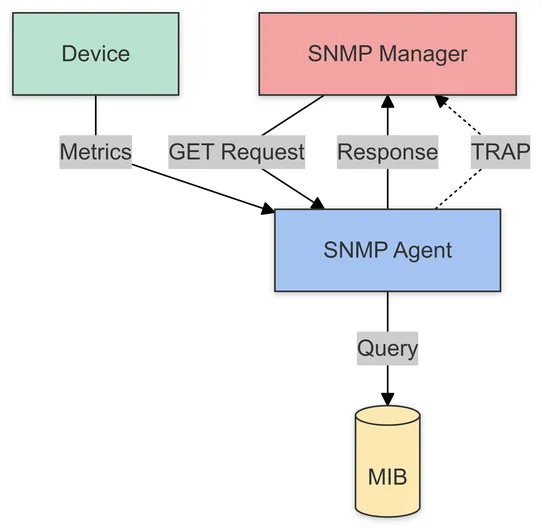

components
Link
@anjali shared a link, 1 year, 4 months ago
Customer Marketing Manager, Last9

gRPC with OpenTelemetry: Observability Guide for Microservices

Learn how to integrate gRPC with OpenTelemetry for better observability, performance, and reliability in microservices architectures.


otel
Link
@anjali shared a link, 1 year, 4 months ago
Customer Marketing Manager, Last9

Linux Syslog Explained: Configuration and Tips

Learn how to configure and manage Linux Syslog for better system monitoring, troubleshooting, and log management with these helpful tips.


Linux Store Syslog Files
Link
@anjali shared a link, 1 year, 4 months ago
Customer Marketing Manager, Last9

A Guide to Spring Boot Logging: Best Practices & Techniques

Learn the best practices and techniques for efficient Spring Boot logging to enhance performance, security, and troubleshooting in your applications.


What-is-an-APM_-A-Comprehensive-Guide-to-Application-Performance-Monitoring
Link
@anjali shared a link, 1 year, 4 months ago
Customer Marketing Manager, Last9

Application Logs: Key Components, Types, & Best Practices

Explore the essential components, types, and best practices for managing application logs to optimize troubleshooting, performance, and security.


application
Link
@anjali shared a link, 1 year, 4 months ago
Customer Marketing Manager, Last9

Parquet vs CSV: Which Format Should You Choose?

Parquet outperforms CSV with its columnar format, offering better compression, faster queries, and more efficient storage for large datasets.


files
Link
@anjali shared a link, 1 year, 4 months ago
Customer Marketing Manager, Last9

npm Packages: Cheatsheet, Troubleshooting & More

Get the hang of npm with this handy cheatsheet—listing packages, installing, troubleshooting, and tips to make your dev life easier!


npm
Link
@anjali shared a link, 1 year, 4 months ago
Customer Marketing Manager, Last9

Top 7 Cloud Providers: The Best AWS Alternatives

Discover the top 7 AWS alternatives, comparing features, benefits, and what makes each one a strong cloud solution for your needs.


cloud
Link
@anjali shared a link, 1 year, 4 months ago
Customer Marketing Manager, Last9

Splunk vs. Datadog: A Side-by-Side Comparison

Compare Splunk and Datadog in this detailed guide to understand their features, strengths, and key differences for your monitoring needs.


splunk vs datadog
Story
@squadcast shared a post, 1 year, 4 months ago

Why Your Organization Needs a Strong On-Call Framework for Incident Response

This comprehensive guide explores how to establish an effective on-call system for incident responses, covering everything from team structure and rotation strategies to tools and best practices. Learn how to implement a framework that balances quick incident resolution with team wellbeing, while ensuring 24/7 coverage for your critical systems.

NanoClaw is an open-source personal AI agent designed to run locally on your machine while remaining small enough to fully understand and audit. Built as a lightweight alternative to larger agent frameworks, the system runs as a single Node.js process with roughly 3,900 lines of code spread across about 15 source files.

The agent integrates with messaging platforms such as WhatsApp and Telegram, allowing users to interact with their AI assistant directly through familiar chat applications. Each conversation group operates independently and maintains its own memory and execution environment.

A core design principle of NanoClaw is security through isolation. Every agent session runs inside its own container using Docker or Apple Container, ensuring that the agent can only access files and resources that are explicitly mounted. This approach relies on operating system–level sandboxing rather than application-level permission checks.

The architecture is intentionally simple: a single orchestrator process manages message queues, schedules tasks, launches containerized agents, and stores state in SQLite. Additional functionality can be added through a modular skills system, allowing users to extend capabilities without increasing the complexity of the core codebase.

By combining a minimal architecture with container-based isolation and messaging integration, NanoClaw aims to provide a transparent, customizable personal AI agent that users can run and control entirely on their own infrastructure.