Join us

ContentUpdates and recent posts about NanoClaw..
Link
@kala shared a link, 1 month, 2 weeks ago
FAUN.dev()

How AI Agents Automate CVE Vulnerability Research

A multi-agent system runs onGoogle's Agent Development Kit (ADK). It orchestrates specialized AI models for CVE research and report synthesis. It runso4-mini-deep-researchwith web search. On timeouts it falls back toGPT‑5. It extracts structured technical requirements. It maps those requirements to .. read more  
How AI Agents Automate CVE Vulnerability Research
Link
@kala shared a link, 1 month, 2 weeks ago
FAUN.dev()

I Will Never Use AI to Code (or write)

This article discusses the negative impacts of relying on AI for coding and skill development. The cycle of using AI leading to skill decay, skill collapse, and the end of capability is highlighted as a major concern. The economic implications of AI usage in various industries and the lack of profit.. read more  

Link
@devopslinks shared a link, 1 month, 3 weeks ago
FAUN.dev()

AI Isn't Replacing SREs. It's Deskilling Them.

This post discusses the impact of AI on the role of Site Reliability Engineers (SREs) by drawing parallels to historical research on automation. It highlights the risk of deskilling and never-skilling for SREs who heavily rely on AI tools for incident response. The post also suggests potential appro.. read more  

Link
@devopslinks shared a link, 1 month, 3 weeks ago
FAUN.dev()

AWS RDS Cost Optimization Guide: Cut Database Costs in 2026

Amazon RDS costs are not fixed - they vary based on configuration and usage. Making informed configuration and governance decisions is key to optimizing costs. Graviton instances offer better price-performance for common databases, while storage costs can be reduced by decoupling performance from ca.. read more  

AWS RDS Cost Optimization Guide: Cut Database Costs in 2026
Link
@devopslinks shared a link, 1 month, 3 weeks ago
FAUN.dev()

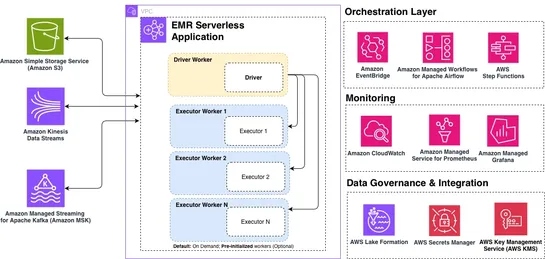
Top 10 best practices for Amazon EMR Serverless

Amazon EMR Serverless allows users to run big data analytics frameworks without managing clusters, integrating with various AWS services for a comprehensive solution. The top 10 best practices for optimizing EMR Serverless workloads focus on performance, cost, and scalability, including consideratio.. read more  

Top 10 best practices for Amazon EMR Serverless
Link
@devopslinks shared a link, 1 month, 3 weeks ago
FAUN.dev()

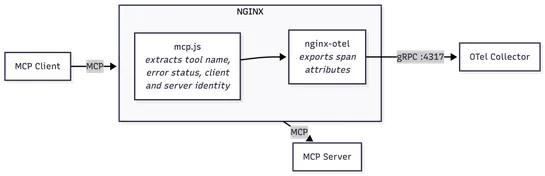
Introducing Agentic Observability in NGINX: Real-time MCP Traffic Monitoring

NGINX ships an open-sourceAgentic ObservabilityJS module. It parsesMCPtraffic and extracts tool names, error statuses, and client/server identities. The module uses nativeOpenTelemetryto export spans. A Docker Compose reference wires upOTel collector,Prometheus, andGrafanafor realtime throughput, la.. read more  

Introducing Agentic Observability in NGINX: Real-time MCP Traffic Monitoring
Link
@devopslinks shared a link, 1 month, 3 weeks ago
FAUN.dev()

Building a Database on S3

This paper from 2008 proposes a shared-disk design over Amazon S3 for cloud-native databases, separating storage from compute. Clients write redo logs to Amazon SQS instead of directly to S3 to hide latency. The paper presents a blueprint for serverless databases before the term existed... read more  

Course
@eon01 published a course, 1 month, 3 weeks ago
Founder, FAUN.dev

Learn Git in a Day

GitLab git Ubuntu

Everything you need, nothing you don't

Learn Git in a Day
 Activity
Story Palark Team
@shurup shared a post, 1 month, 3 weeks ago
@palark

Kubernetes best practices for DevOps engineers

Kubernetes

Have to manage Kubernetes in production but don’t feel confident about its many moving parts, complex architecture, and configurations? Here’s a selection of technical guides from experienced engineers for Kubernetes beginners looking to master this orchestration tool for running containerised apps efficiently and reliably.

Best practices for Kubernetes
NanoClaw is an open-source personal AI agent designed to run locally on your machine while remaining small enough to fully understand and audit. Built as a lightweight alternative to larger agent frameworks, the system runs as a single Node.js process with roughly 3,900 lines of code spread across about 15 source files.

The agent integrates with messaging platforms such as WhatsApp and Telegram, allowing users to interact with their AI assistant directly through familiar chat applications. Each conversation group operates independently and maintains its own memory and execution environment.

A core design principle of NanoClaw is security through isolation. Every agent session runs inside its own container using Docker or Apple Container, ensuring that the agent can only access files and resources that are explicitly mounted. This approach relies on operating system–level sandboxing rather than application-level permission checks.

The architecture is intentionally simple: a single orchestrator process manages message queues, schedules tasks, launches containerized agents, and stores state in SQLite. Additional functionality can be added through a modular skills system, allowing users to extend capabilities without increasing the complexity of the core codebase.

By combining a minimal architecture with container-based isolation and messaging integration, NanoClaw aims to provide a transparent, customizable personal AI agent that users can run and control entirely on their own infrastructure.