Join us

ContentUpdates and recent posts about NanoClaw..
Link
@anjali shared a link, 1 year, 3 months ago
Customer Marketing Manager, Last9

Kubernetes Pods vs Nodes: What Sets Them Apart

Explore the key differences between Kubernetes Pods and Nodes to better understand their roles in container orchestration.
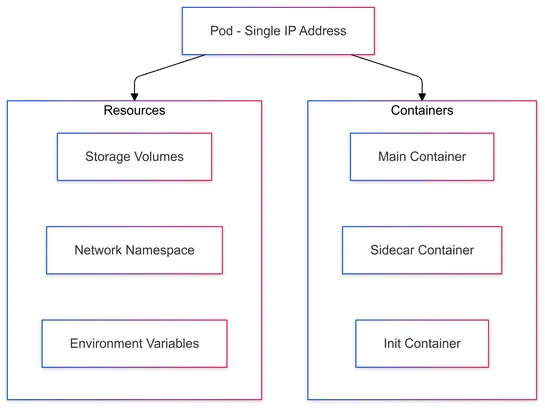
pod
Link
@anjali shared a link, 1 year, 3 months ago
Customer Marketing Manager, Last9

Pod Exec in K8s: Advanced Exec Scenarios and Best Practices

Learn advanced kubectl exec techniques in Kubernetes, covering best practices for troubleshooting, security, and resource management.

kubectl-exec_-Commands--Examples--and-Best-Practices
Link
@anjali shared a link, 1 year, 3 months ago
Customer Marketing Manager, Last9

OpenMetrics vs OpenTelemetry: A Detailed Comparison

Discover the key differences between OpenMetrics and OpenTelemetry, from scope and use cases to adoption and flexibility, to make an informed choice.

otel
Link
@anjali shared a link, 1 year, 3 months ago
Customer Marketing Manager, Last9

5 Common Incident Severity Levels You Should Know

Learn about the 5 common incident severity levels and how they impact your response to system issues, ensuring faster resolutions.

incident
Link
@anjali shared a link, 1 year, 3 months ago
Customer Marketing Manager, Last9

What Are Syslog Levels and Why Should You Care?

Syslog levels help categorize log messages by severity, making it easier to monitor, troubleshoot, and prioritize system events.

logging
Link
@anjali shared a link, 1 year, 3 months ago
Customer Marketing Manager, Last9

TCP Monitoring Made Simple: Keep Your Network in Check

Learn how TCP monitoring keeps your network fast, reliable, and free from issues like latency, packet loss, and connection hiccups.
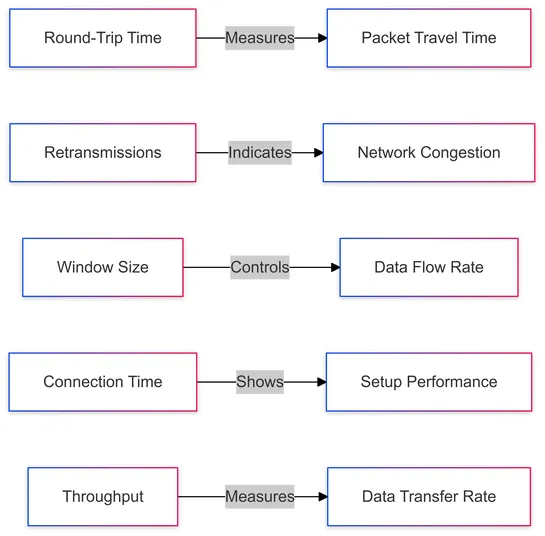
tcp
Link
@anjali shared a link, 1 year, 3 months ago
Customer Marketing Manager, Last9

IoT Monitoring: Why It Matters and How to Do It Right?

Learn about IoT monitoring, its benefits, best practices, and use cases to optimize your systems and improve operational efficiency.

iot
Link
@anjali shared a link, 1 year, 3 months ago
Customer Marketing Manager, Last9

Error Logs: What They Are, Why They Matter, and How to Use Them

Error logs are vital for troubleshooting, improving performance, and ensuring security. Learn how to use them effectively for system health.

error
Story
@viktoriiagolovtseva shared a post, 1 year, 3 months ago

Organize Complex Projects with an Epic Template in Jira

In this article, we’ll explore what an epic is, why using an epic template can help organize complex projects, and how tools like Smart Templates for Jira can further improve your workflows by enabling reusable templates for entire epics.

Link
@anjali shared a link, 1 year, 3 months ago
Customer Marketing Manager, Last9

Datadog Pricing: All your Questions Answered

If you’re curious about Datadog pricing, we’ve got answers to your top questions, from plans to smart ways to save on costs.

datadog pricing
NanoClaw is an open-source personal AI agent designed to run locally on your machine while remaining small enough to fully understand and audit. Built as a lightweight alternative to larger agent frameworks, the system runs as a single Node.js process with roughly 3,900 lines of code spread across about 15 source files.

The agent integrates with messaging platforms such as WhatsApp and Telegram, allowing users to interact with their AI assistant directly through familiar chat applications. Each conversation group operates independently and maintains its own memory and execution environment.

A core design principle of NanoClaw is security through isolation. Every agent session runs inside its own container using Docker or Apple Container, ensuring that the agent can only access files and resources that are explicitly mounted. This approach relies on operating system–level sandboxing rather than application-level permission checks.

The architecture is intentionally simple: a single orchestrator process manages message queues, schedules tasks, launches containerized agents, and stores state in SQLite. Additional functionality can be added through a modular skills system, allowing users to extend capabilities without increasing the complexity of the core codebase.

By combining a minimal architecture with container-based isolation and messaging integration, NanoClaw aims to provide a transparent, customizable personal AI agent that users can run and control entirely on their own infrastructure.