Join us

ContentUpdates and recent posts about NanoClaw..
Link
@faun shared a link, 11 months, 2 weeks ago
FAUN.dev()

Announcing new Model Context Protocol (MCP) Servers for AWS Serverless and Containers - AWS

AWS's Model Context Protocol (MCP) servers arm AI code assistantsto deftly wrangle AWS Lambda, ECS, and EKS. They launch apps at warp speed.MCP servers cram in AWS best practices and operational secrets,freeing you from infrastructure drudgery. You get to dive straight into crafting the heart of you.. read more  

Announcing new Model Context Protocol (MCP) Servers for AWS Serverless and Containers - AWS
Link
@faun shared a link, 11 months, 2 weeks ago
FAUN.dev()

What’s New in Networking for Kubernetes in the Isovalent Platform 1.17

The Isovalent Platform 1.17 release brings major upgrades to Kubernetes networking, including a new standalone Egress Gateway, dynamic BGP features, enhanced multi-tenant security policies, and smoother Calico-to-Cilium migrations. This version also introduces easier observability with integrated Ti.. read more  

Link
@faun shared a link, 11 months, 2 weeks ago
FAUN.dev()

AI Runs Best On Cloud Native—Who's Managing the Kubernetes Platform?

AI workloads thrive on cloud-native platforms like Kubernetes because they offer the scalability, portability, and speed needed for modern machine learning—but building and running this infrastructure is highly complex and distracts from core AI work. The post argues that unless your business is inf.. read more  

Link
@faun shared a link, 11 months, 2 weeks ago
FAUN.dev()

Mastering Kubernetes Migrations From Planning to Execution

Managed K8slike Amazon EKS or GKE? A ticket to smoother ops, but at the expense of control. Enterautoscaling, service meshes, andGitOps—they shift the deployment game dramatically. But don’t fall into the trap of thinking every app belongs on K8s. High-latency, tightly bound apps flounder there. Tos.. read more  

Link
@faun shared a link, 11 months, 2 weeks ago
FAUN.dev()

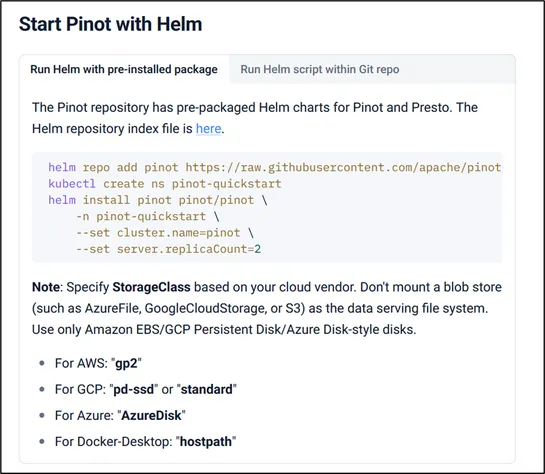
The Risk of Default Configuration: How Out-of-the-Box Helm Charts Can Breach Your Cluster

Apache Pinot's Helm setup is a welcome mat for troublemakers.It throws the doors open to critical services without bothering to ask, "Who goes there?" It's the kind of oversight attackers savor.Meshery and Selenium join the party too.Their default settings flirt with disaster, leaving the gates ajar.. read more  

The Risk of Default Configuration: How Out-of-the-Box Helm Charts Can Breach Your Cluster
Link
@faun shared a link, 11 months, 2 weeks ago
FAUN.dev()

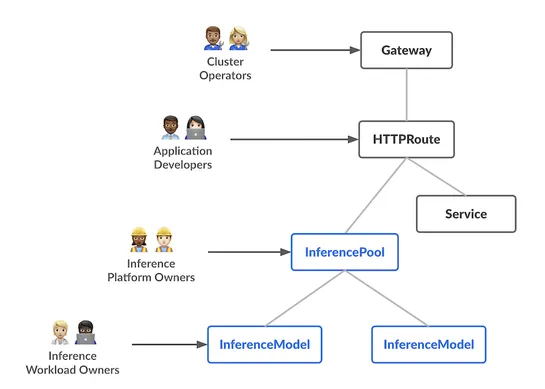
Introducing Gateway API Inference Extension

Gateway API Inference Extensiontakes AI workload routing on Kubernetes and infuses it with model-savvy powers. It slices latency on GPU clusters like a samurai. Meanwhile, theEndpoint Selection Extensionacts like a traffic cop on caffeine, using live metrics to steer pods and trim those nagging tail.. read more  

Introducing Gateway API Inference Extension
Link
@faun shared a link, 11 months, 2 weeks ago
FAUN.dev()

Start Sidecar First: How To Avoid Snags

Kubernetesv1.29.0 steps up its game with sidecars now always booting before the main apps. Fancy that. But don’t get too comfy. To make sure everything’s truly ready, lean on readiness probes or whip up a shell script with a lifecycle hook to get that perfect launch choreography... read more  

Link
@faun shared a link, 11 months, 2 weeks ago
FAUN.dev()

Building Kubernetes Controllers in Node.js

Kubenodeis the secret weapon forNode.jsdevelopers diving intoKubernetes. Forget about wrestling with Go—this tool empowers you to wield custom resources and automate like a boss... read more  

Link
@faun shared a link, 11 months, 2 weeks ago
FAUN.dev()

Not Every Problem Needs Kubernetes

Most projects don’t need Kubernetes;for 90% of teams, it adds unnecessary complexity and operational burden compared to simpler alternatives like managed cloud services, VMs, or actor-model frameworks. Unless you’re running at hyperscale, need true hybrid environments, or have a massive, mature plat.. read more  

Link
@faun shared a link, 11 months, 2 weeks ago
FAUN.dev()

Gateway API v1.3.0: Advancements in Request Mirroring, CORS, Gateway Merging, and Retry Budgets

Gateway API v1.3.0lands with a killer feature:percentage-based request mirroringthat makes traffic handling a whole lot savvier. Fancy a peek at the cutting-edge? Dive into theCORS filtersandretry budgets, all shiny and experimental. Just a heads-up: these feature names sport an "X" at the front—mea.. read more  

Gateway API v1.3.0: Advancements in Request Mirroring, CORS, Gateway Merging, and Retry Budgets
NanoClaw is an open-source personal AI agent designed to run locally on your machine while remaining small enough to fully understand and audit. Built as a lightweight alternative to larger agent frameworks, the system runs as a single Node.js process with roughly 3,900 lines of code spread across about 15 source files.

The agent integrates with messaging platforms such as WhatsApp and Telegram, allowing users to interact with their AI assistant directly through familiar chat applications. Each conversation group operates independently and maintains its own memory and execution environment.

A core design principle of NanoClaw is security through isolation. Every agent session runs inside its own container using Docker or Apple Container, ensuring that the agent can only access files and resources that are explicitly mounted. This approach relies on operating system–level sandboxing rather than application-level permission checks.

The architecture is intentionally simple: a single orchestrator process manages message queues, schedules tasks, launches containerized agents, and stores state in SQLite. Additional functionality can be added through a modular skills system, allowing users to extend capabilities without increasing the complexity of the core codebase.

By combining a minimal architecture with container-based isolation and messaging integration, NanoClaw aims to provide a transparent, customizable personal AI agent that users can run and control entirely on their own infrastructure.