Join us

ContentUpdates and recent posts about NanoClaw..
Link
@kaptain shared a link, 1 month ago
FAUN.dev()

How Kubernetes Learned to Resize Pods Without Restarting Them

Kubernetes v1.35 introduces in-place Pod resizing, allowing dynamic adjustments to CPU and memory limits without restarting containers. This feature addresses the operational gap of vertical scaling in Kubernetes by maintaining the same Pod UID and workload identity during resizing. With this breakt.. read more  

How Kubernetes Learned to Resize Pods Without Restarting Them
Link
@kaptain shared a link, 1 month ago
FAUN.dev()

Why Kubernetes is retiring Ingress NGINX

The Kubernetes Steering Committee is pulling the plug onIngress NGINX- official support ends March 2026. No more updates. No security patches. Gone. Why? It's been coasting on fumes. One or two part-time maintainers couldn't keep up. The tech debt piled up. Now it's a security liability. What's next.. read more  

Why Kubernetes is retiring Ingress NGINX
Link
@kaptain shared a link, 1 month ago
FAUN.dev()

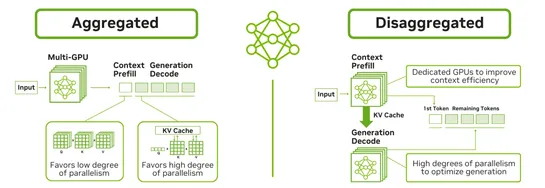
How GKE Inference Gateway improved latency for Vertex AI

Vertex AI now plays nice withGKE Inference Gateway, hooking into the Kubernetes Gateway API to manage serious generative AI workloads. What’s new:load-awareandcontent-aware routing. It pulls from Prometheus metrics and leverages KV cache context to keep latency low and throughput high - exactly what.. read more  

How GKE Inference Gateway improved latency for Vertex AI
Link
@kaptain shared a link, 1 month ago
FAUN.dev()

CVE-2026-22039: Kyverno Authorization Bypass

Kyverno - a CNCF policy engine for Kubernetes - just dropped a critical one:CVE-2026-22039. It lets limited-access users jump namespaces by hijacking Kyverno'scluster-wide ServiceAccountthrough crafty use of policy context variable substitution. Think privilege escalation without breaking a sweat. I.. read more  

CVE-2026-22039: Kyverno Authorization Bypass
Link
@kala shared a link, 1 month ago
FAUN.dev()

Self-Optimizing Football Chatbot Guided by Domain Experts on

Generic LLM judges and static prompts fail to capture domain-specific nuance in football defensive analysis. The architecture for self-optimizing agents built on Databricks Agent Framework allows developers to continuously improve AI quality using MLflow and expert feedback. The agent, such as a DC .. read more  

Link
@kala shared a link, 1 month ago
FAUN.dev()

Nathan Lambert: Open Models Will Never Catch Up

Open models will be the engine for the next ten years of AI research, according to Nathan Lambert, a research scientist at AI2. He explains that while open models may not catch up with closed ones due to fewer resources, they are still crucial for innovation. Lambert emphasizes the importance of int.. read more  

Nathan Lambert: Open Models Will Never Catch Up
Link
@kala shared a link, 1 month ago
FAUN.dev()

My AI Adoption Journey

A dev walks through the shift from chatbot coding toagent-based AI workflows, think agents that read files, run code, and double-check their work. Things only clicked once they built outcustom tools and configsto help agents spot and fix their own screwups. That’s the real unlock... read more  

Link
@kala shared a link, 1 month ago
FAUN.dev()

Generative Pen-trained Transformer

MeetGPenT, an open-source, wall-mounted polargraph pen plotter with a flair for generative art. It blends custom hardware, Marlin firmware, a Flask web UI running on Raspberry Pi, and Gemini-generated drawing prompts. The stack? Machina + LLM. Prompts go in, JSON drawing commands come out. That driv.. read more  

Link
@kala shared a link, 1 month ago
FAUN.dev()

Towards self-driving codebases

OpenAI spun up a swarm of GPT-5.x agents - thousands of them. Over a week-long sprint, they cranked out runnable browser code and shipped it nonstop. The system hit 1,000 commits an hour across 10 million tool calls. The architecture? A planner-worker stack. Hierarchical. Recursive. Lean on agent ch.. read more  

Towards self-driving codebases
Link
@devopslinks shared a link, 1 month ago
FAUN.dev()

Demystifying : Why You Shouldn’t Fear Observability in Traditional Environments

OpenTelemetry is friendly with the past. It now pipesreal-time observability into legacy systems- no code rewrite, no drama. Pull structured metrics straight from raw logs, Windows PDH counters, or SQL Server stats. It doesn’t stop there. Got MQTT-based IoT gear? OTLP export or lightweight adapters .. read more  

Demystifying : Why You Shouldn’t Fear Observability in Traditional Environments
NanoClaw is an open-source personal AI agent designed to run locally on your machine while remaining small enough to fully understand and audit. Built as a lightweight alternative to larger agent frameworks, the system runs as a single Node.js process with roughly 3,900 lines of code spread across about 15 source files.

The agent integrates with messaging platforms such as WhatsApp and Telegram, allowing users to interact with their AI assistant directly through familiar chat applications. Each conversation group operates independently and maintains its own memory and execution environment.

A core design principle of NanoClaw is security through isolation. Every agent session runs inside its own container using Docker or Apple Container, ensuring that the agent can only access files and resources that are explicitly mounted. This approach relies on operating system–level sandboxing rather than application-level permission checks.

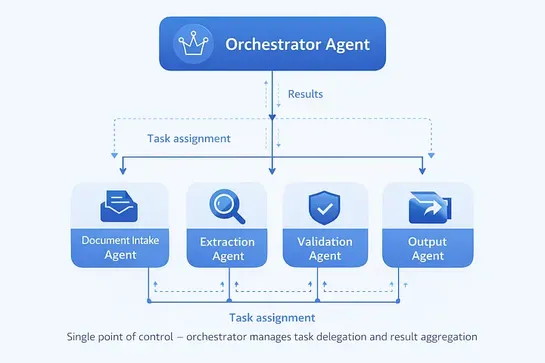
The architecture is intentionally simple: a single orchestrator process manages message queues, schedules tasks, launches containerized agents, and stores state in SQLite. Additional functionality can be added through a modular skills system, allowing users to extend capabilities without increasing the complexity of the core codebase.

By combining a minimal architecture with container-based isolation and messaging integration, NanoClaw aims to provide a transparent, customizable personal AI agent that users can run and control entirely on their own infrastructure.