Join us

ContentUpdates and recent posts about Nano Banana Pro..
Link
@kaptain shared a link, 1 month, 2 weeks ago
FAUN.dev()

udwall: A Tool for Making UFW and Docker Play Nice With Each Other

Hexmos droppedudwall, a declarative firewall manager that finally makesUFWandDockerplay nice. Docker’s notorious for bulldozing past UFW rules via iptables. udwall patches that hole. It syncs rules across both, auto-reconciles changes, backs up configs, and plugs cleanly intoAnsible. No more duct-ta.. read more  

udwall: A Tool for Making UFW and Docker Play Nice With Each Other
Link
@kaptain shared a link, 1 month, 2 weeks ago
FAUN.dev()

You Want Microservices—But Do You Need Them?

Amazon Prime Video ditched its pricey microservices maze and rebuilt as asingle-process monolith, cutting ops costs by 90%. No big press release. Just results. Same move from Twilio Segment. And Shopify. Both pulled their tangled systems back intomodular monoliths- cleaner, faster, easier to test, a.. read more  

You Want Microservices—But Do You Need Them?
Link
@kaptain shared a link, 1 month, 2 weeks ago
FAUN.dev()

Kubernetes Configuration Good Practices

Stripped down and sharp, the blog lays out Kubernetes config best practices: keep YAML manifests in version control, use Deployments (not raw Pods), and label like you mean it - semantically, not just alphabet soup. It digs into sneaky pain points too, like how YAML mangles booleans (yes≠true), and .. read more  

Link
@kaptain shared a link, 1 month, 2 weeks ago
FAUN.dev()

Turning Kubernetes Last Access to Kubernetes Least Access Using KIEMPossible

KIEMPossible is a new open-source tool for Kubernetes entitlement cleanup. It maps out who has access to what - roles, entities, permissions - and shows how those are actually used across your clusters. Think of it as a permission microscope for AKS, EKS, GKE, and even the DIY K8s crowd. It breaks d.. read more  

Turning Kubernetes Last Access to Kubernetes Least Access Using KIEMPossible
Link
@kaptain shared a link, 1 month, 2 weeks ago
FAUN.dev()

The Grafana trust problem

Grafana’s been busy clearing the shelves.Grafana Agent,Agent Flow, andOnCall? All deprecated. The replacement:Grafana Alloy- a one-stop observability agent that handles logs, metrics, traces, and OTEL without flinching. Meanwhile,Mimir 3.0ships with a Kafka-powered ingestion pipeline. More scalabili.. read more  

Link
@kala shared a link, 1 month, 2 weeks ago
FAUN.dev()

How I Built a 100% Offline “Second Brain” for Engineering Docs using Docker & Llama 3 (No OpenAI)

Senior Automation Engineer built an offline RAG system for technical documents using Ollama, Llama 3, and ChromaDB in a Dockerized microservices architecture. The system enables efficient retrieval and generation of information from PDFs with a streamlined UI. The deployment package, including compl.. read more  

Link
@kala shared a link, 1 month, 2 weeks ago
FAUN.dev()

How to Evaluate LLMs Without Opening Your Wallet

A new mock-based framework lets QA and automation folks stress-test LLM outputs - no API calls, no surprise charges. It runs entirely local, usingpytest fixtures, structured test flows, and JSON schema checks to keep things tight. Test logic stays modular. Cross-validation’s baked in. And if you nee.. read more  

Link
@kala shared a link, 1 month, 2 weeks ago
FAUN.dev()

I tested ChatGPT’s backend API using RENTGEN, and found more issues than expected

A closer look at OpenAI’s API uncovers some shaky ground: misconfiguredCORS headers, missingX-Frame-Options, noinput validation, and borkedHTTP status handling. Large uploads? Boom..crash!CORS preflightrequests? Straight-up denied. So much for smooth browser support... read more  

I tested ChatGPT’s backend API using RENTGEN, and found more issues than expected
Link
@kala shared a link, 1 month, 2 weeks ago
FAUN.dev()

Cato CTRL™ Threat Research: HashJack - Novel Indirect Prompt Injection Against AI Browser Assistants

A new attack method -HashJack- shows how AI browsers can be tricked with nothing more than a URL fragment. It works like this: drop malicious instructions after the#in a link, and AI copilots likeComet,Copilot for Edge, andGemini for Chromemight swallow them whole. No need to hack the site. The LLM .. read more  

Link
@kala shared a link, 1 month, 2 weeks ago
FAUN.dev()

Writing a good CLAUDE.md

Anthropic’s Claude Code now deprioritizes parts of the root context file it sees as irrelevant. It still reads the file every session, but won’t waste cycles on side quests. The message to devs: stop stuffing it with catch-all instructions. Instead, use modular context that unfolds as needed - think.. read more  

Writing a good CLAUDE.md
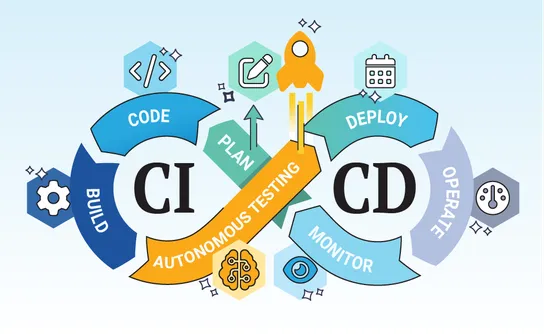
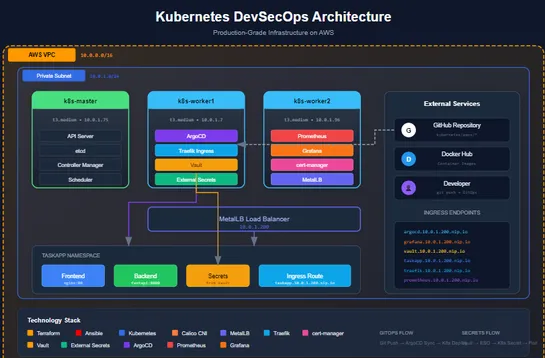
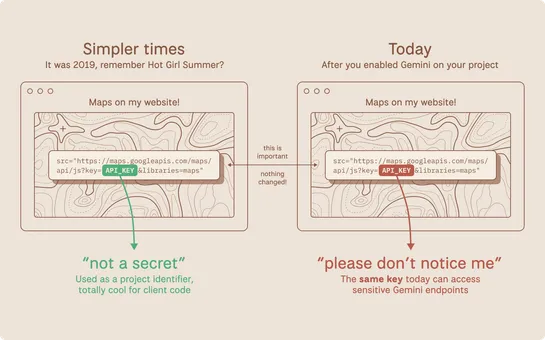
The "Nano Banana Pro" is an AI image generation and editing model. It is built on the Gemini 3.0 Pro reasoning engine. It is designed to create visuals from ideas. Nano Banana Pro plans scenes before rendering. This ensures high-quality results. It can generate text in multiple languages directly within the image.

The model offers advanced creative controls. Users can specify camera angles, lighting conditions, and depth of field. It has editing features, like "multi-image fusion". Up to 14 reference images can be combined. This maintains consistent branding, character identity, and style. Its "search grounding" capability uses real-time information from Google Search. This produces accurate infographics or diagrams.

The visuals are available in up to 4K resolution. They are suitable for social media posts to print materials. They are generated in seconds. Nano Banana Pro is available across the Google Gemini interface, Google Cloud for enterprise clients, and integrated into popular creative software like Adobe Photoshop.