Join us

ContentUpdates and recent posts about Magika..
 Activity
@varbear added a new tool npm , 5 months ago.
 Activity
@devopslinks added a new tool GitHub , 5 months ago.
Story
@laura_garcia shared a post, 5 months ago
Software Developer, RELIANOID

𝘐𝘯 𝘤𝘢𝘴𝘦 𝘺𝘰𝘶 𝘮𝘪𝘴𝘴𝘦𝘥 𝘪𝘵: Europe’s skies disrupted

Cyberattack on Collins Aerospace’s MUSE platform We shared this analysis a few months ago, but given the relevance of the topic and the growing impact of cyberattacks on critical infrastructure, it’s definitely worth resurfacing. The incident forced major airports like Heathrow, Brussels, and Berlin..

News FAUN.dev() Team Trending
@kala shared an update, 5 months ago
FAUN.dev()

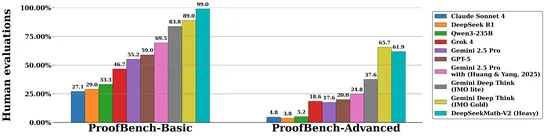
DeepSeekMath-V2 Launches with 685B Parameters - Dominates Math Contests

DeepSeekMath-V2

DeepSeekMath-V2, an AI model with 685 billion parameters, excels in mathematical reasoning and achieves top scores in major competitions, now available open source for research and commercial use.

DeepSeekMath-V2 Launches with 685B Parameters - Dominates Math Contests
Link
@anjali shared a link, 5 months ago
Customer Marketing Manager, Last9

9 Monitoring Tools That Deliver AI-Native Anomaly Detection

A technical guide comparing nine observability platforms built to detect anomalies and support modern AI-driven workflows.

anamoly_detection
 Activity
@kala added a new tool DeepSeekMath-V2 , 5 months ago.
News FAUN.dev() Team
@kala shared an update, 5 months ago
FAUN.dev()

A New Challenger: INTELLECT-3's 100B Parameters Punch Above Their Weight

Ansible Lustre Slurm INTELLECT-3

INTELLECT-3, a 100B+ parameter model, sets new benchmarks in AI, with open-sourced training components to foster research in reinforcement learning.

A New Challenger: INTELLECT-3's 100B Parameters Punch Above Their Weight
 Activity
@kala added a new tool INTELLECT-3 , 5 months ago.
 Activity
@devopslinks added a new tool Lustre , 5 months ago.
 Activity
@varbear added a new tool Slurm , 5 months ago.
Magika is an open-source file type identification engine developed by Google that uses machine learning instead of traditional signature-based heuristics. Unlike classic tools such as file, which rely on magic bytes and handcrafted rules, Magika analyzes file content holistically using a trained model to infer the true file type.

It is designed to be both highly accurate and extremely fast, capable of classifying files in milliseconds. Magika excels at detecting edge cases where file extensions are incorrect, intentionally spoofed, or absent altogether. This makes it particularly valuable for security scanning, malware analysis, digital forensics, and large-scale content ingestion pipelines.

Magika supports hundreds of file formats, including programming languages, configuration files, documents, archives, executables, media formats, and data files. It is available as a Python library, a CLI, and integrates cleanly into automated workflows. The project is maintained by Google and released under an open-source license, making it suitable for both enterprise and research use.

Magika is commonly used in scenarios such as:

- Secure file uploads and content validation
- Malware detection and sandboxing pipelines
- Code repository scanning
- Data lake ingestion and classification
- Digital forensics and incident response