Join us

ContentUpdates and recent posts about Magika..
Link
@kaptain shared a link, 5 months ago
FAUN.dev()

Developers don’t care about Kubernetes clusters

Most cloud-native tools obsess over clusters. Not developers. That means poor support for things like promoting code between environments or deploying by feature - not just by repo. The author pushes for a better way: platforms that hide the Kubernetes mess and tame CI/CD. Think feature-driven deplo.. read more  

Developers don’t care about Kubernetes clusters
Link
@kaptain shared a link, 5 months ago
FAUN.dev()

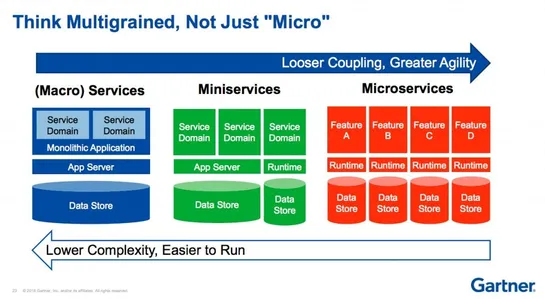
You Want Microservices—But Do You Need Them?

Amazon Prime Video ditched its pricey microservices maze and rebuilt as asingle-process monolith, cutting ops costs by 90%. No big press release. Just results. Same move from Twilio Segment. And Shopify. Both pulled their tangled systems back intomodular monoliths- cleaner, faster, easier to test, a.. read more  

You Want Microservices—But Do You Need Them?
Link
@kaptain shared a link, 5 months ago
FAUN.dev()

Kubernetes Configuration Good Practices

Stripped down and sharp, the blog lays out Kubernetes config best practices: keep YAML manifests in version control, use Deployments (not raw Pods), and label like you mean it - semantically, not just alphabet soup. It digs into sneaky pain points too, like how YAML mangles booleans (yes≠true), and .. read more  

Link
@kaptain shared a link, 5 months ago
FAUN.dev()

The Grafana trust problem

Grafana’s been busy clearing the shelves.Grafana Agent,Agent Flow, andOnCall? All deprecated. The replacement:Grafana Alloy- a one-stop observability agent that handles logs, metrics, traces, and OTEL without flinching. Meanwhile,Mimir 3.0ships with a Kafka-powered ingestion pipeline. More scalabili.. read more  

Link
@kaptain shared a link, 5 months ago
FAUN.dev()

Turning Kubernetes Last Access to Kubernetes Least Access Using KIEMPossible

KIEMPossible is a new open-source tool for Kubernetes entitlement cleanup. It maps out who has access to what - roles, entities, permissions - and shows how those are actually used across your clusters. Think of it as a permission microscope for AKS, EKS, GKE, and even the DIY K8s crowd. It breaks d.. read more  

Turning Kubernetes Last Access to Kubernetes Least Access Using KIEMPossible
Link
@kala shared a link, 5 months ago
FAUN.dev()

How I Built a 100% Offline “Second Brain” for Engineering Docs using Docker & Llama 3 (No OpenAI)

Senior Automation Engineer built an offline RAG system for technical documents using Ollama, Llama 3, and ChromaDB in a Dockerized microservices architecture. The system enables efficient retrieval and generation of information from PDFs with a streamlined UI. The deployment package, including compl.. read more  

Link
@kala shared a link, 5 months ago
FAUN.dev()

How to Evaluate LLMs Without Opening Your Wallet

A new mock-based framework lets QA and automation folks stress-test LLM outputs - no API calls, no surprise charges. It runs entirely local, usingpytest fixtures, structured test flows, and JSON schema checks to keep things tight. Test logic stays modular. Cross-validation’s baked in. And if you nee.. read more  

Link
@kala shared a link, 5 months ago
FAUN.dev()

I tested ChatGPT’s backend API using RENTGEN, and found more issues than expected

A closer look at OpenAI’s API uncovers some shaky ground: misconfiguredCORS headers, missingX-Frame-Options, noinput validation, and borkedHTTP status handling. Large uploads? Boom..crash!CORS preflightrequests? Straight-up denied. So much for smooth browser support... read more  

I tested ChatGPT’s backend API using RENTGEN, and found more issues than expected
Link
@kala shared a link, 5 months ago
FAUN.dev()

Cato CTRL™ Threat Research: HashJack - Novel Indirect Prompt Injection Against AI Browser Assistants

A new attack method -HashJack- shows how AI browsers can be tricked with nothing more than a URL fragment. It works like this: drop malicious instructions after the#in a link, and AI copilots likeComet,Copilot for Edge, andGemini for Chromemight swallow them whole. No need to hack the site. The LLM .. read more  

Link
@kala shared a link, 5 months ago
FAUN.dev()

AI and QE: Patterns and Anti-Patterns

The author shared insights on how AI can be leveraged as a QE and highlighted potential dangers to watch out for, drawing parallels with misuse of positive behaviors or characteristics taken out of context. The post outlined anti-patterns related to automating tasks, stimulating thinking, and tailor.. read more  

Magika is an open-source file type identification engine developed by Google that uses machine learning instead of traditional signature-based heuristics. Unlike classic tools such as file, which rely on magic bytes and handcrafted rules, Magika analyzes file content holistically using a trained model to infer the true file type.

It is designed to be both highly accurate and extremely fast, capable of classifying files in milliseconds. Magika excels at detecting edge cases where file extensions are incorrect, intentionally spoofed, or absent altogether. This makes it particularly valuable for security scanning, malware analysis, digital forensics, and large-scale content ingestion pipelines.

Magika supports hundreds of file formats, including programming languages, configuration files, documents, archives, executables, media formats, and data files. It is available as a Python library, a CLI, and integrates cleanly into automated workflows. The project is maintained by Google and released under an open-source license, making it suitable for both enterprise and research use.

Magika is commonly used in scenarios such as:

- Secure file uploads and content validation
- Malware detection and sandboxing pipelines
- Code repository scanning
- Data lake ingestion and classification
- Digital forensics and incident response