Join us

ContentUpdates and recent posts about Magika..
Story
@laura_garcia shared a post, 2 months, 1 week ago
Software Developer, RELIANOID

Want to deploy RELIANOID Load Balancer Enterprise Edition v8 on AWS using Terraform in a clean, automated way?

We’ve got you covered. In this step-by-step guide, you’ll learn how to: Use the official Terraform module from the Terraform Registry Automatically provision VPC, subnet, security groups, and EC2 Deploy the RELIANOID Enterprise Edition AMI Access the VM via SSH and Web GUI Easily destroy all resourc..
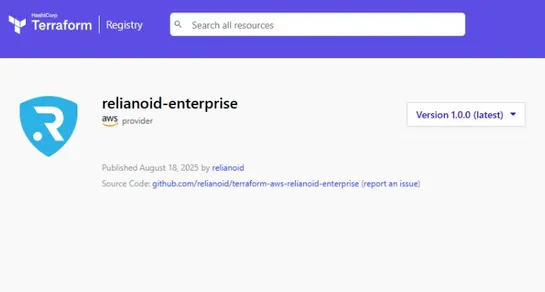
terraform_relianoid_enterprise_img2
Story Keploy Team
@sancharini shared a post, 2 months, 1 week ago

Interpreting Software Testing Metrics Beyond Dashboards

Learn how to interpret software testing metrics beyond dashboards, turning raw data into actionable insights that improve release decisions and reduce risk.

Interpreting Software Testing Metrics Beyond Dashboards
Story
@idjuric660 shared a post, 2 months, 1 week ago
Technical Content Writer, Mailtrap

5 Best Email API for Python Developers Tested & Compared

The best email APIs for Python developers are Mailtrap, Mailgun, SendGrid, Amazon SES, and Postmark. SDK quality & framework compatibility All five providers offerPythonSDKs and they’re compatible with popular frameworks. I tested each withDjango,Flask, and FastAPI to assess real-world integration. ..

 Activity
@jordanunix created an organization DevOpsDayLA , 2 months, 1 week ago.
Story
@laura_garcia shared a post, 2 months, 1 week ago
Software Developer, RELIANOID

💡 Third-Party Vendors: The Hidden Cybersecurity Risk

In today’s hyper-connected world, digital supply chains are only as secure as their weakest link. One single vendor can open the door to ransomware, outages, or worse. At RELIANOID, we take this risk seriously. 🔒 That’s why we apply: ✅ Continuous vendor risk assessments ✅ Real-time monitoring of thi..

cropped-Blog-THIRD-PARTY-VENDOR-RISKS-RELIANOID
Link
@varbear shared a link, 2 months, 1 week ago
FAUN.dev()

Software engineering when machine writes the code

In 1968, computer scientists identified the "software crisis" - the existing methods of programming were struggling to handle the power of computers. Today, AI coding assistants are accelerating productivity, but concerns arise about understanding the code they generate, the implications for debuggi.. read more  

Link
@varbear shared a link, 2 months, 1 week ago
FAUN.dev()

Unconventional PostgreSQL Optimizations

PostgreSQL 18 now supportsvirtual generated columns, indexable expressions without burning storage. Perfect for standardizing queries in analytics-heavy pipelines. Pair that withplanner constraint exclusion(constraint_exclusion=on), and Postgres can dodge irrelevant table scans based on constraints... read more  

Unconventional PostgreSQL Optimizations
Link
@varbear shared a link, 2 months, 1 week ago
FAUN.dev()

How I Taught GitHub Copilot Code Review to Think Like a Maintainer

Vibe coding has made contributing to open source easier, but the high number of contributions to the AI agent framework goose has posed a challenge. An AI Code Review agent like Copilot can help review PRs, but tuning its feedback is crucial for reducing noise and increasing value. By providing clea.. read more  

Link
@varbear shared a link, 2 months, 1 week ago
FAUN.dev()

The challenges of soft delete

"Soft delete" sounds gentle. It isn't. Slapping adeleted_atcolumn on every table pollutes queries, drags down migrations, and leaves tombstones all over production. This post digs into saner options:PostgreSQL triggers,event archiving in the app layer, andCDC via WAL. Each separates the dead stuff f.. read more  

Link
@kaptain shared a link, 2 months, 1 week ago
FAUN.dev()

Experimenting with Gateway API using kind

A new guide shows how to runGateway APIlocally withkindandcloud-provider-kind. It spins up a one-node Kubernetes cluster in Docker - complete with LoadBalancer Services and a Gateway API controller. Cloud vibes, zero cloud bill. Fire it up to deploy demo apps, test routing, or poke around with CRD e.. read more  

Magika is an open-source file type identification engine developed by Google that uses machine learning instead of traditional signature-based heuristics. Unlike classic tools such as file, which rely on magic bytes and handcrafted rules, Magika analyzes file content holistically using a trained model to infer the true file type.

It is designed to be both highly accurate and extremely fast, capable of classifying files in milliseconds. Magika excels at detecting edge cases where file extensions are incorrect, intentionally spoofed, or absent altogether. This makes it particularly valuable for security scanning, malware analysis, digital forensics, and large-scale content ingestion pipelines.

Magika supports hundreds of file formats, including programming languages, configuration files, documents, archives, executables, media formats, and data files. It is available as a Python library, a CLI, and integrates cleanly into automated workflows. The project is maintained by Google and released under an open-source license, making it suitable for both enterprise and research use.

Magika is commonly used in scenarios such as:

- Secure file uploads and content validation
- Malware detection and sandboxing pipelines
- Code repository scanning
- Data lake ingestion and classification
- Digital forensics and incident response