Join us

ContentUpdates and recent posts about Lustre..
Link
@varbear shared a link, 3 weeks, 3 days ago
FAUN.dev()

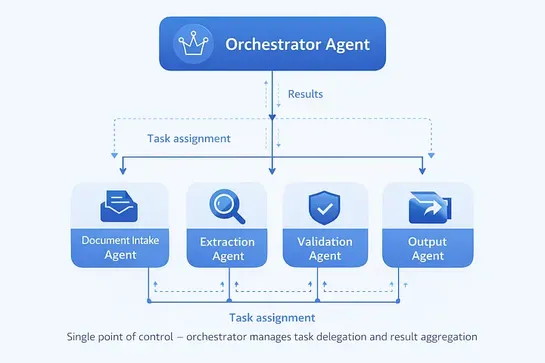
What Is an Async Agent, Really?

An async agent is not inherently async, it depends on whether you wait for it to finish or not. Async agents can manage their own event loop of other agents, spawning and coordinating them to handle tasks, just like an async runtime in programming. This architectural distinction allows for concurren.. read more  

Link
@varbear shared a link, 3 weeks, 3 days ago
FAUN.dev()

I struggled to code with AI until I learned this workflow

AI coding assistants work best when given clear context, a specific plan, and implemented in small, reviewable steps. Start with context, then a plan, and iterate through implementation and testing to avoid AI freelancing pitfalls... read more  

Link
@varbear shared a link, 3 weeks, 3 days ago
FAUN.dev()

Company as Code

Organisations rely heavily on digital systems, yet manage important organisational data using outdated manual methods despite advanced automation capabilities in other areas. A novel "Company as Code" concept proposes a programmatic representation of the entire organisation, enabling structured, ver.. read more  

Link
@kaptain shared a link, 3 weeks, 3 days ago
FAUN.dev()

Introducing Node Readiness Controller

Kubernetes just dropped theNode Readiness Controller- a smarter way to track node health. It slaps taints on nodes based on custom signals, not just the plain old "Ready" status. The goal? Safer pod scheduling that actually reflects what’s going on under the hood. It's powered by theNodeReadinessRul.. read more  

Link
@kaptain shared a link, 3 weeks, 3 days ago
FAUN.dev()

How GKE Inference Gateway improved latency for Vertex AI

Vertex AI now plays nice withGKE Inference Gateway, hooking into the Kubernetes Gateway API to manage serious generative AI workloads. What’s new:load-awareandcontent-aware routing. It pulls from Prometheus metrics and leverages KV cache context to keep latency low and throughput high - exactly what.. read more  

How GKE Inference Gateway improved latency for Vertex AI
Link
@kaptain shared a link, 3 weeks, 3 days ago
FAUN.dev()

CVE-2026-22039: Kyverno Authorization Bypass

Kyverno - a CNCF policy engine for Kubernetes - just dropped a critical one:CVE-2026-22039. It lets limited-access users jump namespaces by hijacking Kyverno'scluster-wide ServiceAccountthrough crafty use of policy context variable substitution. Think privilege escalation without breaking a sweat. I.. read more  

CVE-2026-22039: Kyverno Authorization Bypass
Link
@kaptain shared a link, 3 weeks, 3 days ago
FAUN.dev()

How Kubernetes Learned to Resize Pods Without Restarting Them

Kubernetes v1.35 introduces in-place Pod resizing, allowing dynamic adjustments to CPU and memory limits without restarting containers. This feature addresses the operational gap of vertical scaling in Kubernetes by maintaining the same Pod UID and workload identity during resizing. With this breakt.. read more  

How Kubernetes Learned to Resize Pods Without Restarting Them
Link
@kaptain shared a link, 3 weeks, 3 days ago
FAUN.dev()

Why Kubernetes is retiring Ingress NGINX

The Kubernetes Steering Committee is pulling the plug onIngress NGINX- official support ends March 2026. No more updates. No security patches. Gone. Why? It's been coasting on fumes. One or two part-time maintainers couldn't keep up. The tech debt piled up. Now it's a security liability. What's next.. read more  

Why Kubernetes is retiring Ingress NGINX
Link
@kala shared a link, 3 weeks, 3 days ago
FAUN.dev()

Nathan Lambert: Open Models Will Never Catch Up

Open models will be the engine for the next ten years of AI research, according to Nathan Lambert, a research scientist at AI2. He explains that while open models may not catch up with closed ones due to fewer resources, they are still crucial for innovation. Lambert emphasizes the importance of int.. read more  

Nathan Lambert: Open Models Will Never Catch Up
Link
@kala shared a link, 3 weeks, 3 days ago
FAUN.dev()

My AI Adoption Journey

A dev walks through the shift from chatbot coding toagent-based AI workflows, think agents that read files, run code, and double-check their work. Things only clicked once they built outcustom tools and configsto help agents spot and fix their own screwups. That’s the real unlock... read more  

Lustre is an open-source, parallel distributed file system built for high-performance computing environments that require extremely fast, large-scale data access. Designed to serve thousands of compute nodes concurrently, Lustre enables HPC clusters to read and write data at multi-terabyte-per-second speeds while maintaining low latency and fault tolerance.

A Lustre deployment separates metadata and file data into distinct services—Metadata Servers (MDS) handling namespace operations and Object Storage Servers (OSS) serving file contents stored across multiple Object Storage Targets (OSTs). This architecture allows clients to access data in parallel, achieving performance far beyond traditional network file systems.

Widely adopted in scientific computing, supercomputing centers, weather modeling, genomics, and large-scale AI training, Lustre remains a foundational component of modern HPC stacks. It integrates with resource managers like Slurm, supports POSIX semantics, and is designed to scale from small clusters to some of the world’s fastest supercomputers.

With strong community and enterprise support, Lustre provides a mature, battle-tested solution for workloads that demand extreme I/O performance, massive concurrency, and petabyte-scale distributed storage.