Join us

ContentUpdates and recent posts about Kubernetes..
News FAUN.dev() Team
@kaptain shared an update, 3 months, 1 week ago
FAUN.dev()

Docker Desktop 4.50 Supercharges Daily Development With AI, Security, and Faster Workflows

Docker Docker Desktop Docker Compose Kubernetes

Docker Desktop 4.50 enhances software development with improved debugging, AI integration, and enterprise security features, streamlining workflows and boosting productivity.

Docker Desktop 4.50 Supercharges Daily Development With AI, Security, and Faster Workflows
Story Palark Team
@shurup shared a post, 3 months, 1 week ago
@palark

Kubernetes 1.35 new alpha features

Kubernetes

The next Kubernetes release, v1.35, is scheduled for December 17th. It should bring 15 new Alpha features, including the following ones: - Gang scheduling support - Mutable PersistentVolume node affinity - Restart all containers on container exits - Consider terminating Pods in Deployments - CSI vol..

Kubernetes v1.35 release
News FAUN.dev() Team Trending
@kaptain shared an update, 3 months, 1 week ago
FAUN.dev()

Kubernetes v1.35: A Deep Dive Into the Biggest Changes Before the December 17 Release

Kubernetes containerd

Kubernetes v1.35 release removes cgroup v1 and containerd v1.X support, urging admins to migrate to newer versions and adopt enhancements like in-place Pod updates and OCI image volume support.

Kubernetes v1.35: A Deep Dive Into the Biggest Changes Before the December 17 Release
Course
@eon01 published a course, 3 months, 1 week ago
Founder, FAUN.dev

Cloud Native CI/CD with GitLab

GitLab GitLab CI/CD Helm Prometheus Docker GNU/Linux Kubernetes

From Commit to Production Ready

Cloud Native CI/CD with GitLab
Course
@eon01 published a course, 3 months, 1 week ago
Founder, FAUN.dev

Observability with Prometheus and Grafana

Prometheus Docker k3s Grafana GNU/Linux Kubernetes

A Complete Hands-On Guide to Operational Clarity in Cloud-Native Systems

Observability with Prometheus and Grafana
Course
@eon01 published a course, 3 months, 1 week ago
Founder, FAUN.dev

Cloud-Native Microservices With Kubernetes - 2nd Edition

Helm Jaeger OpenTelemetry Prometheus Docker Grafana Loki Grafana Kubernetes Kubectl

A Comprehensive Guide to Building, Scaling, Deploying, Observing, and Managing Highly-Available Microservices in Kubernetes

Cloud-Native Microservices With Kubernetes - 2nd Edition
News FAUN.dev() Team
@kaptain shared an update, 3 months, 1 week ago
FAUN.dev()

The Most Absurd (and Brilliant) Kubernetes Cluster at KubeCon 2025

Kubernetes Talos Linux

Engineer Justin Garrison showcased a backpack-sized PETAFLOP Kubernetes cluster at KubeCon 2025, demonstrating localized AI capabilities without cloud reliance.

The Most Absurd (and Brilliant) Kubernetes Cluster at KubeCon 2025
 Activity
@juanosma1012 started using tool Kubernetes , 3 months, 2 weeks ago.
News FAUN.dev() Team
@kaptain shared an update, 3 months, 2 weeks ago
FAUN.dev()

CNCF Launches Certified Kubernetes AI Conformance Program at KubeCon

Kubernetes

The Cloud Native Computing Foundation launched the Certified Kubernetes AI Conformance Program to set standards for AI workloads on Kubernetes, ensuring reliability and consistency.

CNCF Launches Certified Kubernetes AI Conformance Program at KubeCon
 Activity
@moronizzz started using tool Kubernetes , 3 months, 3 weeks ago.
Kubernetes, often abbreviated as K8s, is an open-source orchestration platform designed to automate the deployment, scaling, and management of containerized applications. It acts as a "brain" for your infrastructure, ensuring that your containers run exactly where and how they should across a cluster of physical or virtual machines, abstracting away the underlying hardware to treat the entire data center as a single computational resource.

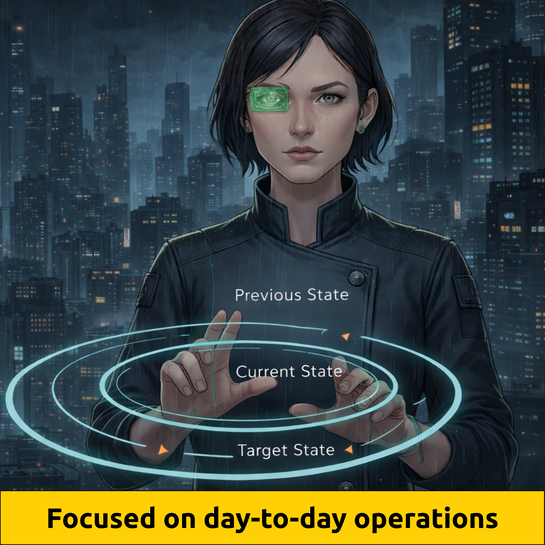
At its core, Kubernetes operates on a declarative model: you define the "desired state" of your application—such as how many replicas should be running or how much CPU they should use - and the system continuously works to maintain that state. If a container crashes or a node fails, Kubernetes automatically detects the discrepancy and restarts or reschedules the workload to ensure zero downtime, providing a self-healing environment that is critical for modern, high-availability systems.

Beyond simple container management, Kubernetes provides a robust ecosystem for networking, storage, and security. It handles service discovery and load balancing internally, allowing containers to communicate seamlessly without hardcoded IP addresses, and orchestrates storage mounting from various providers. By standardizing how applications are deployed and scaled, Kubernetes enables developers to move from local development to global production with consistent and predictable results.