Join us

ContentUpdates and recent posts about Grafana Tempo..
Link
@varbear shared a link, 6 months, 3 weeks ago
FAUN.dev()

Introducing Code Wiki: Accelerating your code understanding

Google just droppedCode Wikiin public preview. It builds live, structured docs straight from your codebase - and stays synced as things change. Docs evolve with your repo. Automatically. A Gemini-powered chat agent sits at the center, armed with full-repo context, clickable code links, and diagrams .. read more  
Introducing Code Wiki: Accelerating your code understanding
Link
@kaptain shared a link, 6 months, 3 weeks ago
FAUN.dev()

AWS Backup now supports Amazon EKS

AWS Backup just added support forAmazon EKS. Now you can back up cluster state and persistent volumes, no agents, no third-party hacks. It handles scheduling, retention, and immutability out of the box. Restore full clusters or drill down to specific components, even across Regions and accounts... read more  

Link
@kaptain shared a link, 6 months, 3 weeks ago
FAUN.dev()

ConfigHub: Why Your Internal Developer Platform Needs It

See why GitOps often feels like a sprawl of configs, discover how to manage Configuration as Data for your Kubernetes platform, and learn how ConfigHub can help... read more  

Link
@kaptain shared a link, 6 months, 3 weeks ago
FAUN.dev()

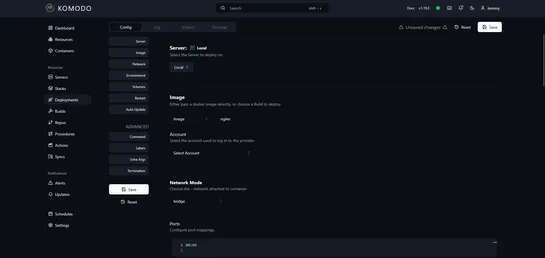
Using Komodo to Run Docker Commands from a Web Interface

Komodo drops a slick browser-based UI for wrangling Docker - containers, images, networks, and Compose stacks - through a real-time visual dashboard. Think native Docker meets one-click redeploys, host curation via agents, and reusable container configs that don’t make you hate YAML... read more  

Using Komodo to Run Docker Commands from a Web Interface
Link
@kaptain shared a link, 6 months, 3 weeks ago
FAUN.dev()

Amazon Elastic Kubernetes Service gets independent affirmation of its zero operator access design

Amazon EKS just went full Fort Knox. It now runs on azero operator accessmodel - meaning even AWS can’t peek inside your Kubernetes control or data plane. The setup leans on theNitro System’s confidential compute,guarded APIs, andmulti-party approval pipelines. NCC Group also kicked the tires and ga.. read more  

Link
@kaptain shared a link, 6 months, 3 weeks ago
FAUN.dev()

KServe becomes a CNCF incubating project

KServe is upgrading.The CNCF pulled it into incubation, backing it astheKubernetes-native way to serve both generative and predictive AI. Translation: it’s not a side project anymore - it’s core infra. Version 0.15 steps up with tighter integrations across the stack:vLLM,Envoy Gateway,llm-d,Knative,.. read more  

KServe becomes a CNCF incubating project
Link
@kaptain shared a link, 6 months, 3 weeks ago
FAUN.dev()

Streamline Complex AI Inference on Kubernetes with NVIDIA Grove

NVIDIA releasedGrove, a Kubernetes API baked intoDynamo, to wrangle the chaos of modern AI inference. It pulls apart your big, messy model into clean, discrete chunks - prefill, decode, routing - and runs them like a single, orchestrated act. The trick?Custom hierarchical resources. They let Grove h.. read more  

Link
@kaptain shared a link, 6 months, 3 weeks ago
FAUN.dev()

Prepare for the Kubernetes Administrator Certification and Pass

A tight 2-hour YouTube course built for theCKA examgrind. It's all real-world tasks: cluster setup, upgrades, troubleshooting. No fluff, just shell commands and Kubernetes in action. It walks through the gritty bits:etcdbackup and restore, node affinity, tolerations, and how to set upIngresslike som.. read more  

Prepare for the Kubernetes Administrator Certification and Pass
Link
@kala shared a link, 6 months, 3 weeks ago
FAUN.dev()

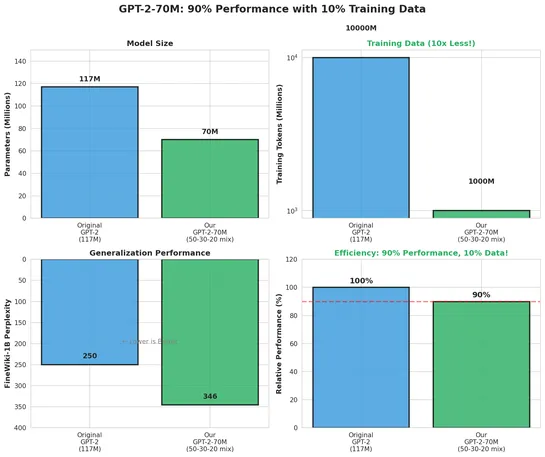
The 1 Billion Token Challenge: Finding the Perfect Pre-training Mix

Researchers squeezed GPT-2-class performance out of a model trained on just1 billion tokens- 10× less data - by dialing in a sharp dataset mix:50% finePDFs, 30% DCLM-baseline, 20% FineWeb-Edu. Static mixing beat curriculum strategies. No catastrophic forgetting. No overfitting. And it hit90%+of GPT-.. read more  

The 1 Billion Token Challenge: Finding the Perfect Pre-training Mix
Link
@kala shared a link, 6 months, 3 weeks ago
FAUN.dev()

Jensen Huang's Stark Warning: China's 1 Million AI Workers vs America's 20,000

Nvidia CEO Jensen Huang, in some leaked comments, didn’t mince words: U.S. export bans aren’t hobbling China’s AI game - they’re fueling it. He pointed to Huawei’s 910C chip edging close to H100 territory, a forecast putting China ahead in AI compute by 2027, and a fast-growing local chip industry n.. read more  

Jensen Huang's Stark Warning: China's 1 Million AI Workers vs America's 20,000
Grafana Tempo is a distributed tracing backend built for massive scale and low operational overhead. Unlike traditional tracing systems that depend on complex databases, Tempo uses object storage—such as S3, GCS, or Azure Blob Storage—to store trace data, making it highly cost-effective and resilient. Tempo is part of the Grafana observability stack and integrates natively with Grafana, Prometheus, and Loki, enabling unified visualization and correlation across metrics, logs, and traces.

Technically, Tempo supports ingestion from major tracing protocols including Jaeger, Zipkin, OpenCensus, and OpenTelemetry, ensuring easy interoperability. It features TraceQL, a domain-specific query language for traces inspired by PromQL and LogQL, allowing developers to perform targeted searches and complex trace-based analytics. The newer TraceQL Metrics capability even lets users derive metrics directly from trace data, bridging the gap between tracing and performance analysis.

Tempo’s Traces Drilldown UI further enhances usability by providing intuitive, queryless analysis of latency, errors, and performance bottlenecks. Combined with the tempo-cli and tempo-vulture tools, it delivers a full suite for trace collection, verification, and debugging.

Built in Go and following OpenTelemetry standards, Grafana Tempo is ideal for organizations seeking scalable, vendor-neutral distributed tracing to power observability at cloud scale.