Join us

ContentUpdates and recent posts about Grafana Tempo..
Link
@kaptain shared a link, 1 month, 2 weeks ago
FAUN.dev()

Running Agents on Kubernetes with Agent Sandbox

Agent Sandbox unveils the Sandbox CRD to map long-lived, singleton AI agents onto Kubernetes. It adds stable identity and lifecycle primitives. It supports runtimes like gVisor and Kata Containers. It enables zero-scale resume. It includes SandboxWarmPool with SandboxClaim and SandboxTemplate to kil.. read more  

Link
@kaptain shared a link, 1 month, 2 weeks ago
FAUN.dev()

Securing Production Debugging in Kubernetes

The post prescribes an on-demand SSH gateway pod. It usesshort-lived, identity-bound credentialsandKubernetes RBACto grant scoped, auditable debug sessions. It recommends anaccess brokerthat binds Roles to groups, issues ephemeral certs and OpenSSH user certificates, rotates CAs, enforces command-le.. read more  

Link
@kaptain shared a link, 1 month, 2 weeks ago
FAUN.dev()

The Invisible Rewrite: Modernizing the Image Promoter

SIG Release rewrote theimage promotercore. It cut 20% of the code. It added apipeline engine,cosignsigning, andSLSAattestations. Signing now sits separate fromsignature replication. Registry reads run in parallel - plan time dropped ~20m → ~2m. Per-request timeouts, retries, and HTTP connection reus.. read more  

Link
@kaptain shared a link, 1 month, 2 weeks ago
FAUN.dev()

Kubernetes v1.36 - Sneak Peek

Kubernetes v1.36 (Apr 22, 2026) enablesHPAScaleToZeroby default. That lets theHPAuseminReplicas: 0and read only controller-owned pod metrics. The release swaps long-lived image-pull secrets forephemeral KSA tokens. It deprecatesIPVS, retiresIngress NGINX, and aligns withcontainerd 2.x. The release f.. read more  

Link
@kala shared a link, 1 month, 2 weeks ago
FAUN.dev()

OpenAI to acquire Astral

OpenAI will acquire Astral, pending regulatory close. It will fold Astral's open-source Python tools —uv,Ruff, andty— intoCodex. Teams will integrate the tools.Codexwill plan changes, modify codebases, run linters and formatters, and verify results acrossPythonworkflows. System shift:This injects pr.. read more  

OpenAI to acquire Astral
Link
@kala shared a link, 1 month, 2 weeks ago
FAUN.dev()

OpenClaw Tutorial: AI Stock Agent with Exa and Milvus

An autonomous market agent ships. OpenClaw handles orchestration. Exa returns structured, semantic web results. Milvus (or Zilliz Cloud) stores vectorized trade memory. A 30‑minute Heartbeat keeps it running. Custom Skills load on demand. Recalls query 1536‑dim embeddings. Entire stack runs for abou.. read more  

OpenClaw Tutorial: AI Stock Agent with Exa and Milvus
Link
@kala shared a link, 1 month, 2 weeks ago
FAUN.dev()

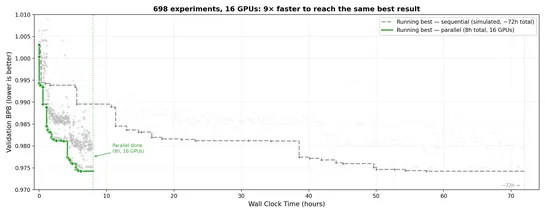
Scaling Karpathy's Autoresearch: What Happens When the Agent Gets a GPU Cluster

A team pointedClaude Codeatautoresearchand spun up 16 Kubernetes GPUs. The setup ran ~910 experiments in 8 hours.val_bpbdropped from 1.003 to 0.974 (2.87%). Throughput climbed ~9×. Parallel factorial waves revealedAR=96as the best width. The pipeline usedH100for cheap screening andH200for validation.. read more  

Scaling Karpathy's Autoresearch: What Happens When the Agent Gets a GPU Cluster
Link
@kala shared a link, 1 month, 2 weeks ago
FAUN.dev()

OpenClaw is a great movement, but dead product. what's next?

After talking to 50+ individuals experimenting with OpenClaw, it's clear that while many have tried it and even explored it for more than 3 days, only around 10% have attempted automating real actions. However, most struggle to maintain these automations at a production level due to challenges with .. read more  

Link
@kala shared a link, 1 month, 2 weeks ago
FAUN.dev()

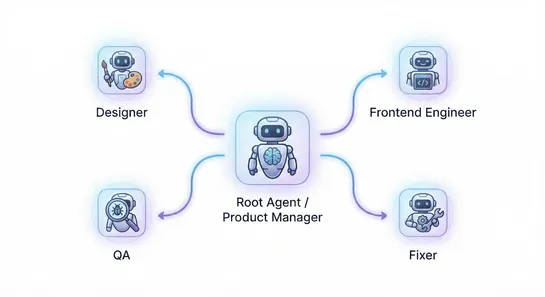
Building AI Teams with Sandboxes & Agent

Docker Agentruns teams of specialized AI agents. The agents split work: design, code, test, fix. Models and toolsets are configurable. Docker Sandboxesisolate each agent in a per-workspacemicroVM. The sandbox mounts the host project path, strips host env vars, and limits network access. Tooling move.. read more  

Building AI Teams with Sandboxes & Agent
Link
@devopslinks shared a link, 1 month, 2 weeks ago
FAUN.dev()

How we fixed Postgres connection pooling on serverless with PgDog

A startup swappedSupavisorandPgBouncerforPgDogonEKS. The swap stopped serverless deploy connection spikes. A multi-threaded, colocated pooler handled the bursty traffic. PgDogneeded fixes forPrismaprepared-statement handling. The team shipped those.PgDognow exports metrics viaOpenMetricstoPrometheus.. read more  

How we fixed Postgres connection pooling on serverless with PgDog
Grafana Tempo is a distributed tracing backend built for massive scale and low operational overhead. Unlike traditional tracing systems that depend on complex databases, Tempo uses object storage—such as S3, GCS, or Azure Blob Storage—to store trace data, making it highly cost-effective and resilient. Tempo is part of the Grafana observability stack and integrates natively with Grafana, Prometheus, and Loki, enabling unified visualization and correlation across metrics, logs, and traces.

Technically, Tempo supports ingestion from major tracing protocols including Jaeger, Zipkin, OpenCensus, and OpenTelemetry, ensuring easy interoperability. It features TraceQL, a domain-specific query language for traces inspired by PromQL and LogQL, allowing developers to perform targeted searches and complex trace-based analytics. The newer TraceQL Metrics capability even lets users derive metrics directly from trace data, bridging the gap between tracing and performance analysis.

Tempo’s Traces Drilldown UI further enhances usability by providing intuitive, queryless analysis of latency, errors, and performance bottlenecks. Combined with the tempo-cli and tempo-vulture tools, it delivers a full suite for trace collection, verification, and debugging.

Built in Go and following OpenTelemetry standards, Grafana Tempo is ideal for organizations seeking scalable, vendor-neutral distributed tracing to power observability at cloud scale.