Join us

ContentUpdates and recent posts about GPT..
News FAUN.dev() Team
@kala shared an update, 5 months ago
FAUN.dev()

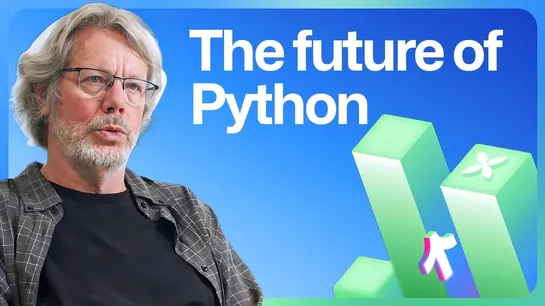
Guido van Rossum: “AI Should Adapt to Python - Not the Other Way Around”

Python TypeScript

Guido van Rossum discussed Python's enduring relevance in AI and education at GitHub's Octoverse, emphasizing its clarity, accessibility, and community-driven growth despite TypeScript's rise.

Guido van Rossum: “AI Should Adapt to Python - Not the Other Way Around”
Story Palark Team
@shurup shared a post, 5 months ago
@palark

Kubernetes 1.35 new alpha features

Kubernetes

The next Kubernetes release, v1.35, is scheduled for December 17th. It should bring 15 new Alpha features, including the following ones: - Gang scheduling support - Mutable PersistentVolume node affinity - Restart all containers on container exits - Consider terminating Pods in Deployments - CSI vol..

Kubernetes v1.35 release
News FAUN.dev() Team
@varbear shared an update, 5 months ago
FAUN.dev()

NordPass: Worst Passwords of 2025 and How Each Generation Compares

NordPass's latest research reveals the ongoing global reliance on weak passwords like "123456" and "password," despite slight improvements in security practices.

NordPass: Worst Passwords of 2025 and How Each Generation Compares
News FAUN.dev() Team
@kaptain shared an update, 5 months ago
FAUN.dev()

Kubernetes v1.35: A Deep Dive Into the Biggest Changes Before the December 17 Release

Kubernetes containerd

Kubernetes v1.35 release removes cgroup v1 and containerd v1.X support, urging admins to migrate to newer versions and adopt enhancements like in-place Pod updates and OCI image volume support.

Kubernetes v1.35: A Deep Dive Into the Biggest Changes Before the December 17 Release
News FAUN.dev() Team
@devopslinks shared an update, 5 months ago
FAUN.dev()

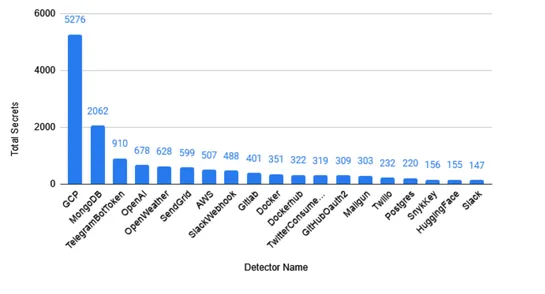
Researcher Scans 5.6M GitLab Repositories, Uncovers 17,000 Live Secrets and a Decade of Exposed Credentials

TruffleHog AWS Lambda GitLab GitLab CI/CD Atlassian Bitbucket

A security research project led by Luke Marshall scanned 5.6 million GitLab repositories, uncovering over 17,000 live secrets and earning $9,000 in bounties, highlighting GitLab's larger scale and higher exposure risk compared to Bitbucket.

Researcher Scans 5.6M GitLab Repositories, Uncovers 17,000 Live Secrets and a Decade of Exposed Credentials
 Activity
@devopslinks added a new tool TruffleHog , 5 months ago.
News FAUN.dev() Team
@devopslinks shared an update, 5 months ago
FAUN.dev()

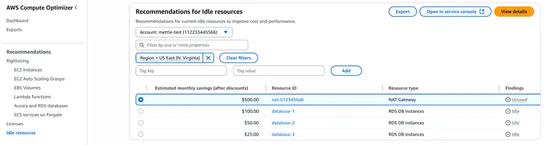
AWS Optimizer Targets Unused NAT Gateways for Cost Savings

Amazon CloudWatch Amazon Web Services

AWS Compute Optimizer now helps identify unused NAT Gateways to boost cost savings by analyzing traffic activity and route table associations.

AWS Optimizer Targets Unused NAT Gateways for Cost Savings
News FAUN.dev() Team
@devopslinks shared an update, 5 months ago
FAUN.dev()

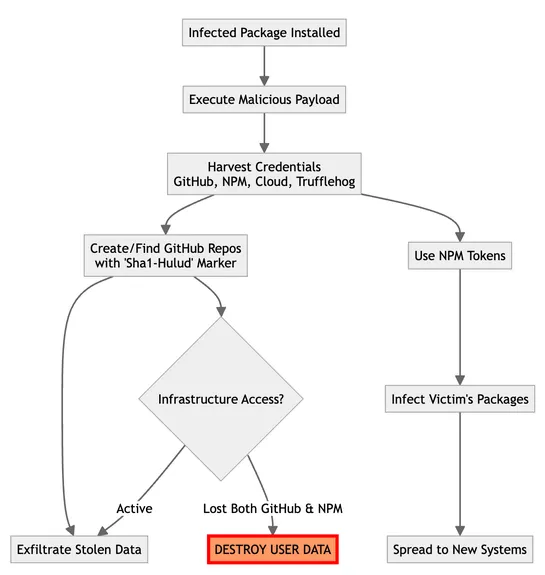
GitLab Uncovers Massive npm Attack - Developers on High Alert

npm Amazon Web Services GitLab GitHub

GitLab's team discovers a large-scale npm supply chain attack with malware that spreads through npm packages, threatening data destruction if disrupted.

GitLab Uncovers Massive npm Attack - Developers on High Alert
 Activity
@varbear added a new tool npm , 5 months ago.
 Activity
@devopslinks added a new tool GitHub , 5 months ago.
GPT (Generative Pre-trained Transformer) is a deep learning model developed by OpenAI that has been pre-trained on massive amounts of text data using unsupervised learning techniques. GPT is designed to generate human-like text in response to prompts, and it is capable of performing a variety of natural language processing tasks, including language translation, summarization, and question-answering. The model is based on the transformer architecture, which allows it to handle long-range dependencies and generate coherent, fluent text. GPT has been used in a wide range of applications, including chatbots, language translation, and content generation.

GPT is a family of language models that have been trained on large amounts of text data using a technique called unsupervised learning. The model is pre-trained on a diverse range of text sources, including books, articles, and web pages, which allows it to capture a broad range of language patterns and styles. Once trained, GPT can be fine-tuned on specific tasks, such as language translation or question-answering, by providing it with task-specific data.

One of the key features of GPT is its ability to generate coherent and fluent text that is indistinguishable from human-generated text. This is achieved by training the model to predict the next word in a sentence given the previous words. GPT also uses a technique called attention, which allows it to focus on relevant parts of the input text when generating a response.

GPT has become increasingly popular in recent years, particularly in the field of natural language processing. The model has been used in a wide range of applications, including chatbots, content generation, and language translation. GPT has also been used to create AI-generated stories, poetry, and even music.