Join us

ContentUpdates and recent posts about GPT-5.4..
Link
@devopslinks shared a link, 6 months ago
FAUN.dev()

CVE-2025-49844 - The Redis CVSS 10.0 vulnerability and how we responded

Report URI closed the door on Redis CVE-2025-49844 fast. They rolled out ACL-based command blocks and jumped to Redis8.2.2, now running on a freshRedis Sentinel-based HA setup. To prove the fix stuck, they ran command counter checks and layered in enforced blocking rules—then pushed it all out fleet.. read more  

CVE-2025-49844 - The Redis CVSS 10.0 vulnerability and how we responded
Link
@devopslinks shared a link, 6 months ago
FAUN.dev()

Migrating to Hetzner - We saved 76% on our cloud bills

DigitalSociety ditched AWS and DigitalOcean. Swapped the comfort of cloud for full control onHetzner, built onTalos Linux. PostgreSQL? Now running onCloudNativePG. Traffic flows throughIngress NGINXwithExternalDNShandling the names. The payoff: monthly costs dropped from $449.50 to under $100. ARM v.. read more  

Migrating to Hetzner - We saved 76% on our cloud bills
Link
@devopslinks shared a link, 6 months ago
FAUN.dev()

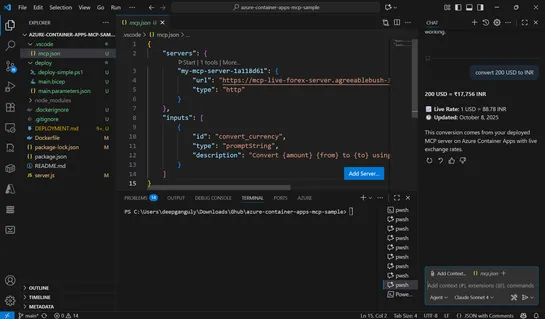
Hosting Remote MCP Server on Azure Container Apps (ACA) using Streamable HTTP transport mechanism

A fresh setup shows how to runModel Context Protocol (MCP) servers over HTTPinsideAzure Container Apps—stateless, serverless, and ready for real-time jobs like live forex conversion. It pipes in a live API fallback, adds caching, and speaksJSON-RPC 2.0overPOST. You can spin it up withBicep templates.. read more  

Hosting Remote MCP Server on Azure Container Apps (ACA) using Streamable HTTP transport mechanism
Link
@kaptain shared a link, 6 months ago
FAUN.dev()

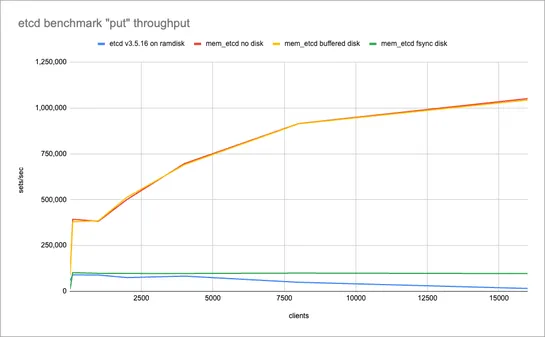
A fully functional Kubernetes cluster with 1 million active nodes.

Pushing Kubernetes to 1M nodes isn’t just hardware—it's architectural judo. Networking flips to exclusive IPv6.Less chatter, more breathing room. etcd hits a wall.Write throughput stalls at scale, so they swap it out. Entermem_etcd, a Rust-built replacement pushing over 1M buffered writes per second.. read more  

A fully functional Kubernetes cluster with 1 million active nodes.
Link
@kaptain shared a link, 6 months ago
FAUN.dev()

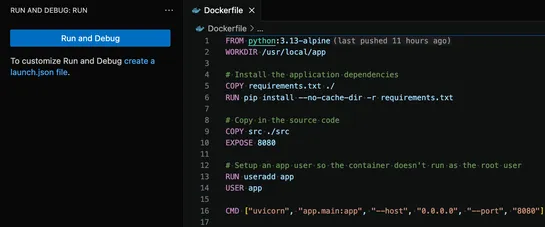
Debug Builds with Visual Studio Code

Docker droppedBuildx debuggingfor VS Code. Set breakpoints in your Dockerfiles. Peek into image layers. Even jump into an interactive shell mid-build. It runs on theDebug Adapter Protocol, so editors likeNeovimandJetBrains IDEscan join the party too... read more  

Debug Builds with Visual Studio Code
Link
@kaptain shared a link, 6 months ago
FAUN.dev()

How to Allocate Kubernetes Resource Ownership

Resource ownership in Kubernetes isn’t just a nice-to-have anymore—it’s turning into table stakes. Teams are usingnamespaces, RBAC, labels, quotas, and admission controllersto draw clear lines around who owns what, how much they can use, and what rules they follow. Tools likeKyverno,LimitRanges, and.. read more  

How to Allocate Kubernetes Resource Ownership
Link
@kaptain shared a link, 6 months ago
FAUN.dev()

Hardened Images: crafted by humans, protected by AI

Docker just wired anAI guardrailstraight into its Hardened Image (DHI) pipeline. It scans upstream diffs, catches regressions before they ship, and stops bad logic in its tracks. Case in point: it flagged a logic bug that slipped past the usual coding copilots. A real fix landed upstream. Win for cu.. read more  

Hardened Images: crafted by humans, protected by AI
Link
@kaptain shared a link, 6 months ago
FAUN.dev()

Connect Codex to MCP Servers via MCP Toolkit

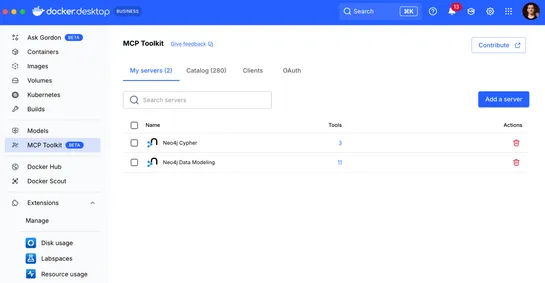
OpenAI Codex just leveled up. It now hooks into Docker’sModel Context Protocol (MCP) Toolkit, which means it can tap directly into 200+ infrastructure tools—likeNeo4j graph databases—as if they were built-in features. With MCP, Codex doesn’t just code. It runs containers, spins up data models, eats .. read more  

Connect Codex to MCP Servers via MCP Toolkit
Link
@kaptain shared a link, 6 months ago
FAUN.dev()

Announcing Istio 1.27.2

Istio 1.27.2 locks down TLS secret access in Gateway API mode. Now, both the namespace and service account have to match. No more half-matching your way in. It also drops the install order dependency betweenistioctl’s pilot and CNI. You can now install those in whatever order your chaos-loving soul .. read more  

Announcing Istio 1.27.2
News FAUN.dev() Team
@kaptain shared an update, 6 months ago
FAUN.dev()

Mirantis Launches Pelagia for Enhanced Ceph Management on Kubernetes

Rook Pelagia Kubernetes Ceph

Mirantis introduces Pelagia, an open source tool to streamline Ceph storage management on Kubernetes, advancing automation and integration with GitOps workflows.

GPT-5.4 is OpenAI’s latest frontier AI model designed to perform complex professional and technical work more reliably. It combines advances in reasoning, coding, tool use, and long-context understanding into a single system capable of handling multi-step workflows across software environments. The model builds on earlier GPT-5 releases while integrating the strong coding capabilities previously introduced with GPT-5.3-Codex.

One of the defining features of GPT-5.4 is its ability to operate as part of agent-style workflows. The model can interact with tools, APIs, and external systems to complete tasks that extend beyond simple text generation. It also introduces native computer-use capabilities, allowing AI agents to operate applications using keyboard and mouse commands, screenshots, and browser automation frameworks such as Playwright.

GPT-5.4 supports context windows of up to one million tokens, enabling it to process and reason over very large documents, long conversations, or complex project contexts. This makes it suitable for tasks such as analyzing codebases, generating technical documentation, working with large spreadsheets, or coordinating long-running workflows. The model also introduces a feature called tool search, which allows it to dynamically retrieve tool definitions only when needed. This reduces token usage and makes it more efficient to work with large ecosystems of tools, including environments with dozens of APIs or MCP servers.

In addition to improved reasoning and automation capabilities, GPT-5.4 focuses on real-world productivity tasks. It performs better at generating and editing spreadsheets, presentations, and documents, and it is designed to maintain stronger context across longer reasoning processes. The model also improves factual accuracy and reduces hallucinations compared with previous versions.

GPT-5.4 is available across OpenAI’s ecosystem, including ChatGPT, the OpenAI API, and Codex. A higher-performance variant, GPT-5.4 Pro, is also available for users and developers who require maximum performance for complex tasks such as advanced research, large-scale automation, and demanding engineering workflows. Together, these capabilities position GPT-5.4 as a model aimed not just at conversation, but at executing real work across software systems.