Join us

ContentUpdates and recent posts about GPT-5.4..
Link
@kaptain shared a link, 5 months, 1 week ago
FAUN.dev()

Manage Secrets of your Kubernetes Platform at Scale with GitOps

Learn how to manage secrets with the External Secrets Operator and plug it into Argo CD to power your Internal Developer Platform without manual management, enabling self-service secrets management and secure connections between workload clusters and the control plane. With a chain of trust between .. read more  
Link
@kaptain shared a link, 5 months, 1 week ago
FAUN.dev()

Kubernetes with Buildkite: faster, simpler, and ready for scale

Buildkite just added a major revamp of its Kubernetes Agent Stack. Highlights:REST-based config,leaner K8s objects, andhardened security defaults. It handlestens of thousands of concurrent jobswithout breaking a sweat. Shared environment vars cut down pod config noise. Error messages come with full .. read more  

Kubernetes with Buildkite: faster, simpler, and ready for scale
Link
@kaptain shared a link, 5 months, 1 week ago
FAUN.dev()

How Airbnb Runs Distributed Databases on Kubernetes at Scale

Airbnb runs distributed databases across multiple Kubernetes clusters - each tied to its own AWS Availability Zone. That setup isolates failures down to individual pods and keeps the whole system highly available. They built a custom Kubernetes operator and leaned on EBS volumes with PVCs to smooth .. read more  

How Airbnb Runs Distributed Databases on Kubernetes at Scale
Link
@kaptain shared a link, 5 months, 1 week ago
FAUN.dev()

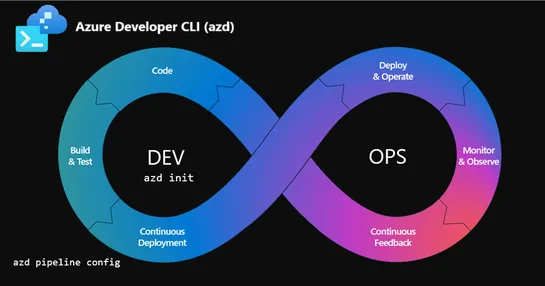
Azure Developer CLI: Azure Container Apps Dev-to-Prod Deployment with Layered Infrastructure

Azure Developer CLI v1.20.0 leveled up Container Apps. Build and push are now split from deploy, so you can finally "build once, deploy everywhere" and mean it. It adds layered infrastructure support, lets you share anAzure Container Registryacross environments, and handles resource dependency seque.. read more  

Azure Developer CLI: Azure Container Apps Dev-to-Prod Deployment with Layered Infrastructure
Link
@kaptain shared a link, 5 months, 1 week ago
FAUN.dev()

Zero-Trust Kubernetes: Enforcing Security & Multi-Tenancy with Custom Admission Webhooks

Tools likeOPA Gatekeeper,Kyverno, and custom webhooks slam the brakes on sketchy workloadsbeforethey ever spin up. These controllers aren’t just gatekeepers - they’re enforcers. They check pod configs, block unverified images, and apply live, scoped policies like tenant-awarenetwork isolationandreso.. read more  

Link
@kala shared a link, 5 months, 1 week ago
FAUN.dev()

You Should Write An Agent

Building LLM agents - essentially looping stateless models through tools - looks simple. Until it isn't. Peel back the layers, and you hit real architectural puzzles:context engineering, agent loops, sub-agent choreography, execution constraints... read more  

You Should Write An Agent
Link
@kala shared a link, 5 months, 1 week ago
FAUN.dev()

AI Broke Interviews

AI has revolutionized technical interviews, blurring the line between genuine skill and cheating with perfect solutions and polished answers. In response, companies are shifting back to in-person interviews for real-time cognitive transparency, authenticity constraints, realistic collaboration signa.. read more  

Link
@kala shared a link, 5 months, 1 week ago
FAUN.dev()

AI's Dial-Up Era

AI's reshaping jobs - but not evenly. Some industries will feel the squeeze faster than others. It all comes down to a race: productivity vs. demand. History's playbook? Think textiles, steel, autos. Automation boosted output. Jobs stuck around - as long as demand kept growing. Once markets topped o.. read more  

AI's Dial-Up Era
Link
@kala shared a link, 5 months, 1 week ago
FAUN.dev()

How I Use Every Claude Code Feature

Claude Code isn't just generating responses anymore - it's gearing up to run projects. The new direction turns it into a programmable, auditable agent runtime. Think custom hooks, restart logic, planning workflows, GitHub Actions, and subagent delegation tricks like the “Master-Clone” pattern. At th.. read more  

How I Use Every Claude Code Feature
Link
@devopslinks shared a link, 5 months, 1 week ago
FAUN.dev()

Why I Like Using Docker Compose in Production

A decade in, and this dev still rides with Docker Compose for production. Why? It just works. Clean deployments, solid uptime, same setup everywhere. No yak-shaving. It shines when you pair it with Git hooks for hands-off, zero-downtime deploys. No need to drag in Kubernetes unless you’re actually w.. read more  

Why I Like Using Docker Compose in Production
GPT-5.4 is OpenAI’s latest frontier AI model designed to perform complex professional and technical work more reliably. It combines advances in reasoning, coding, tool use, and long-context understanding into a single system capable of handling multi-step workflows across software environments. The model builds on earlier GPT-5 releases while integrating the strong coding capabilities previously introduced with GPT-5.3-Codex.

One of the defining features of GPT-5.4 is its ability to operate as part of agent-style workflows. The model can interact with tools, APIs, and external systems to complete tasks that extend beyond simple text generation. It also introduces native computer-use capabilities, allowing AI agents to operate applications using keyboard and mouse commands, screenshots, and browser automation frameworks such as Playwright.

GPT-5.4 supports context windows of up to one million tokens, enabling it to process and reason over very large documents, long conversations, or complex project contexts. This makes it suitable for tasks such as analyzing codebases, generating technical documentation, working with large spreadsheets, or coordinating long-running workflows. The model also introduces a feature called tool search, which allows it to dynamically retrieve tool definitions only when needed. This reduces token usage and makes it more efficient to work with large ecosystems of tools, including environments with dozens of APIs or MCP servers.

In addition to improved reasoning and automation capabilities, GPT-5.4 focuses on real-world productivity tasks. It performs better at generating and editing spreadsheets, presentations, and documents, and it is designed to maintain stronger context across longer reasoning processes. The model also improves factual accuracy and reduces hallucinations compared with previous versions.

GPT-5.4 is available across OpenAI’s ecosystem, including ChatGPT, the OpenAI API, and Codex. A higher-performance variant, GPT-5.4 Pro, is also available for users and developers who require maximum performance for complex tasks such as advanced research, large-scale automation, and demanding engineering workflows. Together, these capabilities position GPT-5.4 as a model aimed not just at conversation, but at executing real work across software systems.