Join us

ContentUpdates and recent posts about GPT-5.4..
Link
@kaptain shared a link, 4 months, 2 weeks ago
FAUN.dev()

The Grafana trust problem

Grafana’s been busy clearing the shelves.Grafana Agent,Agent Flow, andOnCall? All deprecated. The replacement:Grafana Alloy- a one-stop observability agent that handles logs, metrics, traces, and OTEL without flinching. Meanwhile,Mimir 3.0ships with a Kafka-powered ingestion pipeline. More scalabili.. read more  

Link
@kaptain shared a link, 4 months, 2 weeks ago
FAUN.dev()

Turning Kubernetes Last Access to Kubernetes Least Access Using KIEMPossible

KIEMPossible is a new open-source tool for Kubernetes entitlement cleanup. It maps out who has access to what - roles, entities, permissions - and shows how those are actually used across your clusters. Think of it as a permission microscope for AKS, EKS, GKE, and even the DIY K8s crowd. It breaks d.. read more  

Turning Kubernetes Last Access to Kubernetes Least Access Using KIEMPossible
Link
@kaptain shared a link, 4 months, 2 weeks ago
FAUN.dev()

Kubernetes Configuration Good Practices

Stripped down and sharp, the blog lays out Kubernetes config best practices: keep YAML manifests in version control, use Deployments (not raw Pods), and label like you mean it - semantically, not just alphabet soup. It digs into sneaky pain points too, like how YAML mangles booleans (yes≠true), and .. read more  

Link
@kaptain shared a link, 4 months, 2 weeks ago
FAUN.dev()

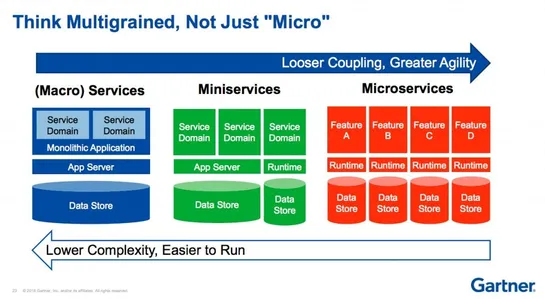
You Want Microservices—But Do You Need Them?

Amazon Prime Video ditched its pricey microservices maze and rebuilt as asingle-process monolith, cutting ops costs by 90%. No big press release. Just results. Same move from Twilio Segment. And Shopify. Both pulled their tangled systems back intomodular monoliths- cleaner, faster, easier to test, a.. read more  

You Want Microservices—But Do You Need Them?
Link
@kala shared a link, 4 months, 2 weeks ago
FAUN.dev()

How I Built a 100% Offline “Second Brain” for Engineering Docs using Docker & Llama 3 (No OpenAI)

Senior Automation Engineer built an offline RAG system for technical documents using Ollama, Llama 3, and ChromaDB in a Dockerized microservices architecture. The system enables efficient retrieval and generation of information from PDFs with a streamlined UI. The deployment package, including compl.. read more  

Link
@kala shared a link, 4 months, 2 weeks ago
FAUN.dev()

How to Evaluate LLMs Without Opening Your Wallet

A new mock-based framework lets QA and automation folks stress-test LLM outputs - no API calls, no surprise charges. It runs entirely local, usingpytest fixtures, structured test flows, and JSON schema checks to keep things tight. Test logic stays modular. Cross-validation’s baked in. And if you nee.. read more  

Link
@kala shared a link, 4 months, 2 weeks ago
FAUN.dev()

I tested ChatGPT’s backend API using RENTGEN, and found more issues than expected

A closer look at OpenAI’s API uncovers some shaky ground: misconfiguredCORS headers, missingX-Frame-Options, noinput validation, and borkedHTTP status handling. Large uploads? Boom..crash!CORS preflightrequests? Straight-up denied. So much for smooth browser support... read more  

I tested ChatGPT’s backend API using RENTGEN, and found more issues than expected
Link
@kala shared a link, 4 months, 2 weeks ago
FAUN.dev()

Writing a good CLAUDE.md

Anthropic’s Claude Code now deprioritizes parts of the root context file it sees as irrelevant. It still reads the file every session, but won’t waste cycles on side quests. The message to devs: stop stuffing it with catch-all instructions. Instead, use modular context that unfolds as needed - think.. read more  

Writing a good CLAUDE.md
Link
@kala shared a link, 4 months, 2 weeks ago
FAUN.dev()

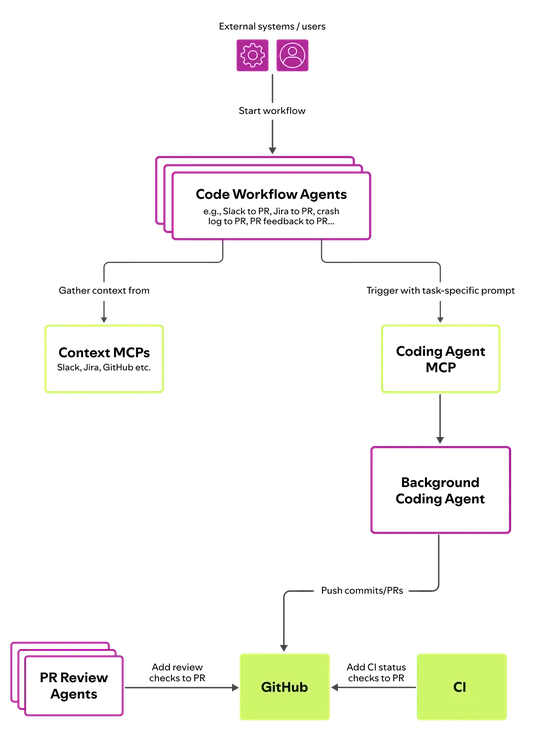
1,500+ PRs Later: Spotify’s Journey with Our Background Coding Agent

Spotify just gave its internal Fleet Management tooling a serious brain upgrade. They've wired inAI coding agentsthat now handle source-to-source transformations across repos - automatically. So far? Over 1,500 AI-generated PRs pushed. Not just lint fixes - these include heavy-duty migrations. They'.. read more  

1,500+ PRs Later: Spotify’s Journey with Our Background Coding Agent
Link
@kala shared a link, 4 months, 2 weeks ago
FAUN.dev()

AI and QE: Patterns and Anti-Patterns

The author shared insights on how AI can be leveraged as a QE and highlighted potential dangers to watch out for, drawing parallels with misuse of positive behaviors or characteristics taken out of context. The post outlined anti-patterns related to automating tasks, stimulating thinking, and tailor.. read more  

GPT-5.4 is OpenAI’s latest frontier AI model designed to perform complex professional and technical work more reliably. It combines advances in reasoning, coding, tool use, and long-context understanding into a single system capable of handling multi-step workflows across software environments. The model builds on earlier GPT-5 releases while integrating the strong coding capabilities previously introduced with GPT-5.3-Codex.

One of the defining features of GPT-5.4 is its ability to operate as part of agent-style workflows. The model can interact with tools, APIs, and external systems to complete tasks that extend beyond simple text generation. It also introduces native computer-use capabilities, allowing AI agents to operate applications using keyboard and mouse commands, screenshots, and browser automation frameworks such as Playwright.

GPT-5.4 supports context windows of up to one million tokens, enabling it to process and reason over very large documents, long conversations, or complex project contexts. This makes it suitable for tasks such as analyzing codebases, generating technical documentation, working with large spreadsheets, or coordinating long-running workflows. The model also introduces a feature called tool search, which allows it to dynamically retrieve tool definitions only when needed. This reduces token usage and makes it more efficient to work with large ecosystems of tools, including environments with dozens of APIs or MCP servers.

In addition to improved reasoning and automation capabilities, GPT-5.4 focuses on real-world productivity tasks. It performs better at generating and editing spreadsheets, presentations, and documents, and it is designed to maintain stronger context across longer reasoning processes. The model also improves factual accuracy and reduces hallucinations compared with previous versions.

GPT-5.4 is available across OpenAI’s ecosystem, including ChatGPT, the OpenAI API, and Codex. A higher-performance variant, GPT-5.4 Pro, is also available for users and developers who require maximum performance for complex tasks such as advanced research, large-scale automation, and demanding engineering workflows. Together, these capabilities position GPT-5.4 as a model aimed not just at conversation, but at executing real work across software systems.