Join us

ContentUpdates and recent posts about GPT-5.4..
Link
@varbear shared a link, 1 month, 3 weeks ago
FAUN.dev()

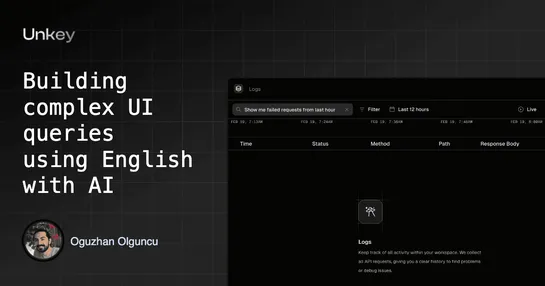
Zen: A Minimalist HTTP Library for Go

Unkey builtZen- a thin HTTP framework on Go'snet/http. It restores precise middleware ordering and lets middleware run after errors to capture the final response. Zen poolsSessionobjects to cut allocations. It emits RFC7807problem+jsonfor tagged domain errors. It runs OpenAPI validation before handl.. read more  
Zen: A Minimalist HTTP Library for Go
Link
@kaptain shared a link, 1 month, 3 weeks ago
FAUN.dev()

It's Not Kubernetes. It Never Was

The complexity in managing Kubernetes clusters is a reflection of the organizational decisions and lack of processes within the teams operating them. The move towards multi-cloud environments without sufficient planning or resources has exacerbated these issues. Platform engineering solutions offer .. read more  

It's Not Kubernetes. It Never Was
Link
@kaptain shared a link, 1 month, 3 weeks ago
FAUN.dev()

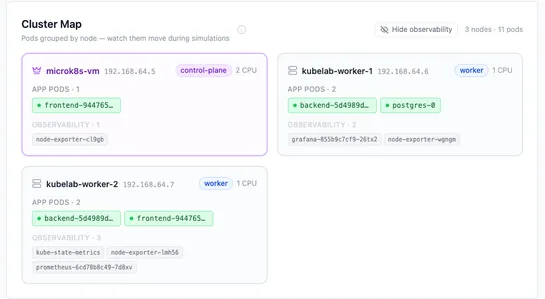
How Does Kubernetes Self-Healing Work? Understand Self-Healing By Breaking a Real Cluster

KubeLab boots a three-nodeKubernetescluster and runs seven failure simulations. It deploysNode.js,Postgres,Prometheus, andGrafana. Then it deletes pods, forcesOOMKill, throttles CPU, drains nodes, and scales aStatefulSetto zero. Each scenario surfaces fixes:readiness probes,PodDisruptionBudget, anti.. read more  

How Does Kubernetes Self-Healing Work? Understand Self-Healing By Breaking a Real Cluster
Link
@kaptain shared a link, 1 month, 3 weeks ago
FAUN.dev()

pg_plan_alternatives: Tracing PostgreSQL’s Query Plan Alternatives using eBPF

The tracer hooks PostgreSQL's optimizer via eBPF. It captures every alternative plan path with cost estimates and flags the chosen plan. A kernel-space eBPF program reads planner structs using DWARF-derived offsets. A user-space collector gathers the data and a visualizer renders plan graphs. eBPF p.. read more  

Link
@kaptain shared a link, 1 month, 3 weeks ago
FAUN.dev()

The great migration: Why every AI platform is converging on Kubernetes

The CNCF survey finds82%of container users runKubernetesin production.66%of GenAI hosts use it for inference. Kubernetes now stitches data processing, distributed training, LLM inference, and autonomous agents viaSpark,Kubeflow,Kueue,KServe, andArmada. GPU sharing and scheduling advanced withMIG, ti.. read more  

The great migration: Why every AI platform is converging on Kubernetes
Link
@kaptain shared a link, 1 month, 3 weeks ago
FAUN.dev()

How WebAssembly plugins simplify Kubernetes extensibility

Helm 4runsWebAssembly (Wasm)plugins to executeWASImodules insideOCIcontainers and VMs.Helmtemplates standardize module lifecycle. The Wasm plugin adds instruction-level sandboxing and Kubernetes segmentation.Helm 4preserves portability acrossx86/ARM. Compared withHelm 3plugins, it shows up to a 40% .. read more  

Link
@kala shared a link, 1 month, 3 weeks ago
FAUN.dev()

Reasoning models struggle to control their chains of thought, and that’s good

OpenAI's paper unveilsCoT-Control: an open-source suite of 13,000+ tasks fromGPQA, MMLU-Pro, HLE, BFCLthat measuresCoTcontrollability. Evaluations on 13 models show compliance at 0.1%-15.4%. Compliance is tiny. Controllability improves with model size. It drops as reasoning chains lengthen and after.. read more  

Reasoning models struggle to control their chains of thought, and that’s good
Link
@kala shared a link, 1 month, 3 weeks ago
FAUN.dev()

The L in "LLM" Stands for Lying

The author arguesLLMschurn out fast, generic answers by remixing low-quality source material. They seed brittle, repetitive code viavibe-coding. The remedy: requiresource attributionand auditable inference to separate originals from forgeries and to reshape model training and deployment. Requiringso.. read more  

The L in "LLM" Stands for Lying
Link
@kala shared a link, 1 month, 3 weeks ago
FAUN.dev()

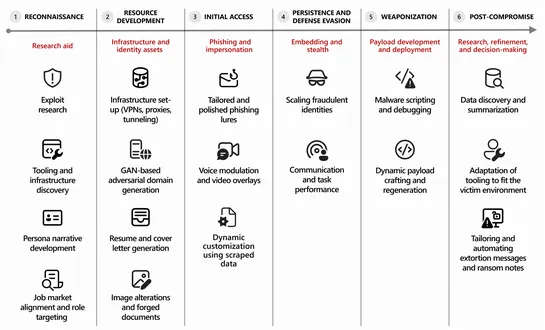
AI as tradecraft: How threat actors operationalize AI

Microsoft observes threat actors operationalizeAIandLLMsacross the cyberattack lifecycle. They accelerate reconnaissance, phishing, malware development, and post‑compromise triage. Actors abusejailbreakingtechniques andGANs. They craft personas, generate look‑alike domains, embed runtime‑adaptive pa.. read more  

AI as tradecraft: How threat actors operationalize AI
Link
@kala shared a link, 1 month, 3 weeks ago
FAUN.dev()

The reason big tech is giving away AI agent frameworks

A catalog of majoragent frameworks: LangGraph, CrewAI, Google ADK, AWS Strands, Microsoft Agent Framework, OpenAI Agents SDK, Mastra, Pydantic AI, Agno. Hyperscalers co-design free SDKs (e.g.,Strands,ADK). They tie those SDKs to metered runtimes -Bedrock,Vertex AI. Revenue shifts to inference and de.. read more  

GPT-5.4 is OpenAI’s latest frontier AI model designed to perform complex professional and technical work more reliably. It combines advances in reasoning, coding, tool use, and long-context understanding into a single system capable of handling multi-step workflows across software environments. The model builds on earlier GPT-5 releases while integrating the strong coding capabilities previously introduced with GPT-5.3-Codex.

One of the defining features of GPT-5.4 is its ability to operate as part of agent-style workflows. The model can interact with tools, APIs, and external systems to complete tasks that extend beyond simple text generation. It also introduces native computer-use capabilities, allowing AI agents to operate applications using keyboard and mouse commands, screenshots, and browser automation frameworks such as Playwright.

GPT-5.4 supports context windows of up to one million tokens, enabling it to process and reason over very large documents, long conversations, or complex project contexts. This makes it suitable for tasks such as analyzing codebases, generating technical documentation, working with large spreadsheets, or coordinating long-running workflows. The model also introduces a feature called tool search, which allows it to dynamically retrieve tool definitions only when needed. This reduces token usage and makes it more efficient to work with large ecosystems of tools, including environments with dozens of APIs or MCP servers.

In addition to improved reasoning and automation capabilities, GPT-5.4 focuses on real-world productivity tasks. It performs better at generating and editing spreadsheets, presentations, and documents, and it is designed to maintain stronger context across longer reasoning processes. The model also improves factual accuracy and reduces hallucinations compared with previous versions.

GPT-5.4 is available across OpenAI’s ecosystem, including ChatGPT, the OpenAI API, and Codex. A higher-performance variant, GPT-5.4 Pro, is also available for users and developers who require maximum performance for complex tasks such as advanced research, large-scale automation, and demanding engineering workflows. Together, these capabilities position GPT-5.4 as a model aimed not just at conversation, but at executing real work across software systems.