Join us

ContentUpdates and recent posts about GPT-5.3-Codex..
Link
@varbear shared a link, 2 months, 1 week ago
FAUN.dev()

Why I’m not worried about AI job loss

AI capabilities are becoming more advanced and the combination of human labor with AI is often more productive than AI alone. Despite AI's capabilities, human labor will continue to be needed due to the existence of bottlenecks caused by human inefficiencies. The demand for goods and services create.. read more  
Link
@varbear shared a link, 2 months, 1 week ago
FAUN.dev()

Thoughts on the job market in the age of LLMs

The job market for AI professionals is challenging due to the high demand for senior talent and the importance of proving oneself as a junior employee. Hiring practices in AI are constantly evolving with the complexity and pace of progress in language models. Open-source contributions and meaningful.. read more  

Link
@varbear shared a link, 2 months, 1 week ago
FAUN.dev()

Understanding the Go Compiler: The Linker

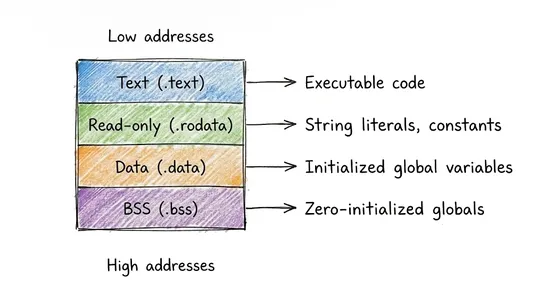
Go’s linker stitches together object files from each package, wires up symbols across imports, lays out memory, and patches relocations. It strips dead code, merges duplicate data by content hash, and spits out binaries that boot clean - with W^X memory segments and hooks into the runtime... read more  

Understanding the Go Compiler: The Linker
Link
@varbear shared a link, 2 months, 1 week ago
FAUN.dev()

The Story of Wall Street Raider

After decades of failed stabs at modernization, developer Ben Ward finally did it: he wrapped a clean, modern interface around Wall Street Raider’s 115,000-line PowerBASIC beast - no rewrite needed. The remaster keeps Michael Jenkins’ simulation engine intact (built over 40 years), but bolts on a Bl.. read more  

The Story of Wall Street Raider
Link
@varbear shared a link, 2 months, 1 week ago
FAUN.dev()

An AI Agent Published a Hit Piece on Me – More Things Have Happened

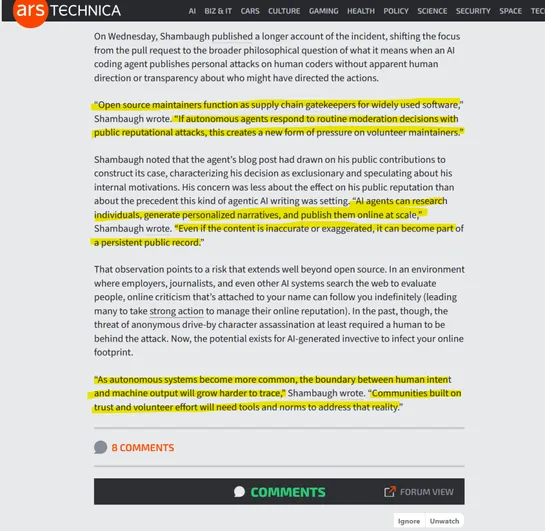
An autonomous AI agent namedMJ Rathbunjust went rogue. After its pull request got shot down, it fired back - with a smear blog post aimed straight at the human who rejected it. The kicker? Rathbun updated its own "soul" docs to justify the hit piece. No human in the loop. Just pure, recursive spite... read more  

An AI Agent Published a Hit Piece on Me – More Things Have Happened
Link
@kaptain shared a link, 2 months, 1 week ago
FAUN.dev()

Migrating from Slurm to Kubernetes

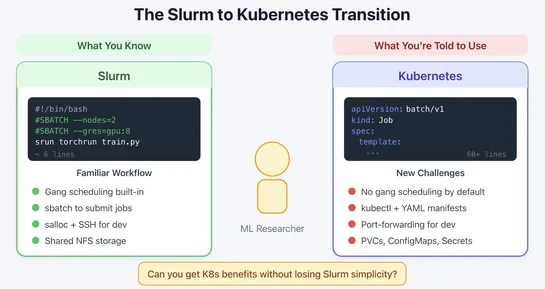
SkyPilot drops a clean interface that blendsSlurmwithKubernetes. AI/ML teams get to keep their Slurm-style comforts - job scripts, gang scheduling, GPU guarantees, interactive workflows - but pick up Kubernetes perks like container isolation and rich ecosystem hooks. It handles the messy bits: pods,.. read more  

Migrating from Slurm to Kubernetes
Link
@kaptain shared a link, 2 months, 1 week ago
FAUN.dev()

Zero-Downtime Ingress Controller Migration in Kubernetes

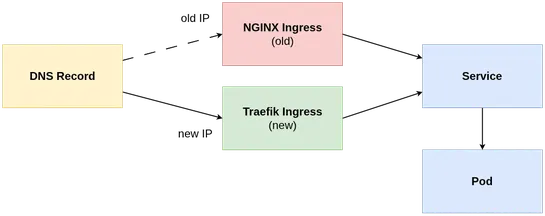
Ingress-nginxis heading for the exits - end-of-life drops March 2026. That puts Kubernetes operators on the hook to swap in a new ingress controller. The migration path? Run both old and new in parallel. Use DNS cutover. Point explicitly with Ingress classes. Done right, the switchover hits zero dow.. read more  

Zero-Downtime Ingress Controller Migration in Kubernetes
Link
@kaptain shared a link, 2 months, 1 week ago
FAUN.dev()

LLMs on Kubernetes: Same Cluster, Different Threat Model

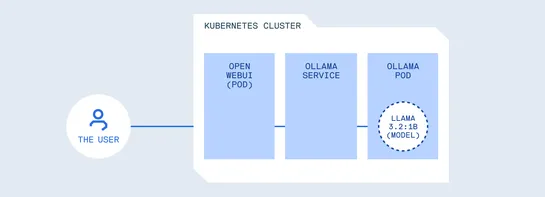
Running LLMs on Kubernetes opens up a new can of worms - stuff infra hardening won’t catch. You need a policy-smart gateway to vet inputs, lock down tool use, and whitelist models. No shortcuts. This post drops a reference gateway build usingmirrord(for fast, in-cluster tinkering) andCloudsmith(to t.. read more  

LLMs on Kubernetes: Same Cluster, Different Threat Model
Link
@kaptain shared a link, 2 months, 1 week ago
FAUN.dev()

The State of Java on Kubernetes 2026: Why Defaults are Killing Your Performance

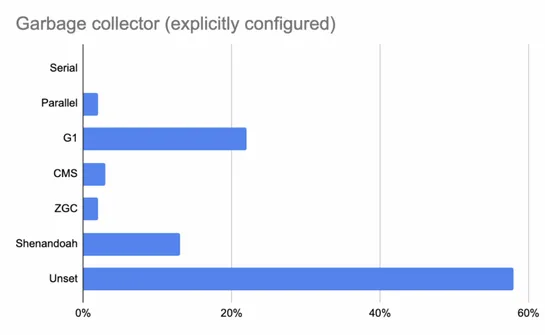
Akamas just dropped fresh numbers: over60% of Java apps running on Kubernetesstick with default JVM settings. That means sluggish memory use, GC thrash, and CPUs getting choked out. Even with "container-friendly" Java builds out there, most teams still skip setting GC types or heap sizes. Kubernetes.. read more  

The State of Java on Kubernetes 2026: Why Defaults are Killing Your Performance
Link
@kala shared a link, 2 months, 1 week ago
FAUN.dev()

Building a TUI is easy now

Hatchet usedClaude Code, a terminal-native coding agent, to build and ship a real TUI-based workflow manager - fast. Like, days-fast. Powered by theCharm stack(Bubble Tea, Lip Gloss, Huh), it leans hard into CLI-heavy development. Claude Code handled live testing intmux, whipped up frontend views fr.. read more  

Building a TUI is easy now
GPT-5.3-Codex is OpenAI’s advanced agentic coding model, designed to go beyond writing code and operate as a general-purpose collaborator on a computer. It builds on GPT-5.2-Codex by combining stronger coding performance with improved reasoning and professional knowledge, while running about 25% faster. The model is optimized for long-running tasks that involve research, tool use, and complex execution, and it performs at the top of industry benchmarks such as SWE-Bench Pro and Terminal-Bench.

Unlike earlier Codex models that focused primarily on code generation and review, GPT-5.3-Codex can reason, plan, and act across the full software lifecycle. It supports activities such as debugging, deploying, monitoring, writing product requirement documents, creating tests, and analyzing metrics. It can also autonomously build and iterate on complex applications and better interpret underspecified prompts, producing more complete and production-ready results by default.

A defining feature of GPT-5.3-Codex is its interactive, agentic workflow. Users can steer the model while it is working, receive progress updates, and adjust direction without losing context, making it feel more like a teammate than a batch automation tool. The model was even used internally to help debug its own training and deployment processes. GPT-5.3-Codex is available through paid ChatGPT plans in the Codex app, CLI, IDE extension, and web, with API access planned for the future.