Join us

ContentUpdates and recent posts about Gemini 3..
Link
@varbear shared a link, 7 months ago
FAUN.dev()

100X Faster: How We Supercharged Netflix Maestro’s Workflow Engine

The Maestro engine has been revamped for jaw-dropping improvement: a speed boost of100Xwith overhead slashed from seconds to milliseconds. The groundbreaking redesign delivers massive performance gains, solving past workflow development hurdles and elevating user experiences sky-high!.. read more  

Link
@varbear shared a link, 7 months ago
FAUN.dev()

How I Reversed Amazon's Kindle Web Obfuscation Because Their App Sucked

A developer cracked Kindle Cloud Reader’s font obfuscation, sidestepping randomized glyph swaps withSVG renderingandSSIM-powered perceptual hashingto rebuild actual EPUBs. Amazon rotates font mappings every five pages, using finicky micro-paths to jam scrapers and derail OCR. It wasn’t enough. Syste.. read more  

How I Reversed Amazon's Kindle Web Obfuscation Because Their App Sucked
Link
@varbear shared a link, 7 months ago
FAUN.dev()

Measuring Engineering Productivity

A former engineering leader lays out a no-nonsense framework for tracking team output without turning into Big Brother. Think:daily Slack updates,weekly GitHub changelogs,tight 1:1s,demo-fueled All-Hands, andauto-verified deploys. It leans onpublic artifacts, not peeking over shoulders - and puts th.. read more  

Measuring Engineering Productivity
Link
@varbear shared a link, 7 months ago
FAUN.dev()

Discussion of the Benefits and Drawbacks of the Git Pre-Commit Hook

Pre-commit hooks catch secrets and fix formatting before bad stuff hits your repo. But if they’re clunky or slow, devs bail. Tools likePre-Commit,Husky, anddevenvare trying to fix that.devenvstands out—hooks are baked right into your Nix env, no extra glue scripts... read more  

Link
@varbear shared a link, 7 months ago
FAUN.dev()

State of AI Report 2025

The 2025 State of AI Report just landed—China’s catching up fast on reasoning and coding. Models like DeepSeek, Qwen, and Kimi are starting to nip at OpenAI’s heels. AI is thinking longer-term now. Reinforced reasoning and rubric-style feedback are pushing models into deeper, more deliberate plannin.. read more  

State of AI Report 2025
Link
@kaptain shared a link, 7 months ago
FAUN.dev()

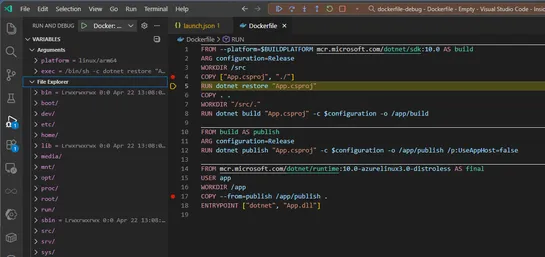
Debugging container image creation with a Dockerfile

Docker just made debugging Dockerfiles inVS Codefeel like real development. With the latest Docker extension and Docker Desktop update, you can now set breakpoints, step through builds with F10/F11, poke at variables, and mess with the container’s file system mid-build... read more  

Debugging container image creation with a Dockerfile
Link
@kaptain shared a link, 7 months ago
FAUN.dev()

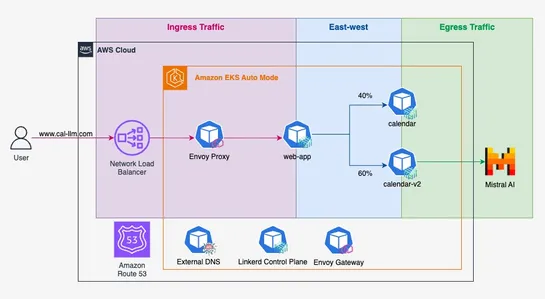
Kubernetes Gateway API in action

The Kubernetes Gateway API leveled up - unifying North-South, East-West, and egress traffic with standard CRDs likeGRPCRoute,HTTPRoute, andReferenceGrant. In a Linkerd world, that means clean, declarative canary releases, granular egress control to outside APIs (say, Mistral AI), and clearer lines b.. read more  

Kubernetes Gateway API in action
Link
@kaptain shared a link, 7 months ago
FAUN.dev()

Bootstrapping Rancher’s RKE2 Kubernetes Cluster on a Podman VM with Cilium CNI and MetalLB LoadBalancer

Running RKE2 with Cilium and MetalLB in a lightweight Podman VM on macOS enables experimentation with Kubernetes. Unique network challenges require SSH port forwarding for service exposure... read more  

Link
@kaptain shared a link, 7 months ago
FAUN.dev()

Exposing Kubernetes Services Without Cloud LoadBalancers: A Practical Guide

Bare-metal Kubernetes just got a cloud-style glow-up. By wiring upMetalLBin layer2 mode with theNGINX ingress controller, the setup exposesLoadBalancer-typeservices—no cloud provider in sight. MetalLB dishes out static, LAN-routable IPs. NGINX funnels external traffic to internalClusterIPservices th.. read more  

Exposing Kubernetes Services Without Cloud LoadBalancers: A Practical Guide
Link
@kaptain shared a link, 7 months ago
FAUN.dev()

7 Common Kubernetes Pitfalls (and How I Learned to Avoid Them)

Seven ways folks trip over Kubernetes - each more avoidable than the last. Top offenses: skippingresource requests/limits, forgettinghealth probes, trustingephemeral logsthat vanish when you need them. Reusing configs across dev and prod? Still a bad idea. Pushing off observability until it’s on fir.. read more  

Gemini 3 is Google’s third-generation large language model family, designed to power advanced reasoning, multimodal understanding, and long-running agent workflows across consumer and enterprise products. It represents a major step forward in factual reliability, long-context comprehension, and tool-driven autonomy.

At its core, Gemini 3 emphasizes low hallucination rates, deep synthesis across large information spaces, and multi-step reasoning. Models in the Gemini 3 family are trained with scaled reinforcement learning for search and planning, enabling them to autonomously formulate queries, evaluate results, identify gaps, and iterate toward higher-quality outputs.

Gemini 3 powers advanced agents such as Gemini Deep Research, where it excels at producing well-structured, citation-rich reports by combining web data, uploaded documents, and proprietary sources. The model supports very large context windows, multimodal inputs (text, images, documents), and structured outputs like JSON, making it suitable for research, finance, science, and enterprise knowledge work.

Gemini 3 is available through Google’s AI platforms and APIs, including the Interactions API, and is being integrated across products such as Google Search, NotebookLM, Google Finance, and the Gemini app. It is positioned as Google’s most factual and research-capable model generation to date.