Join us

ContentUpdates and recent posts about Flask..
Link
@kala shared a link, 5 months, 4 weeks ago
FAUN.dev()

How I Use Every Claude Code Feature

Claude Code isn't just generating responses anymore - it's gearing up to run projects. The new direction turns it into a programmable, auditable agent runtime. Think custom hooks, restart logic, planning workflows, GitHub Actions, and subagent delegation tricks like the “Master-Clone” pattern. At th.. read more  
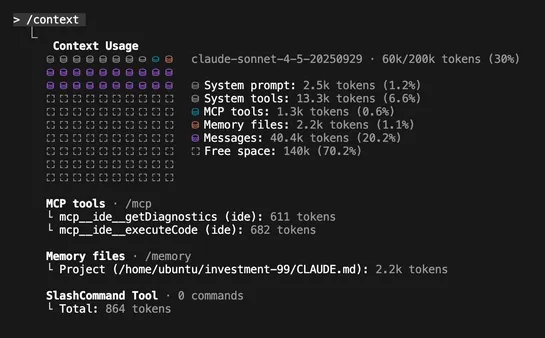
How I Use Every Claude Code Feature
Link
@kala shared a link, 5 months, 4 weeks ago
FAUN.dev()

AI Broke Interviews

AI has revolutionized technical interviews, blurring the line between genuine skill and cheating with perfect solutions and polished answers. In response, companies are shifting back to in-person interviews for real-time cognitive transparency, authenticity constraints, realistic collaboration signa.. read more  

Link
@kala shared a link, 5 months, 4 weeks ago
FAUN.dev()

AI's Dial-Up Era

AI's reshaping jobs - but not evenly. Some industries will feel the squeeze faster than others. It all comes down to a race: productivity vs. demand. History's playbook? Think textiles, steel, autos. Automation boosted output. Jobs stuck around - as long as demand kept growing. Once markets topped o.. read more  

AI's Dial-Up Era
Link
@devopslinks shared a link, 5 months, 4 weeks ago
FAUN.dev()

Why I Like Using Docker Compose in Production

A decade in, and this dev still rides with Docker Compose for production. Why? It just works. Clean deployments, solid uptime, same setup everywhere. No yak-shaving. It shines when you pair it with Git hooks for hands-off, zero-downtime deploys. No need to drag in Kubernetes unless you’re actually w.. read more  

Why I Like Using Docker Compose in Production
Link
@devopslinks shared a link, 5 months, 4 weeks ago
FAUN.dev()

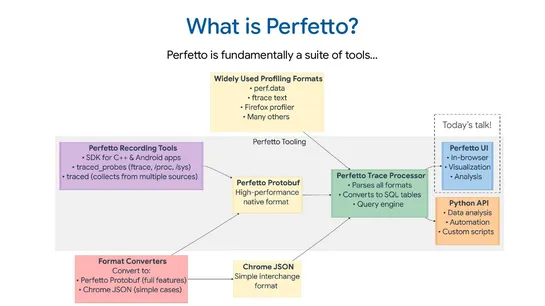
Perfetto: Swiss Army Knife for Linux Client Tracing

Perfetto now pulls in mixed trace data -perfsamples, scheduler events, app-level instrumentation - and lines it all up on a single timeline. One view, no silos. It readstrace-cmd’s text format now, with smoother flame graphs, sharper bottom-up views, and SQL-powered filtering baked right into the UI.. read more  

Perfetto: Swiss Army Knife for Linux Client Tracing
Link
@devopslinks shared a link, 5 months, 4 weeks ago
FAUN.dev()

VMware Cloud Foundation – what’s actually going on?

Broadcom underwent significant changes post-VMware acquisition, with emphasis on subscription-based pricing and portfolio simplification. Prashant Shenoy claims VCF lowered prices by 50%, challenging industry norms about AI workloads on bare metal versus virtualized environments. Integration pointed.. read more  

News FAUN.dev() Team
@kaptain shared an update, 5 months, 4 weeks ago
FAUN.dev()

Kubernetes Gateway API 1.4.0 Makes Network Routing More Declarative and Reliable

Istio Kubernetes

Kubernetes releases Gateway API 1.4.0, enhancing service networking with new features like secure TLS connections and improved configuration options.

Gateway API Logo
News FAUN.dev() Team
@kaptain shared an update, 5 months, 4 weeks ago
FAUN.dev()

Grafana Pushes the Limits of Metrics Performance with Mimir 3.0

Prometheus Grafana Mimir

Grafana Mimir 3.0 debuts with a new query engine and architecture, boosting performance, reliability, and cost efficiency.

Grafana Pushes the Limits of Metrics Performance with Mimir 3.0
Link
@anjali shared a link, 5 months, 4 weeks ago
Customer Marketing Manager, Last9

OpenTelemetry Metrics in Quarkus Explained

Understand how to enable, export, and extend OpenTelemetry metrics in your Quarkus application with practical examples.

otel_metrics_quarkus
News FAUN.dev() Team
@varbear shared an update, 5 months, 4 weeks ago
FAUN.dev()

Redis Fixes Critical Vulnerability - Update Your Instances Now

Redis

Redis addresses a critical remote code execution vulnerability, CVE-2025-49844, by releasing fixed versions and recommending best practices to protect instances.

Redis Fixes Critical Vulnerability - Update Your Instances Now
Flask is an open-source web framework written in Python and created by Armin Ronacher in 2010. It is known as a microframework, not because it is weak or incomplete, but because it provides only the essential building blocks for developing web applications. Its core focuses on handling HTTP requests, defining routes, and rendering templates, while leaving decisions about databases, authentication, form handling, and other components to the developer. This minimalistic design makes Flask lightweight, flexible, and easy to learn, but also powerful enough to support complex systems when extended with the right tools.

At the heart of Flask are two libraries: Werkzeug, which is a WSGI utility library that handles the low-level details of communication between web servers and applications, and Jinja2, a templating engine that allows developers to write dynamic HTML pages with embedded Python logic. By combining these two, Flask provides a clean and pythonic way to create web applications without imposing strict architectural patterns.

One of the defining characteristics of Flask is its explicitness. Unlike larger frameworks such as Django, Flask does not try to hide complexity behind layers of abstraction or dictate how a project should be structured. Instead, it gives developers complete control over how they organize their code and which tools they integrate. This explicit nature makes applications easier to reason about and gives teams the freedom to design solutions that match their exact needs. At the same time, Flask benefits from a vast ecosystem of extensions contributed by the community. These extensions cover areas such as database integration through SQLAlchemy, user session and authentication management, form validation with CSRF protection, and database migration handling. This modular approach means a developer can start with a very simple application and gradually add only the pieces they require, avoiding the overhead of unused components.

Flask is also widely appreciated for its simplicity and approachability. Many developers write their first web application in Flask because the learning curve is gentle, the documentation is clear, and the framework itself avoids unnecessary complexity. It is particularly well suited for building prototypes, REST APIs, microservices, or small to medium-sized web applications. At the same time, production-grade deployments are supported by running Flask applications on WSGI servers such as Gunicorn or uWSGI, since the development server included with Flask is intended only for testing and debugging.

The strengths of Flask lie in its minimalism, flexibility, and extensibility. It gives developers the freedom to assemble their application architecture, choose their own libraries, and maintain tight control over how things work under the hood. This is attractive to experienced engineers who dislike being boxed in by heavy frameworks. However, the same freedom can become a limitation. Flask does not include features like an ORM, admin interface, or built-in authentication system, which means teams working on very large applications must take on more responsibility for enforcing patterns and maintaining consistency. In situations where a project requires an opinionated, all-in-one solution, Django or another full-stack framework may be a better fit.

In practice, Flask has grown far beyond its initial positioning as a lightweight tool. It has been used by startups for rapid prototypes and by large companies for production systems. Its design philosophy—keep the core simple, make extensions easy, and let developers decide—continues to attract both beginners and professionals. This balance between simplicity and power has made Flask one of the most enduring and widely used Python web frameworks.