Join us

ContentUpdates and recent posts about Flask..
Link
@devopslinks shared a link, 5 months, 1 week ago
FAUN.dev()

WTF is ... - AI-Native SAST?

AI-native SAST is replacing the “LLM as magic scanner” myth. Instead, the smart play is combining language models with real static analysis. That’s how teams are catching the gnarlier stuff - like business logic bugs - that usually slip through. The trick?Use static analysis to grab clean, relevant .. read more  

Link
@devopslinks shared a link, 5 months, 1 week ago
FAUN.dev()

Post-quantum (ML-DSA) code signing with AWS Private CA and AWS KMS

AWS Private CA now supportspost-quantum ML-DSA X.509 certificates. That means quantum-resistant roots of trust - for code signing, mTLS, and device auth. It's wired up with AWS KMS, so you can handle signing workflows usingML-DSA keysand verify them with standard tools like OpenSSL usingCMS detached.. read more  

Post-quantum (ML-DSA) code signing with AWS Private CA and AWS KMS
Link
@devopslinks shared a link, 5 months, 1 week ago
FAUN.dev()

Unlocking self-service LLM deployment with platform engineering

A new platform stack - Port+GitHub Actions+HCP Terraform** - is turning LLM deployment into a clean self-service flow. The result => predictable, governed pipelines that ship faster. Infra gets standardized. Provisioning? Handled through GitHub Actions. Policies? Baked in via HCP Terraform. Port tie.. read more  

Unlocking self-service LLM deployment with platform engineering
Link
@devopslinks shared a link, 5 months, 1 week ago
FAUN.dev()

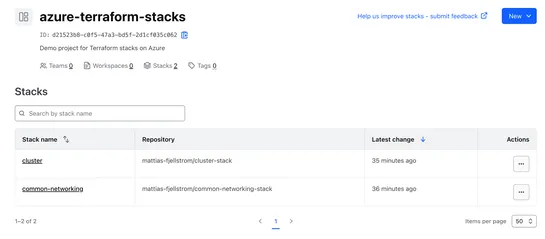
Terraform Stacks: A Deep-Dive for Azure Practitioners in Europe

Terraform Stacksjust hit GA onHCP Terraform, and they bring some real structure to the chaos. Think modular, declarative, and way less workspace spaghetti. Build reusablecomponents(a.k.a. modules), bundle them intodeployments, and wire up stacks usingpublish/consume patterns- complete with automated.. read more  

Terraform Stacks: A Deep-Dive for Azure Practitioners in Europe
News FAUN.dev() Team
@varbear shared an update, 5 months, 2 weeks ago
FAUN.dev()

New MCP Release v0.10.0 Supercharges AI-Assisted Web Development

chrome-devtools-mcp

Chrome DevTools MCP v0.10.0 unlocks deeper AI-powered debugging with new tools for DOM access, network request detection, page reload automation, performance insights, and snapshot saving.

Google Launches Chrome DevTools MCP Server Preview for AI-Driven Web Debugging
News FAUN.dev() Team
@varbear shared an update, 5 months, 2 weeks ago
FAUN.dev()

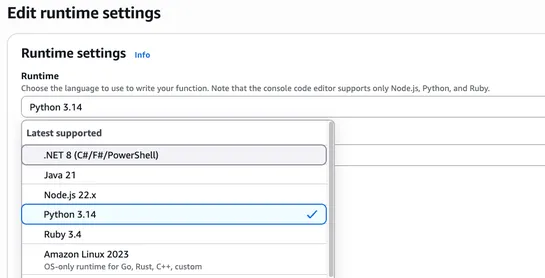
AWS Lambda Gets Python 3.14: Faster, Smarter, and More Serverless-Friendly

AWS Lambda

Python 3.14 is now available in AWS Lambda, enabling developers to leverage new Python features for serverless applications.

AWS Lambda Gets Python 3.14: Faster, Smarter, and More Serverless-Friendly
News FAUN.dev() Team
@kaptain shared an update, 5 months, 2 weeks ago
FAUN.dev()

The Most Absurd (and Brilliant) Kubernetes Cluster at KubeCon 2025

Kubernetes Talos Linux

Engineer Justin Garrison showcased a backpack-sized PETAFLOP Kubernetes cluster at KubeCon 2025, demonstrating localized AI capabilities without cloud reliance.

The Most Absurd (and Brilliant) Kubernetes Cluster at KubeCon 2025
News FAUN.dev() Team
@kaptain shared an update, 5 months, 2 weeks ago
FAUN.dev()

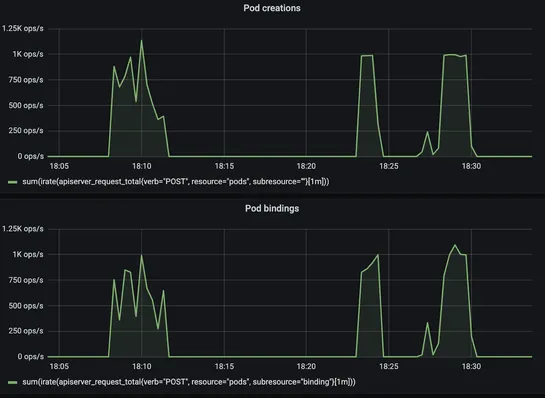
Google Breaks Kubernetes Limits Again: Inside the 130,000-Node GKE Cluster

Google Kubernetes Engine (GKE) kueue

Google successfully operates a 130,000-node Kubernetes cluster to enhance GKE's scalability for AI workloads.

Control plane throughput: Sustaining up to 1,000 operations per second for both Pod creation and Pod binding during intense scheduling phases.
News FAUN.dev() Team
@devopslinks shared an update, 5 months, 2 weeks ago
FAUN.dev()

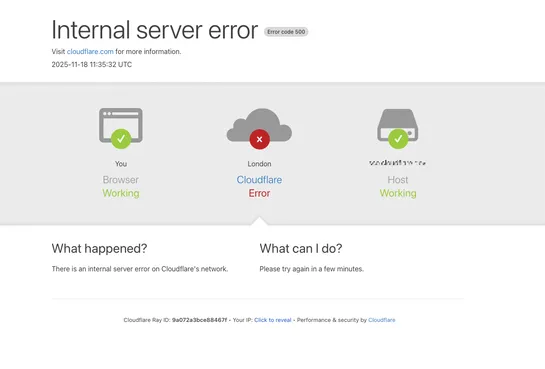
Inside Cloudflare's Worst Outage Since 2019: How a Single Config File Broke the Internet

Cloudflare Cloudflare Workers

A database permissions change led to a Cloudflare outage by creating an oversized feature file, causing network failures initially mistaken for a DDoS attack.

Inside Cloudflare's Worst Outage Since 2019: How a Single Config File Broke the Internet
News FAUN.dev() Team
@devopslinks shared an update, 5 months, 2 weeks ago
FAUN.dev()

Valkey 9.0 Released: Faster Clusters, New TTL Controls, and Big Networking Gains

Valkey

Valkey 9.0 debuts with atomic slot migrations, hash field expiration, and improved cluster mode support, enhancing data management and scalability.

Valkey 9.0 Released: Faster Clusters, New TTL Controls, and Big Networking Gains
Flask is an open-source web framework written in Python and created by Armin Ronacher in 2010. It is known as a microframework, not because it is weak or incomplete, but because it provides only the essential building blocks for developing web applications. Its core focuses on handling HTTP requests, defining routes, and rendering templates, while leaving decisions about databases, authentication, form handling, and other components to the developer. This minimalistic design makes Flask lightweight, flexible, and easy to learn, but also powerful enough to support complex systems when extended with the right tools.

At the heart of Flask are two libraries: Werkzeug, which is a WSGI utility library that handles the low-level details of communication between web servers and applications, and Jinja2, a templating engine that allows developers to write dynamic HTML pages with embedded Python logic. By combining these two, Flask provides a clean and pythonic way to create web applications without imposing strict architectural patterns.

One of the defining characteristics of Flask is its explicitness. Unlike larger frameworks such as Django, Flask does not try to hide complexity behind layers of abstraction or dictate how a project should be structured. Instead, it gives developers complete control over how they organize their code and which tools they integrate. This explicit nature makes applications easier to reason about and gives teams the freedom to design solutions that match their exact needs. At the same time, Flask benefits from a vast ecosystem of extensions contributed by the community. These extensions cover areas such as database integration through SQLAlchemy, user session and authentication management, form validation with CSRF protection, and database migration handling. This modular approach means a developer can start with a very simple application and gradually add only the pieces they require, avoiding the overhead of unused components.

Flask is also widely appreciated for its simplicity and approachability. Many developers write their first web application in Flask because the learning curve is gentle, the documentation is clear, and the framework itself avoids unnecessary complexity. It is particularly well suited for building prototypes, REST APIs, microservices, or small to medium-sized web applications. At the same time, production-grade deployments are supported by running Flask applications on WSGI servers such as Gunicorn or uWSGI, since the development server included with Flask is intended only for testing and debugging.

The strengths of Flask lie in its minimalism, flexibility, and extensibility. It gives developers the freedom to assemble their application architecture, choose their own libraries, and maintain tight control over how things work under the hood. This is attractive to experienced engineers who dislike being boxed in by heavy frameworks. However, the same freedom can become a limitation. Flask does not include features like an ORM, admin interface, or built-in authentication system, which means teams working on very large applications must take on more responsibility for enforcing patterns and maintaining consistency. In situations where a project requires an opinionated, all-in-one solution, Django or another full-stack framework may be a better fit.

In practice, Flask has grown far beyond its initial positioning as a lightweight tool. It has been used by startups for rapid prototypes and by large companies for production systems. Its design philosophy—keep the core simple, make extensions easy, and let developers decide—continues to attract both beginners and professionals. This balance between simplicity and power has made Flask one of the most enduring and widely used Python web frameworks.