Join us

ContentUpdates and recent posts about Flask..
News FAUN.dev() Team
@kala shared an update, 5 months ago
FAUN.dev()

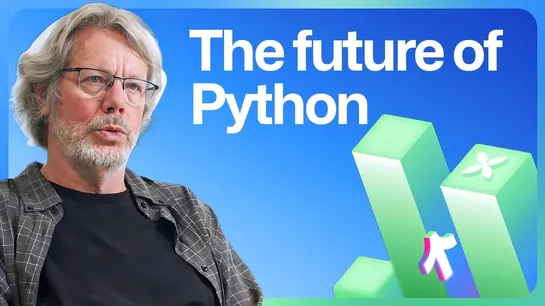
Guido van Rossum: “AI Should Adapt to Python - Not the Other Way Around”

Python TypeScript

Guido van Rossum discussed Python's enduring relevance in AI and education at GitHub's Octoverse, emphasizing its clarity, accessibility, and community-driven growth despite TypeScript's rise.

Guido van Rossum: “AI Should Adapt to Python - Not the Other Way Around”
Story Palark Team
@shurup shared a post, 5 months ago
@palark

Kubernetes 1.35 new alpha features

Kubernetes

The next Kubernetes release, v1.35, is scheduled for December 17th. It should bring 15 new Alpha features, including the following ones: - Gang scheduling support - Mutable PersistentVolume node affinity - Restart all containers on container exits - Consider terminating Pods in Deployments - CSI vol..

Kubernetes v1.35 release
News FAUN.dev() Team
@varbear shared an update, 5 months ago
FAUN.dev()

NordPass: Worst Passwords of 2025 and How Each Generation Compares

NordPass's latest research reveals the ongoing global reliance on weak passwords like "123456" and "password," despite slight improvements in security practices.

NordPass: Worst Passwords of 2025 and How Each Generation Compares
News FAUN.dev() Team
@kaptain shared an update, 5 months ago
FAUN.dev()

Kubernetes v1.35: A Deep Dive Into the Biggest Changes Before the December 17 Release

Kubernetes containerd

Kubernetes v1.35 release removes cgroup v1 and containerd v1.X support, urging admins to migrate to newer versions and adopt enhancements like in-place Pod updates and OCI image volume support.

Kubernetes v1.35: A Deep Dive Into the Biggest Changes Before the December 17 Release
News FAUN.dev() Team
@devopslinks shared an update, 5 months ago
FAUN.dev()

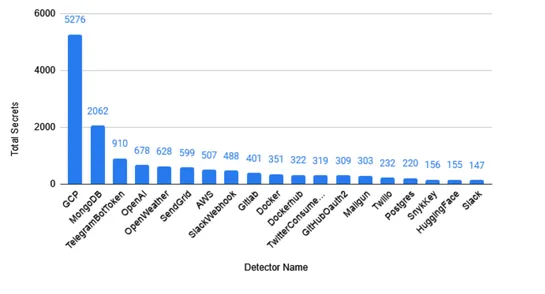
Researcher Scans 5.6M GitLab Repositories, Uncovers 17,000 Live Secrets and a Decade of Exposed Credentials

TruffleHog AWS Lambda GitLab GitLab CI/CD Atlassian Bitbucket

A security research project led by Luke Marshall scanned 5.6 million GitLab repositories, uncovering over 17,000 live secrets and earning $9,000 in bounties, highlighting GitLab's larger scale and higher exposure risk compared to Bitbucket.

Researcher Scans 5.6M GitLab Repositories, Uncovers 17,000 Live Secrets and a Decade of Exposed Credentials
 Activity
@devopslinks added a new tool TruffleHog , 5 months ago.
News FAUN.dev() Team
@devopslinks shared an update, 5 months ago
FAUN.dev()

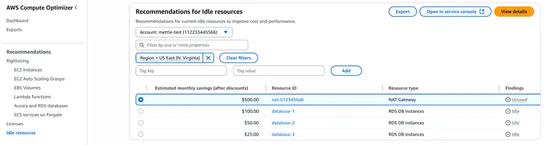
AWS Optimizer Targets Unused NAT Gateways for Cost Savings

Amazon CloudWatch Amazon Web Services

AWS Compute Optimizer now helps identify unused NAT Gateways to boost cost savings by analyzing traffic activity and route table associations.

AWS Optimizer Targets Unused NAT Gateways for Cost Savings
News FAUN.dev() Team
@devopslinks shared an update, 5 months ago
FAUN.dev()

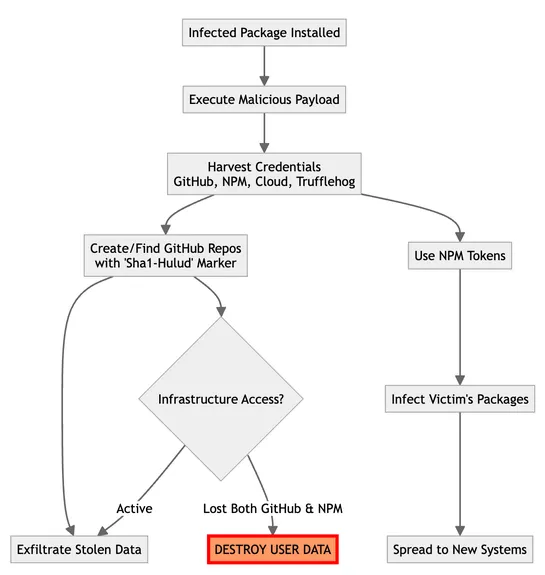
GitLab Uncovers Massive npm Attack - Developers on High Alert

npm Amazon Web Services GitLab GitHub

GitLab's team discovers a large-scale npm supply chain attack with malware that spreads through npm packages, threatening data destruction if disrupted.

GitLab Uncovers Massive npm Attack - Developers on High Alert
 Activity
@varbear added a new tool npm , 5 months ago.
 Activity
@devopslinks added a new tool GitHub , 5 months ago.
Flask is an open-source web framework written in Python and created by Armin Ronacher in 2010. It is known as a microframework, not because it is weak or incomplete, but because it provides only the essential building blocks for developing web applications. Its core focuses on handling HTTP requests, defining routes, and rendering templates, while leaving decisions about databases, authentication, form handling, and other components to the developer. This minimalistic design makes Flask lightweight, flexible, and easy to learn, but also powerful enough to support complex systems when extended with the right tools.

At the heart of Flask are two libraries: Werkzeug, which is a WSGI utility library that handles the low-level details of communication between web servers and applications, and Jinja2, a templating engine that allows developers to write dynamic HTML pages with embedded Python logic. By combining these two, Flask provides a clean and pythonic way to create web applications without imposing strict architectural patterns.

One of the defining characteristics of Flask is its explicitness. Unlike larger frameworks such as Django, Flask does not try to hide complexity behind layers of abstraction or dictate how a project should be structured. Instead, it gives developers complete control over how they organize their code and which tools they integrate. This explicit nature makes applications easier to reason about and gives teams the freedom to design solutions that match their exact needs. At the same time, Flask benefits from a vast ecosystem of extensions contributed by the community. These extensions cover areas such as database integration through SQLAlchemy, user session and authentication management, form validation with CSRF protection, and database migration handling. This modular approach means a developer can start with a very simple application and gradually add only the pieces they require, avoiding the overhead of unused components.

Flask is also widely appreciated for its simplicity and approachability. Many developers write their first web application in Flask because the learning curve is gentle, the documentation is clear, and the framework itself avoids unnecessary complexity. It is particularly well suited for building prototypes, REST APIs, microservices, or small to medium-sized web applications. At the same time, production-grade deployments are supported by running Flask applications on WSGI servers such as Gunicorn or uWSGI, since the development server included with Flask is intended only for testing and debugging.

The strengths of Flask lie in its minimalism, flexibility, and extensibility. It gives developers the freedom to assemble their application architecture, choose their own libraries, and maintain tight control over how things work under the hood. This is attractive to experienced engineers who dislike being boxed in by heavy frameworks. However, the same freedom can become a limitation. Flask does not include features like an ORM, admin interface, or built-in authentication system, which means teams working on very large applications must take on more responsibility for enforcing patterns and maintaining consistency. In situations where a project requires an opinionated, all-in-one solution, Django or another full-stack framework may be a better fit.

In practice, Flask has grown far beyond its initial positioning as a lightweight tool. It has been used by startups for rapid prototypes and by large companies for production systems. Its design philosophy—keep the core simple, make extensions easy, and let developers decide—continues to attract both beginners and professionals. This balance between simplicity and power has made Flask one of the most enduring and widely used Python web frameworks.