Join us

ContentUpdates and recent posts about Flask..
Story
@laura_garcia shared a post, 4 months, 3 weeks ago
Software Developer, RELIANOID

RELIANOID at CII Delhi International Technology Summit 2025

16–17 December 2025 - New Delhi, India Our team continues a packed December schedule, and we’re excited to add another key event: the CII Delhi International Technology Summit 2025. Focused on “Accelerating the Techade”, this summit brings together industry, government, and research leaders to shape..
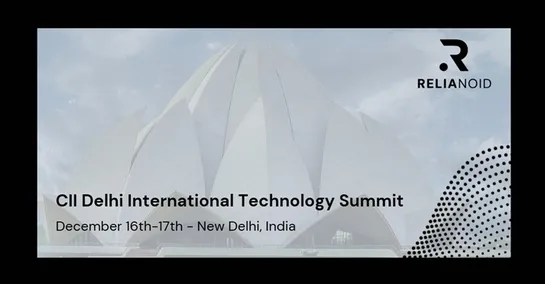
CII Delhi International Technology Summit relianoid
Link
@anjali shared a link, 4 months, 3 weeks ago
Customer Marketing Manager, Last9

OTel Updates: OpenTelemetry Proposes Changes to Stability, Releases, and Semantic Conventions

OpenTelemetry proposes stability changes: stable-by-default distributions, decoupled instrumentation, and epoch releases for production deployments.

otel_stability_update
Story
@laura_garcia shared a post, 4 months, 3 weeks ago
Software Developer, RELIANOID

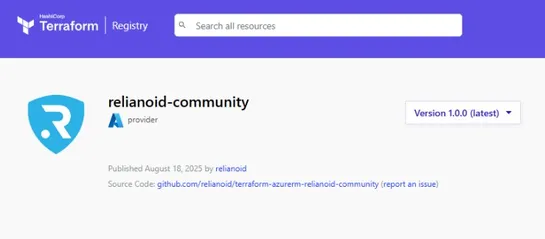
deploy the RELIANOID Load Balancer Community Edition v7 on Azure using Terraform

🚀 New Technical Guide Available! You can now deploy the RELIANOID Load Balancer Community Edition v7 on Azure using Terraform in just a few minutes: ✔️ Install prerequisites (Terraform, Azure CLI, SSH keys) ✔️ Use the official Terraform module from the Registry ✔️ Automatically provision all Azure r..

terraform_relianoid_community_azure_img2
 Activity
@tairascott gave 🐾 to Helm 4 or Nelm? What's the difference , 4 months, 3 weeks ago.
 Activity
@tairascott gave 🐾 to Hidden Correlations Traditional Monitoring Misses , 4 months, 3 weeks ago.
 Activity
Link
@anjali shared a link, 4 months, 3 weeks ago
Customer Marketing Manager, Last9

How to Track Down the Real Cause of Sudden Latency Spikes

Sudden latency spikes rarely have a single cause. This blog shows how to uncover the real source using traces, histograms, and modern debugging signals.

track_latency
Link
@anjali shared a link, 4 months, 3 weeks ago
Customer Marketing Manager, Last9

Hidden Correlations Traditional Monitoring Misses

Last9 is built to work with high-cardinality telemetry, and we’ve been covering it in detail through our series. This piece looks at a familiar pain: issues that only show up for a specific tenant or deployment. Why does that context disappear in most monitoring setups?

anamoly_detection
Story
@shurup shared a post, 4 months, 3 weeks ago
@palark

Helm 4 or Nelm? What's the difference

Helm werf

Helm 4.0.0 brought several new features to its users, such as Server-Side Apply support and kstatus-based resource watching.Nelm, an alternative to Helm created in werf, a CNCF Sandbox project, has been offering these capabilities even before. Nelm has many more new features for Kubernetes deploymen..

Link
@anjali shared a link, 4 months, 4 weeks ago
Customer Marketing Manager, Last9

Which Observability Tool Helps with Visibility Without Overspend

A detailed look at observability platforms so you can choose tools that keep visibility high and costs steady as your systems scale.

go
Flask is an open-source web framework written in Python and created by Armin Ronacher in 2010. It is known as a microframework, not because it is weak or incomplete, but because it provides only the essential building blocks for developing web applications. Its core focuses on handling HTTP requests, defining routes, and rendering templates, while leaving decisions about databases, authentication, form handling, and other components to the developer. This minimalistic design makes Flask lightweight, flexible, and easy to learn, but also powerful enough to support complex systems when extended with the right tools.

At the heart of Flask are two libraries: Werkzeug, which is a WSGI utility library that handles the low-level details of communication between web servers and applications, and Jinja2, a templating engine that allows developers to write dynamic HTML pages with embedded Python logic. By combining these two, Flask provides a clean and pythonic way to create web applications without imposing strict architectural patterns.

One of the defining characteristics of Flask is its explicitness. Unlike larger frameworks such as Django, Flask does not try to hide complexity behind layers of abstraction or dictate how a project should be structured. Instead, it gives developers complete control over how they organize their code and which tools they integrate. This explicit nature makes applications easier to reason about and gives teams the freedom to design solutions that match their exact needs. At the same time, Flask benefits from a vast ecosystem of extensions contributed by the community. These extensions cover areas such as database integration through SQLAlchemy, user session and authentication management, form validation with CSRF protection, and database migration handling. This modular approach means a developer can start with a very simple application and gradually add only the pieces they require, avoiding the overhead of unused components.

Flask is also widely appreciated for its simplicity and approachability. Many developers write their first web application in Flask because the learning curve is gentle, the documentation is clear, and the framework itself avoids unnecessary complexity. It is particularly well suited for building prototypes, REST APIs, microservices, or small to medium-sized web applications. At the same time, production-grade deployments are supported by running Flask applications on WSGI servers such as Gunicorn or uWSGI, since the development server included with Flask is intended only for testing and debugging.

The strengths of Flask lie in its minimalism, flexibility, and extensibility. It gives developers the freedom to assemble their application architecture, choose their own libraries, and maintain tight control over how things work under the hood. This is attractive to experienced engineers who dislike being boxed in by heavy frameworks. However, the same freedom can become a limitation. Flask does not include features like an ORM, admin interface, or built-in authentication system, which means teams working on very large applications must take on more responsibility for enforcing patterns and maintaining consistency. In situations where a project requires an opinionated, all-in-one solution, Django or another full-stack framework may be a better fit.

In practice, Flask has grown far beyond its initial positioning as a lightweight tool. It has been used by startups for rapid prototypes and by large companies for production systems. Its design philosophy—keep the core simple, make extensions easy, and let developers decide—continues to attract both beginners and professionals. This balance between simplicity and power has made Flask one of the most enduring and widely used Python web frameworks.