Join us

ContentUpdates and recent posts about Flask..
Link
@varbear shared a link, 4 months, 2 weeks ago
FAUN.dev()

Use Python for Scripting!

Shell scripts love to break across macOS and Linux. Blame all the GNU vs BSD quirks;sed,date,readlink, take your pick. The mess adds up fast, especially in build pipelines and CI systems. This post makes the case for a cleaner way:Python 3. Standard library. Predictable behavior. Same results whethe.. read more  
Use Python for Scripting!
Link
@varbear shared a link, 4 months, 2 weeks ago
FAUN.dev()

How Reddit Migrated Comments Functionality from Python to Go

Reddit successfully migrated its monolithic, high-traffic Comments service from legacy Python to modern Go microservices with zero user disruption. This was achieved by using a "tap compare" for reads and isolated "sister datastores" for writes, ensuring safe verification of the new code against pro.. read more  

Link
@kaptain shared a link, 4 months, 2 weeks ago
FAUN.dev()

Why Kubernetes Won: Perfect Timing & Developer Culture

Kubernetes won big because the stars aligned, DevOps took off, Docker exploded, and enterprises finally stopped side-eyeing open source. Then came the institutional tailwind: CNCF pushed hard, GCP bet big, and the rest followed. Kubernetes isn't just tech. It's a new operating model, built in the op.. read more  

Link
@kaptain shared a link, 4 months, 2 weeks ago
FAUN.dev()

An In-Depth Look at Istio Ambient Mode with Calico

Tigera just wiredIstio Ambient Modeinto Calico. That means you getsidecarless service mesh, think mTLS, L4/L7 policy, and observability, without stuffing every pod with a sidecar. It’s all handled by lean zTunnel and Waypoint proxies. Ports stay visible, soCalico and Istio policiesplay nice. No rewr.. read more  

Link
@kaptain shared a link, 4 months, 2 weeks ago
FAUN.dev()

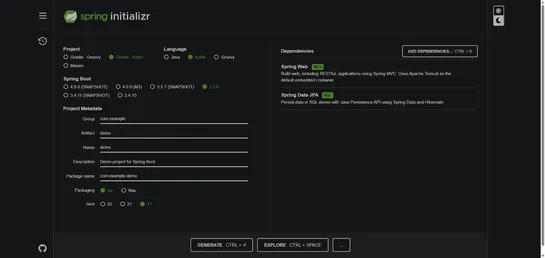
Kubernetes Made Simple: A Guide for JVM Developers

A sharp walkthrough for JVM devs shipping aKotlin Spring Boot app on Kubernetes. It covers the full deployment arc, packaging with Docker, wiring upDeploymentandServicemanifests, and managing config withConfigMapsandSecrets. There's a cleanPostgreSQLintegration baked in. It even gets intoheader-base.. read more  

Kubernetes Made Simple: A Guide for JVM Developers
Link
@kaptain shared a link, 4 months, 2 weeks ago
FAUN.dev()

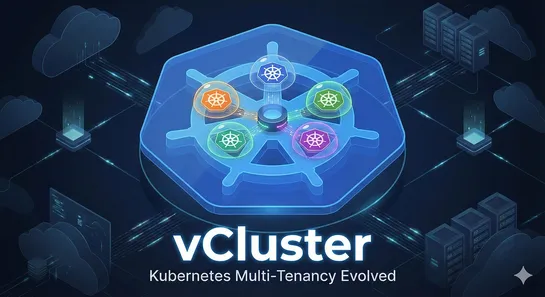
The “Inception” of Kubernetes: A Deep Dive into vCluster Architecture and Benefits

vCluster, a CNCF sandbox project, spins up real-deal Kubernetes control planes inside pods. Each lives in its own namespace but behaves like a full cluster, admin access, CRDs, Helm, the works. It reuses the host’s worker nodes using a syncer that routes vCluster workloads onto the real thing... read more  

The “Inception” of Kubernetes: A Deep Dive into vCluster Architecture and Benefits
Link
@kaptain shared a link, 4 months, 2 weeks ago
FAUN.dev()

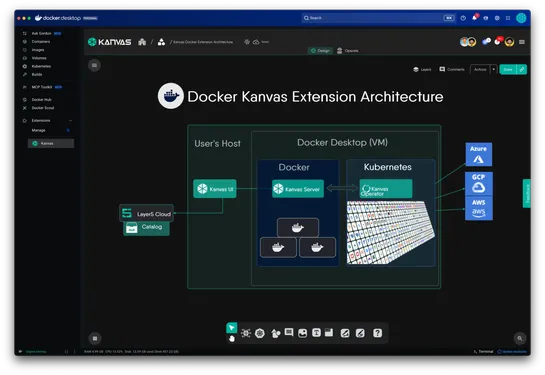
Compose to Kubernetes to Cloud With Kanvas

Docker just droppedKanvas, a new visual toy for building multi-cloud Kubernetes setups, without drowning in YAML. It bolts onto Docker Desktop and runs onMeshery. Drag and drop services into a topology, then bring them to life across AWS, GCP, or Azure. Mix inpolicy-driven validationandreal-time mut.. read more  

Compose to Kubernetes to Cloud With Kanvas
Link
@kaptain shared a link, 4 months, 2 weeks ago
FAUN.dev()

A Deep Dive into Kubernetes Headless Service

Headless Serviceis a powerfulKubernetesfeature enabling direct pod-to-pod communication forstateful applicationsand preciseservice discoverywithout traditional load balancing.No automatic load balancing, pod IP changes, andspecial use casesmake it ideal for specific scenarios, not general workloads... read more  

Link
@kaptain shared a link, 4 months, 2 weeks ago
FAUN.dev()

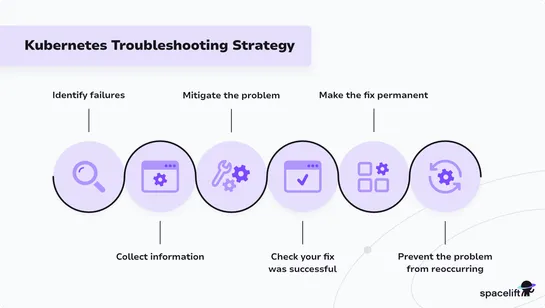
How to Troubleshoot Common Kubernetes Errors

A fresh Kubernetes troubleshooting guide lays out real-world tactics for tracking down 12 common cluster headaches. Think:kubectlsleuthing, poking through system logs, scraping observability metrics, and jumping intodebug containers. The guide breaks down howAIOpsis stepping in, digesting event data.. read more  

How to Troubleshoot Common Kubernetes Errors
Link
@kaptain shared a link, 4 months, 2 weeks ago
FAUN.dev()

Kubernetes 1.35 - New security features

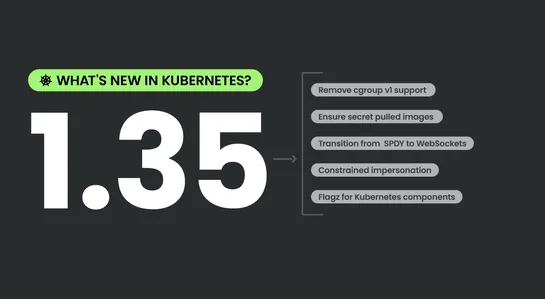
Kubernetes 1.35 is done with legacy baggage. cgroups v1? Deprecated. Image pull credentials? Now re-verified by default—no more freeloading. kubectl SPDY API upgrades? Locked down. You’ll needcreatepermissions just to speak the protocol. Expect breakage if your workflows leaned on old assumptions. U.. read more  

Kubernetes 1.35 - New security features
Flask is an open-source web framework written in Python and created by Armin Ronacher in 2010. It is known as a microframework, not because it is weak or incomplete, but because it provides only the essential building blocks for developing web applications. Its core focuses on handling HTTP requests, defining routes, and rendering templates, while leaving decisions about databases, authentication, form handling, and other components to the developer. This minimalistic design makes Flask lightweight, flexible, and easy to learn, but also powerful enough to support complex systems when extended with the right tools.

At the heart of Flask are two libraries: Werkzeug, which is a WSGI utility library that handles the low-level details of communication between web servers and applications, and Jinja2, a templating engine that allows developers to write dynamic HTML pages with embedded Python logic. By combining these two, Flask provides a clean and pythonic way to create web applications without imposing strict architectural patterns.

One of the defining characteristics of Flask is its explicitness. Unlike larger frameworks such as Django, Flask does not try to hide complexity behind layers of abstraction or dictate how a project should be structured. Instead, it gives developers complete control over how they organize their code and which tools they integrate. This explicit nature makes applications easier to reason about and gives teams the freedom to design solutions that match their exact needs. At the same time, Flask benefits from a vast ecosystem of extensions contributed by the community. These extensions cover areas such as database integration through SQLAlchemy, user session and authentication management, form validation with CSRF protection, and database migration handling. This modular approach means a developer can start with a very simple application and gradually add only the pieces they require, avoiding the overhead of unused components.

Flask is also widely appreciated for its simplicity and approachability. Many developers write their first web application in Flask because the learning curve is gentle, the documentation is clear, and the framework itself avoids unnecessary complexity. It is particularly well suited for building prototypes, REST APIs, microservices, or small to medium-sized web applications. At the same time, production-grade deployments are supported by running Flask applications on WSGI servers such as Gunicorn or uWSGI, since the development server included with Flask is intended only for testing and debugging.

The strengths of Flask lie in its minimalism, flexibility, and extensibility. It gives developers the freedom to assemble their application architecture, choose their own libraries, and maintain tight control over how things work under the hood. This is attractive to experienced engineers who dislike being boxed in by heavy frameworks. However, the same freedom can become a limitation. Flask does not include features like an ORM, admin interface, or built-in authentication system, which means teams working on very large applications must take on more responsibility for enforcing patterns and maintaining consistency. In situations where a project requires an opinionated, all-in-one solution, Django or another full-stack framework may be a better fit.

In practice, Flask has grown far beyond its initial positioning as a lightweight tool. It has been used by startups for rapid prototypes and by large companies for production systems. Its design philosophy—keep the core simple, make extensions easy, and let developers decide—continues to attract both beginners and professionals. This balance between simplicity and power has made Flask one of the most enduring and widely used Python web frameworks.