Join us

ContentUpdates and recent posts about Flask..
Story FAUN.dev() Team Trending
@eon01 shared a post, 4ย months, 2ย weeks ago
Founder, FAUN.dev

Announcing FAUN.sensei() โ€” Self-paced guides to grow fast โ€” even when tech moves faster.

Docker GitLab CI/CD Helm Kubernetes GitHub Copilot

After months of hard work, FAUN.sensei() is finally alive!

FAUN.sensei()
Story
@laura_garcia shared a post, 4ย months, 2ย weeks ago
Software Developer, RELIANOID

๐ŸŒŸ ๐—ช๐—ฒโ€™๐—ฟ๐—ฒ ๐—›๐—ถ๐—ฟ๐—ถ๐—ป๐—ด! ๐—๐—ผ๐—ถ๐—ป ๐˜๐—ต๐—ฒ ๐—ฅ๐—˜๐—Ÿ๐—œ๐—”๐—ก๐—ข๐—œ๐—— ๐—ง๐—ฒ๐—ฎ๐—บ ๐ŸŒŸ

Are you passionate about technology, networking, and innovation? At RELIANOID, weโ€™re building cutting-edge solutions that power secure, scalable, and reliable infrastructures โ€” and weโ€™re looking for talented people to join us on this journey! ๐Ÿš€ Whether youโ€™re an experienced professional or just star..

careers RELIANOID hiring
ย Activity
@arunsanna added a new tool AWS-Sage , 4ย months, 2ย weeks ago.
Story FAUN.dev() Team Trending
@eon01 shared a post, 4ย months, 2ย weeks ago
Founder, FAUN.dev

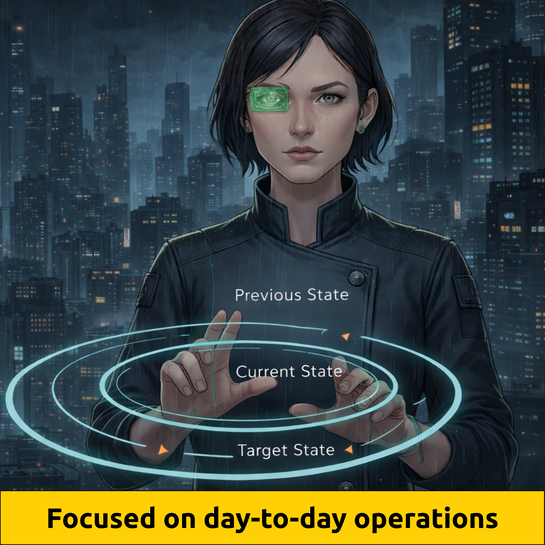
Helm Cheat Sheet: Everything You Need to Know to Start Using Helm

Helm Kubernetes

Helm is the package manager Kubernetes was missing. It lets you package applications and their dependencies into charts, deploy them as versioned releases, and manage installs, upgrades, and rollbacks in a consistent and repeatable way. This post walks through what Helm is, how to install it, and the core commands you will use day to day.
ย Activity
@varbear added a new tool Git , 4ย months, 2ย weeks ago.
Course
@eon01 published a course, 4ย months, 2ย weeks ago
Founder, FAUN.dev

Helm in Practice

#Helmย 
Helm Argo CD Docker k3s Harbor Kubernetes

Designing, Deploying, and Operating Kubernetes Applications at Scale

Helm in Practice
ย Activity
@zeno added a new tool Sigstore , 4ย months, 2ย weeks ago.
Story
@laura_garcia shared a post, 4ย months, 2ย weeks ago
Software Developer, RELIANOID

๐Ÿš€ ๐—ฅ๐—˜๐—Ÿ๐—œ๐—”๐—ก๐—ข๐—œ๐—— ๐Ÿณ.๐Ÿด.๐Ÿฌ ๐—–๐—ผ๐—บ๐—บ๐˜‚๐—ป๐—ถ๐˜๐˜† ๐—˜๐—ฑ๐—ถ๐˜๐—ถ๐—ผ๐—ป ๐—ถ๐˜€ ๐—ผ๐˜‚๐˜!

This new release brings a modern foundation and powerful cloud automation to the open-source community: ๐Ÿ”น Debian Bookworm 12.12 ๐Ÿ”น Major upgrade support ๐Ÿ”น Automated cloud deployments on AWS, Azure & GCP ๐Ÿ”น Terraform-based Infrastructure as Code ๐Ÿ”น Improved Web UI usability and responsiveness Designed t..
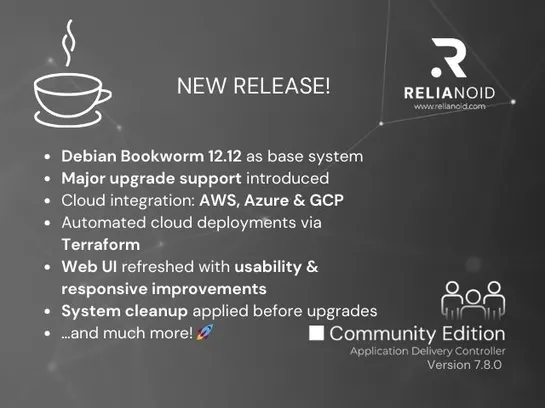
Community edition V7.8 release relianoid
Story
@viktoriiagolovtseva shared a post, 4ย months, 2ย weeks ago

A Ready-to-Use Business Travel Template For Jira

For many of us, even planning a personal trip can be a daunting task. Missing one detail when booking a flight or hotel can lead to a disaster. The challenge becomes even greater when you need to organize a business trip for others, especially for large events where many people travel simultaneously.ย 

Additionally, business travel often requires multiple approvals and cross-team collaboration. You will need a solution to keep everyone on the same page and easily track every detail. A business travel template for Jira is an ideal way to solve this challenge.ย 

In this blog post, we share a ready-to-use template and explain how to use it.

Zrzut ekranu 2025-12-17 143647
Story
@laura_garcia shared a post, 4ย months, 2ย weeks ago
Software Developer, RELIANOID

๐Ÿš€ AI is redefining Site Reliability Engineering (SRE)

What started as ensuring web apps were fast and resilient has now entered a new era: AI Reliability Engineering. Inference workloads demand speed, trust, and observability far beyond traditional infrastructure challenges. In our latest blog, we explore: Why unreliable AI is worse than no AI at all H..

relianoid_blog_documentation
Flask is an open-source web framework written in Python and created by Armin Ronacher in 2010. It is known as a microframework, not because it is weak or incomplete, but because it provides only the essential building blocks for developing web applications. Its core focuses on handling HTTP requests, defining routes, and rendering templates, while leaving decisions about databases, authentication, form handling, and other components to the developer. This minimalistic design makes Flask lightweight, flexible, and easy to learn, but also powerful enough to support complex systems when extended with the right tools.

At the heart of Flask are two libraries: Werkzeug, which is a WSGI utility library that handles the low-level details of communication between web servers and applications, and Jinja2, a templating engine that allows developers to write dynamic HTML pages with embedded Python logic. By combining these two, Flask provides a clean and pythonic way to create web applications without imposing strict architectural patterns.

One of the defining characteristics of Flask is its explicitness. Unlike larger frameworks such as Django, Flask does not try to hide complexity behind layers of abstraction or dictate how a project should be structured. Instead, it gives developers complete control over how they organize their code and which tools they integrate. This explicit nature makes applications easier to reason about and gives teams the freedom to design solutions that match their exact needs. At the same time, Flask benefits from a vast ecosystem of extensions contributed by the community. These extensions cover areas such as database integration through SQLAlchemy, user session and authentication management, form validation with CSRF protection, and database migration handling. This modular approach means a developer can start with a very simple application and gradually add only the pieces they require, avoiding the overhead of unused components.

Flask is also widely appreciated for its simplicity and approachability. Many developers write their first web application in Flask because the learning curve is gentle, the documentation is clear, and the framework itself avoids unnecessary complexity. It is particularly well suited for building prototypes, REST APIs, microservices, or small to medium-sized web applications. At the same time, production-grade deployments are supported by running Flask applications on WSGI servers such as Gunicorn or uWSGI, since the development server included with Flask is intended only for testing and debugging.

The strengths of Flask lie in its minimalism, flexibility, and extensibility. It gives developers the freedom to assemble their application architecture, choose their own libraries, and maintain tight control over how things work under the hood. This is attractive to experienced engineers who dislike being boxed in by heavy frameworks. However, the same freedom can become a limitation. Flask does not include features like an ORM, admin interface, or built-in authentication system, which means teams working on very large applications must take on more responsibility for enforcing patterns and maintaining consistency. In situations where a project requires an opinionated, all-in-one solution, Django or another full-stack framework may be a better fit.

In practice, Flask has grown far beyond its initial positioning as a lightweight tool. It has been used by startups for rapid prototypes and by large companies for production systems. Its design philosophyโ€”keep the core simple, make extensions easy, and let developers decideโ€”continues to attract both beginners and professionals. This balance between simplicity and power has made Flask one of the most enduring and widely used Python web frameworks.