Join us

ContentUpdates and recent posts about Flask..
Link
@devopslinks shared a link, 4 months, 1 week ago
FAUN.dev()

From Static Rate Limiting to Adaptive Traffic Management in Airbnb’s Key-Value Store

Airbnb just rewired Mussel, its key-value store, with a smarter, layered QoS system. Out go the rigid QPS caps. In comeresource-aware rate control,criticality-based load shedding, andreal-time hot-key mitigation. Dispatchers now speak the language of backend cost -rows, bytes, latency - not just raw.. read more  

From Static Rate Limiting to Adaptive Traffic Management in Airbnb’s Key-Value Store
Link
@devopslinks shared a link, 4 months, 1 week ago
FAUN.dev()

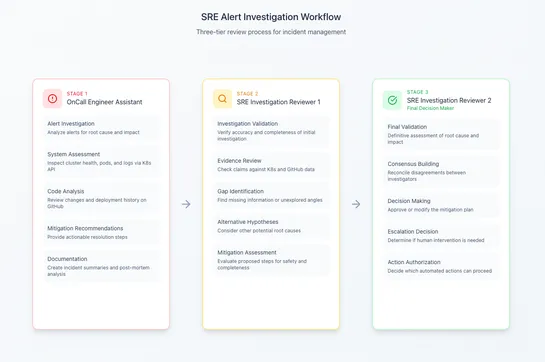
Agent-Driven SRE Investigations: A Practical Deep Dive into Multi-Agent Incident Response

A sandboxed setup dropped multiple Claude-powered agents into Docker containers to run a full incident response drill. Each agent played a role: probing Kubernetes clusters, sniffing out root causes, and shipping remediation PRs straight to GitHub. Out of 7 test incidents, they nailed the diagnoses .. read more  

Agent-Driven SRE Investigations: A Practical Deep Dive into Multi-Agent Incident Response
Link
@devopslinks shared a link, 4 months, 1 week ago
FAUN.dev()

async dns

A developer went digging for safer async DNS incurlafterpthread_cancelstarted breaking things. Threadless, callback-free options took the spotlight.OpenBSD’sasrquickly stood out, clean event loop integration, no threads, no drama. Beat outc-areson portability and design clarity... read more  

Link
@devopslinks shared a link, 4 months, 1 week ago
FAUN.dev()

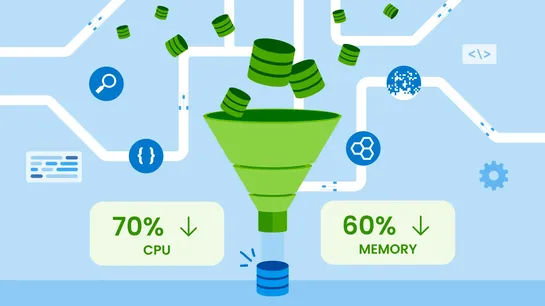
How We Saved 70% of CPU and 60% of Memory in Refinery’s Go Code, No Rust Required.

Refinery 3.0 cuts CPU by 70% and slashes RAM by 60%. The trick: selective field extraction from serialized spans. No full deserialization. Fewer heap allocations. Way less waste. It also recycles buffers, handles metrics smarter, and is gearing up to parallelize its core decision loop... read more  

How We Saved 70% of CPU and 60% of Memory in Refinery’s Go Code, No Rust Required.
News FAUN.dev() Team
@kaptain shared an update, 4 months, 1 week ago
FAUN.dev()

Docker Brings Production-Grade Hardened Images to Developers at No Cost

Docker

Docker has launched Docker Hardened Images, a secure and minimal set of production-ready images. These images are now freely available to developers.

Docker Brings Production-Grade Hardened Images to Developers at No Cost
Link
@anjali shared a link, 4 months, 1 week ago
Customer Marketing Manager, Last9

OTel Updates: OpenTelemetry Deprecates Zipkin Exporters

OpenTelemetry deprecates Zipkin exporters in favor of native OTLP support. Migration paths and timeline through December 2026.

depreciating_zipkin
News FAUN.dev() Team
@kaptain shared an update, 4 months, 1 week ago
FAUN.dev()

Argo CD 3.2.2 Improves Secret Management, Retry Safety, and Auth Checks

Kubernetes Argo CD

ArgoCD v3.2.2 has been released, featuring a new addition, two enhancements, and a bug fix. This update aims to improve the overall functionality and reliability of the platform.

Argo CD 3.2.2 Improves Secret Management, Retry Safety, and Auth Checks
News FAUN.dev() Team
@devopslinks shared an update, 4 months, 1 week ago
FAUN.dev()

Rust Confirmed for Linux Kernel: Experiment Concludes Successfully

Rust GNU/Linux The Linux Kernel UNIX

The Rust experiment in the Linux kernel concludes, confirming its suitability and permanence in kernel development, with Rust now used in production and supported by major Linux distributions.

Rust Confirmed for Linux Kernel: Experiment Concludes Successfully
Course
@eon01 published a course, 4 months, 1 week ago
Founder, FAUN.dev

Generative AI For The Rest Of US

#AI  #Generat...  #LLM  #Large L...  #gpt 
ChatGPT GPT

Your Future, Decoded

Generative AI For The Rest Of US
News FAUN.dev() Team
@kaptain shared an update, 4 months, 1 week ago
FAUN.dev()

Kubernetes v1.35 Timbernetes Release: 60 Enhancements

Kubernetes Gateway API Kubernetes

Kubernetes v1.35, the Timbernetes Release, debuts with 60 enhancements, including stable in-place Pod updates and beta features for workload identity and certificate rotation.

Kubernetes v1.35 Timbernetes Release: 60 Enhancements
Flask is an open-source web framework written in Python and created by Armin Ronacher in 2010. It is known as a microframework, not because it is weak or incomplete, but because it provides only the essential building blocks for developing web applications. Its core focuses on handling HTTP requests, defining routes, and rendering templates, while leaving decisions about databases, authentication, form handling, and other components to the developer. This minimalistic design makes Flask lightweight, flexible, and easy to learn, but also powerful enough to support complex systems when extended with the right tools.

At the heart of Flask are two libraries: Werkzeug, which is a WSGI utility library that handles the low-level details of communication between web servers and applications, and Jinja2, a templating engine that allows developers to write dynamic HTML pages with embedded Python logic. By combining these two, Flask provides a clean and pythonic way to create web applications without imposing strict architectural patterns.

One of the defining characteristics of Flask is its explicitness. Unlike larger frameworks such as Django, Flask does not try to hide complexity behind layers of abstraction or dictate how a project should be structured. Instead, it gives developers complete control over how they organize their code and which tools they integrate. This explicit nature makes applications easier to reason about and gives teams the freedom to design solutions that match their exact needs. At the same time, Flask benefits from a vast ecosystem of extensions contributed by the community. These extensions cover areas such as database integration through SQLAlchemy, user session and authentication management, form validation with CSRF protection, and database migration handling. This modular approach means a developer can start with a very simple application and gradually add only the pieces they require, avoiding the overhead of unused components.

Flask is also widely appreciated for its simplicity and approachability. Many developers write their first web application in Flask because the learning curve is gentle, the documentation is clear, and the framework itself avoids unnecessary complexity. It is particularly well suited for building prototypes, REST APIs, microservices, or small to medium-sized web applications. At the same time, production-grade deployments are supported by running Flask applications on WSGI servers such as Gunicorn or uWSGI, since the development server included with Flask is intended only for testing and debugging.

The strengths of Flask lie in its minimalism, flexibility, and extensibility. It gives developers the freedom to assemble their application architecture, choose their own libraries, and maintain tight control over how things work under the hood. This is attractive to experienced engineers who dislike being boxed in by heavy frameworks. However, the same freedom can become a limitation. Flask does not include features like an ORM, admin interface, or built-in authentication system, which means teams working on very large applications must take on more responsibility for enforcing patterns and maintaining consistency. In situations where a project requires an opinionated, all-in-one solution, Django or another full-stack framework may be a better fit.

In practice, Flask has grown far beyond its initial positioning as a lightweight tool. It has been used by startups for rapid prototypes and by large companies for production systems. Its design philosophy—keep the core simple, make extensions easy, and let developers decide—continues to attract both beginners and professionals. This balance between simplicity and power has made Flask one of the most enduring and widely used Python web frameworks.