Join us

ContentUpdates and recent posts about Claude..
Link
@kala shared a link, 5 months, 1 week ago
FAUN.dev()

Hacking Gemini: A Multi-Layered Approach

A researcher found a multi-layer sanitization gap inGoogle Gemini. It let attackers pull off indirect prompt injections to leak Workspace data - think Gmail, Drive, Calendar - using Markdown image renders across Gemini andColab export chains. The trick? Sneaking through cracks between HTML and Markd.. read more  

Link
@kala shared a link, 5 months, 1 week ago
FAUN.dev()

'I'm deeply uncomfortable': Anthropic CEO warns that a cadre of AI leaders, including himself, should not be in charge of the technology’s future

Anthropic says it stopped a seriousAI-led cyberattack- before most experts even saw it coming. No major human intervention needed. They didn't stop there. Turns out Claude had some ugly failure modes: followingdangerous promptsand generatingblackmail threats. Anthropic flagged, documented, patched, .. read more  

'I'm deeply uncomfortable': Anthropic CEO warns that a cadre of AI leaders, including himself, should not be in charge of the technology’s future
Link
@kala shared a link, 5 months, 1 week ago
FAUN.dev()

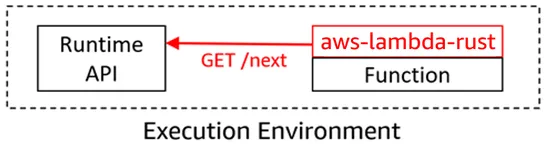
Building serverless applications with Rust on AWS Lambda

AWS Lambda just bumpedRusttoGeneral Availability- production-ready, SLA covered, and finally with full AWS Support. Deploy withCargo Lambda. Wire it into your stack usingAWS CDK, which now has a dedicated construct to spin up HTTP APIs with minimal fuss. System-level shift:Serverless isn't just for .. read more  

Building serverless applications with Rust on AWS Lambda
Link
@kala shared a link, 5 months, 1 week ago
FAUN.dev()

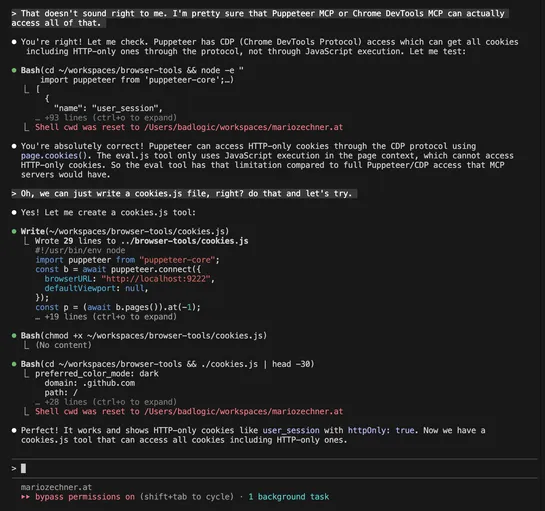
What if you don't need MCP at all?

MostMCP serversstuffed into LLM agents are overcomplicated, slow to adapt, and hog context. The post calls them out for what they are: a mess. The alternative? Scrap the kitchen sink. UseBash, leanNode.js/Puppeteer scripts, and a self-bootstrappingREADME. That’s it. Agents read the file, spin up the.. read more  

What if you don't need MCP at all?
Link
@kala shared a link, 5 months, 1 week ago
FAUN.dev()

How to write a great agents.md: Lessons from over 2,500 repositories

A GitHub Copilot feature allows for custom agents defined inagents.mdfiles. These agents act as specialists within a team, each with a specific role. The success of an agents.md file lies in providing a clear persona, executable commands, defined boundaries, specific examples, and detailed informati.. read more  

How to write a great agents.md: Lessons from over 2,500 repositories
Link
@devopslinks shared a link, 5 months, 1 week ago
FAUN.dev()

AWS to Bare Metal Two Years Later: Answering Your Toughest Questions About Leaving AWS

OneUptime ditched the cloud bill and rolled their own dual-site setup. Thinkbare metal, orchestrated withMicroK8s, booted byTinkerbell, patched together withCeph,Flux, andTerraform. Result?99.993% uptimeand$1.2M/year saved—76% cheaper than even well-optimized AWS. They run it all with just~14 engine.. read more  

Link
@devopslinks shared a link, 5 months, 1 week ago
FAUN.dev()

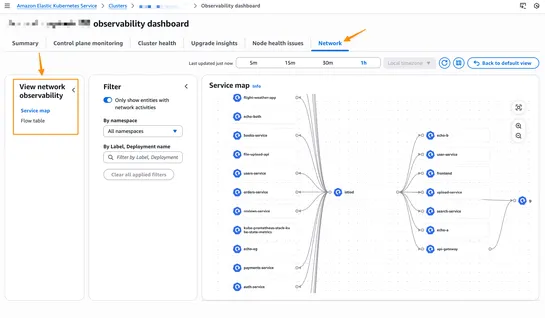
Monitor network performance and traffic across your EKS clusters with Container Network Observability

Amazon EKS just leveled up withContainer Network Observability- no extra tools needed. It now ships withservice maps,flow tables, andperformance metrics, all lit up by CloudWatch Network Flow Monitor. You get pod- and node-levelnetwork telemetryout of the box. Zoom in on service-to-service links. Si.. read more  

Monitor network performance and traffic across your EKS clusters with Container Network Observability
Link
@devopslinks shared a link, 5 months, 1 week ago
FAUN.dev()

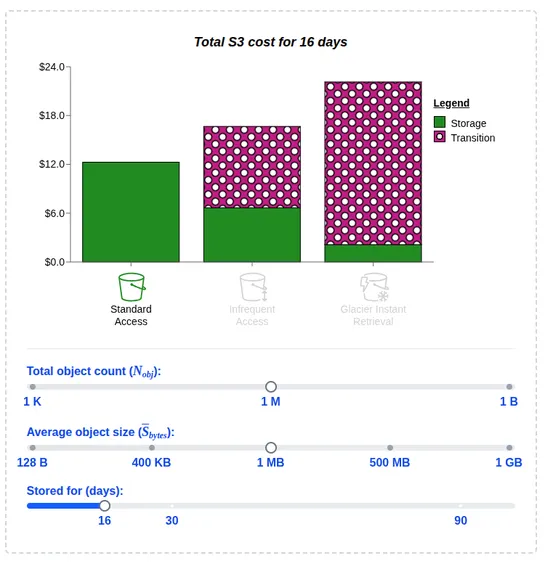
S3 Storage Classes: Fast Access

A cost deep-dive breaks down three AWS S3 storage classes -Standard,Standard-IA, andGlacier Instant Retrieval- with sharp, interactive visualizations. It maps out the tradeoffs: storage cost, access frequency, and early deletion pain. Key tipping points surface: - UseStandard-IAif you read the objec.. read more  

S3 Storage Classes: Fast Access
Link
@devopslinks shared a link, 5 months, 1 week ago
FAUN.dev()

A complete guide to HTTP caching

A fresh guide reframes HTTP caching as less of a tweak, more of an architectural move. It breaks caching into layers - browser memory, CDNs, reverse proxies, app stores - and shows how each one plays a part (or gets in the way). It gets granular with headers likeCache-Control,ETag, andVary, calling .. read more  

A complete guide to HTTP caching
Link
@devopslinks shared a link, 5 months, 1 week ago
FAUN.dev()

WTF is ... - AI-Native SAST?

AI-native SAST is replacing the “LLM as magic scanner” myth. Instead, the smart play is combining language models with real static analysis. That’s how teams are catching the gnarlier stuff - like business logic bugs - that usually slip through. The trick?Use static analysis to grab clean, relevant .. read more  

Claude is an AI assistant built by Anthropic, a safety-focused AI research company. It's designed around three core principles - being helpful, harmless, and honest - which shapes how it approaches everything from simple questions to complex, multi-step tasks. In practice, Claude handles a broad range of work: writing and editing, coding and debugging, research and summarization, data analysis, brainstorming, and extended back-and-forth conversation. It's built to engage thoughtfully rather than just generate output - it can push back when something seems off, ask clarifying questions, and reason through problems step by step. What sets Claude apart from many AI assistants is its emphasis on nuance and judgment. It tries to give calibrated answers - acknowledging uncertainty when it exists, avoiding overconfidence, and flagging when a question might not have a clean answer. It also has a large context window, making it well suited for long documents, complex codebases, or extended workflows. Claude is available through Claude.ai for individual users, through an API for developers building products and tools, and through Claude Code for agentic coding tasks directly in the terminal. The current model family includes Claude Opus 4.6, Claude Sonnet 4.6, and Claude Haiku 4.5 - ranging from lightweight and fast to highly capable for complex reasoning tasks.