Join us

ContentUpdates and recent posts about Claude..
Link
@devopslinks shared a link, 4 weeks, 2 days ago
FAUN.dev()

AI Isn't Replacing SREs. It's Deskilling Them.

This post discusses the impact of AI on the role of Site Reliability Engineers (SREs) by drawing parallels to historical research on automation. It highlights the risk of deskilling and never-skilling for SREs who heavily rely on AI tools for incident response. The post also suggests potential appro.. read more  
Link
@devopslinks shared a link, 4 weeks, 2 days ago
FAUN.dev()

Building a Database on S3

This paper from 2008 proposes a shared-disk design over Amazon S3 for cloud-native databases, separating storage from compute. Clients write redo logs to Amazon SQS instead of directly to S3 to hide latency. The paper presents a blueprint for serverless databases before the term existed... read more  

Link
@devopslinks shared a link, 4 weeks, 2 days ago
FAUN.dev()

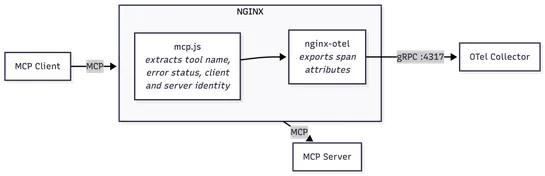
Introducing Agentic Observability in NGINX: Real-time MCP Traffic Monitoring

NGINX ships an open-sourceAgentic ObservabilityJS module. It parsesMCPtraffic and extracts tool names, error statuses, and client/server identities. The module uses nativeOpenTelemetryto export spans. A Docker Compose reference wires upOTel collector,Prometheus, andGrafanafor realtime throughput, la.. read more  

Introducing Agentic Observability in NGINX: Real-time MCP Traffic Monitoring
Link
@devopslinks shared a link, 4 weeks, 2 days ago
FAUN.dev()

AWS RDS Cost Optimization Guide: Cut Database Costs in 2026

Amazon RDS costs are not fixed - they vary based on configuration and usage. Making informed configuration and governance decisions is key to optimizing costs. Graviton instances offer better price-performance for common databases, while storage costs can be reduced by decoupling performance from ca.. read more  

AWS RDS Cost Optimization Guide: Cut Database Costs in 2026
Course
@eon01 published a course, 4 weeks, 2 days ago
Founder, FAUN.dev

Learn Git in a Day

GitLab git Ubuntu

Everything you need, nothing you don't

Learn Git in a Day
Story Palark Team
@shurup shared a post, 1 month ago
@palark

Kubernetes best practices for DevOps engineers

Kubernetes

Have to manage Kubernetes in production but don’t feel confident about its many moving parts, complex architecture, and configurations? Here’s a selection of technical guides from experienced engineers for Kubernetes beginners looking to master this orchestration tool for running containerised apps efficiently and reliably.

Best practices for Kubernetes
Link
@pramod_kumar_0820 shared a link, 1 month ago
Software Engineer, Teknospire

⚡ Why Your Spring Boot API Takes 3 Seconds to Respond (And How to Fix It)

A practical breakdown of the most common Spring Boot performance bottlenecks — and how we optimized our API from 3 seconds to 200 ms.

News FAUN.dev() Team Trending
@devopslinks shared an update, 1 month ago
FAUN.dev()

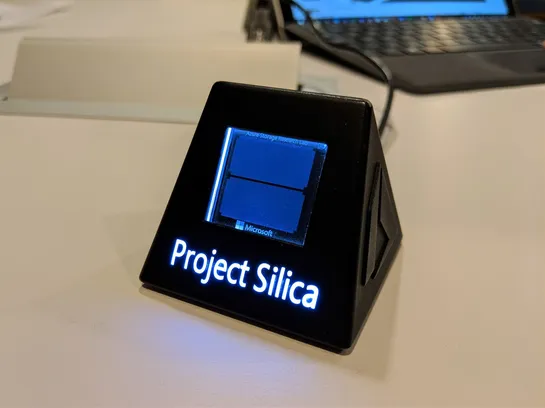
Microsoft Project Silica: Your Data, Stored in a Pyrex Dish, for 10,000 Years

Microsoft's Project Silica encodes data in borosilicate glass using femtosecond lasers, offering long-term storage for up to 10,000 years. This method overcomes traditional storage limitations and is cost-effective, though write speed remains a challenge. The research phase is complete, but no product release has been announced.

Microsoft Project Silica: Your Data, Stored in a Pyrex Dish, for 10,000 Years
News FAUN.dev() Team Trending
@varbear shared an update, 1 month ago
FAUN.dev()

Operating Systems as Age Gatekeepers: The Law That Could Reshape the Internet

California's Digital Age Assurance Act mandates operating systems to share users' age data with app developers via a real-time API by 2027. The law faces criticism for depending on self-reported ages, potentially affecting its efficacy.

Claude is an AI assistant built by Anthropic, a safety-focused AI research company. It's designed around three core principles - being helpful, harmless, and honest - which shapes how it approaches everything from simple questions to complex, multi-step tasks. In practice, Claude handles a broad range of work: writing and editing, coding and debugging, research and summarization, data analysis, brainstorming, and extended back-and-forth conversation. It's built to engage thoughtfully rather than just generate output - it can push back when something seems off, ask clarifying questions, and reason through problems step by step. What sets Claude apart from many AI assistants is its emphasis on nuance and judgment. It tries to give calibrated answers - acknowledging uncertainty when it exists, avoiding overconfidence, and flagging when a question might not have a clean answer. It also has a large context window, making it well suited for long documents, complex codebases, or extended workflows. Claude is available through Claude.ai for individual users, through an API for developers building products and tools, and through Claude Code for agentic coding tasks directly in the terminal. The current model family includes Claude Opus 4.6, Claude Sonnet 4.6, and Claude Haiku 4.5 - ranging from lightweight and fast to highly capable for complex reasoning tasks.