Join us

ContentUpdates and recent posts about Claude..
 Activity
@ishanupadhyay started using tool Azure Pipelines , 3 weeks, 2 days ago.
 Activity
@ishanupadhyay started using tool Terragrunt , 3 weeks, 2 days ago.
 Activity
@ishanupadhyay started using tool Terraform , 3 weeks, 2 days ago.
 Activity
@ishanupadhyay started using tool Sonatype Nexus , 3 weeks, 2 days ago.
 Activity
@ishanupadhyay started using tool SonarQube , 3 weeks, 2 days ago.
News FAUN.dev() Team Trending
@kala shared an update, 3 weeks, 2 days ago
FAUN.dev()

NanoClaw + Docker Sandboxes: Secure Agent Execution Without the Overhead

NanoClaw Claude Code Docker

NanoClaw integrates with Docker Sandboxes to enhance AI agent security through strong isolation and transparency. This collaboration focuses on enabling secure and autonomous operations for AI agents within enterprise environments.

Link
@varbear shared a link, 3 weeks, 2 days ago
FAUN.dev()

Interview with Thomas Wouters - release Manager for Python

The interview traces Python's core evolution. It starts with addingaugmented assignment(+=) and thePEP 203debates. Arguments followed. Nested scopeslanded viafuture imports. Maintainers repackagedelementtree/xmlplususingpath. asynciorose and supplantedTwisted. Python moved toyearly releases... read more  

Link
@varbear shared a link, 3 weeks, 2 days ago
FAUN.dev()

The real cost of random I/O

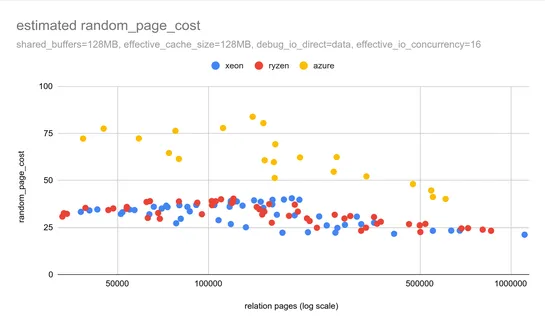
Therandom_page_costwas introduced ~25 years ago, and its default value has remained at 4.0 since then. Recent experiments suggest that the actual cost of reading a random page may be significantly higher than the default value, especially on SSDs. Lowering therandom_page_costmay not always be the be.. read more  

The real cost of random I/O
Link
@varbear shared a link, 3 weeks, 2 days ago
FAUN.dev()

Things I miss about Spring Boot after switching to Go

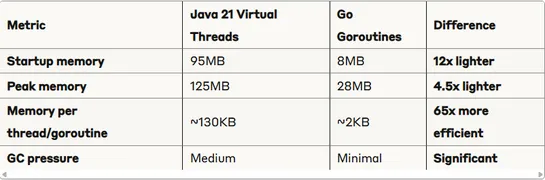
The author migrated fromJava/Spring BoottoGolang. Spring bundlesSecurity,Data,Actuator, and auto-wiring. Go prefers minimalist libraries and explicit wiring. It produces static binaries, instant startup, lower memory use, and nativegoroutineconcurrency. Spring needs JVM startup and GC tuning... read more  

Things I miss about Spring Boot after switching to Go
Link
@varbear shared a link, 3 weeks, 2 days ago
FAUN.dev()

Why is WebAssembly a second-class language on the web?

The post catalogs recentWebAssemblyextensions:shared memory,SIMD,exceptions,tail calls,64-bit memory,GC,bulk memory,multiple returns, andreference types. It arguesWebAssemblyremains a second-class web language. MessyJS glueand arcane loading keep it there. The post pushes theWebAssembly Component Mo.. read more  

Claude is an AI assistant built by Anthropic, a safety-focused AI research company. It's designed around three core principles - being helpful, harmless, and honest - which shapes how it approaches everything from simple questions to complex, multi-step tasks. In practice, Claude handles a broad range of work: writing and editing, coding and debugging, research and summarization, data analysis, brainstorming, and extended back-and-forth conversation. It's built to engage thoughtfully rather than just generate output - it can push back when something seems off, ask clarifying questions, and reason through problems step by step. What sets Claude apart from many AI assistants is its emphasis on nuance and judgment. It tries to give calibrated answers - acknowledging uncertainty when it exists, avoiding overconfidence, and flagging when a question might not have a clean answer. It also has a large context window, making it well suited for long documents, complex codebases, or extended workflows. Claude is available through Claude.ai for individual users, through an API for developers building products and tools, and through Claude Code for agentic coding tasks directly in the terminal. The current model family includes Claude Opus 4.6, Claude Sonnet 4.6, and Claude Haiku 4.5 - ranging from lightweight and fast to highly capable for complex reasoning tasks.