Join us

ContentUpdates and recent posts about BigQuery..
Link
@kaptain shared a link, 3 months, 1 week ago
FAUN.dev()

v1.35: Introducing Workload Aware Scheduling

Kubernetes v1.35 is shifting gears. The newWorkload APIand earlygang schedulingsupport bring group-first thinking, schedule Pods as a unit, or not at all. They’ve thrown inopportunistic batchingtoo. It’s in Beta. It speeds up clusters juggling loads of identical Pods by skipping repeat feasibility c.. read more  

Link
@kaptain shared a link, 3 months, 1 week ago
FAUN.dev()

Kubernetes Was Overkill. We Moved to Docker Compose and Saved 60 Hours.

A small team rolled back their Kubernetes move after six months in the weeds. The setup tanked productivity, bloated infra costs, and turned simple deploys into a slog. They ditched it, brought back Docker Compose, and chopped deploy time from 45 minutes to 4. That one change freed up 60+ engineerin.. read more  

Link
@kaptain shared a link, 3 months, 1 week ago
FAUN.dev()

From Cluster UI to Operational Plane: Lessons from the Kubernetes Dashboard Deprecation

The official Kubernetes Dashboard has been deprecated. This reflects the shift in Kubernetes operations towards multi-cluster environments, GitOps workflows, and strict access controls. Modern Kubernetes environments require application-aware, RBAC-first operational tools that work across clusters a.. read more  

Link
@kaptain shared a link, 3 months, 1 week ago
FAUN.dev()

Bryan Cantrill: How Kubernetes Broke the AWS Cloud Monopoly

Bryan Cantrill says Kubernetes didn’t just organize containers, it cracked open the cloud market. By letting teams provision infrastructure without locking into provider APIs, it broke AWS’s first-mover grip. That shift putcloud neutralityon the table, and suddenly multi-cloud wasn’t just a buzzword.. read more  

Bryan Cantrill: How Kubernetes Broke the AWS Cloud Monopoly
Link
@kaptain shared a link, 3 months, 1 week ago
FAUN.dev()

Kubernetes by Example

K8s by Exampleis likeGo by Example, but for YAML and Kubernetes. It’s packed with annotated manifests that show real deployment, scaling, and self-healing patterns, stuff you'd actually use in prod... read more  

Link
@kala shared a link, 3 months, 1 week ago
FAUN.dev()

8 plots that explain the state of open models

Starting 2026, Chinese companies are dominating the open AI model scene, with Qwen leading in adoption metrics. Despite the rise of new entrants like Z.ai, MiniMax, Kimi Moonshot, and others, Qwen's position seems secure. DeepSeek's large models are showing potential to compete with Qwen, but the Ch.. read more  

Link
@kala shared a link, 3 months, 1 week ago
FAUN.dev()

Build an AI-powered website assistant with Amazon Bedrock

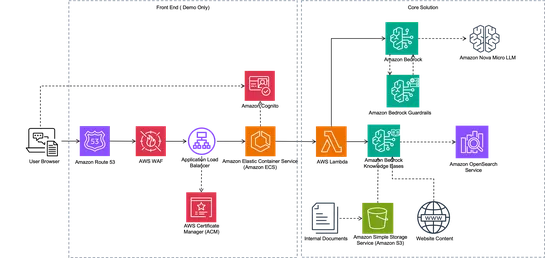
AWS spun up a serverless RAG-based support assistant usingAmazon BedrockandBedrock Knowledge Bases. It pulls in docs via a web crawler and S3, then stuffs embeddings intoAmazon OpenSearch Serverless. Access is role-aware, locked down withCognito. Everything spins up clean withAWS CDK... read more  

Build an AI-powered website assistant with Amazon Bedrock
Link
@kala shared a link, 3 months, 1 week ago
FAUN.dev()

Towards Generalizable and Efficient Large-Scale Generative Recommenders

Authors discuss their approach to scaling generative recommendation models from O(1M) to O(1B) parameters for Netflix tasks, improving training stability, computational efficiency, and evaluation methodology. They address challenges in alignment, cold-start adaptation, and deployment, proposing syst.. read more  

Link
@kala shared a link, 3 months, 1 week ago
FAUN.dev()

Where good ideas come from (for coding agents)

A new way to build agents treats prompting ascontext navigation, steering the LLM through ideas like a pilot, not tossing it prompts and hoping for magic. It maps neatly onto Steven Johnson’s seven patterns of innovation. For coding agents to actually pull their weight, users need to bring more than.. read more  

Link
@kala shared a link, 3 months, 1 week ago
FAUN.dev()

Agentic AI, MCP, and spec-driven development: Top blog posts of 2025

AI speeds up dev - but it’s a double-edged keyboard. It sneaks in subtle bugs and brittle logic that break under pressure. To keep things sane, teams are fighting back withguardrail patterns,AI-aware linters, andtest suites hardened for hallucinated code... read more  

BigQuery is a cloud-native, serverless analytics platform designed to store, query, and analyze massive volumes of structured and semi-structured data using standard SQL. It separates storage from compute, automatically scales resources, and eliminates the need for infrastructure management, indexing, or capacity planning.

BigQuery is optimized for analytical workloads such as business intelligence, log analysis, data science, and machine learning. It supports real-time data ingestion via streaming, batch loading from cloud storage, and federated queries across external data sources like Cloud Storage, Bigtable, and Google Drive.

Query execution is distributed and highly parallel, enabling interactive performance even on petabyte-scale datasets. The platform integrates deeply with the Google Cloud ecosystem, including Looker for BI, Vertex AI for ML workflows, Dataflow for streaming pipelines, and BigQuery ML, which allows users to train and run machine learning models directly using SQL.

Built-in security features include fine-grained IAM controls, column- and row-level security, encryption by default, and audit logging. BigQuery follows a consumption-based pricing model, charging for storage and queries (on-demand or reserved capacity).