Join us

ContentUpdates and recent posts about AWX..
 Activity
@kala added a new tool GPT-5.2 , 6 months ago.
Story
@laura_garcia shared a post, 6 months ago
Software Developer, RELIANOID

RELIANOID at CII Delhi International Technology Summit 2025

16–17 December 2025 - New Delhi, India Our team continues a packed December schedule, and we’re excited to add another key event: the CII Delhi International Technology Summit 2025. Focused on “Accelerating the Techade”, this summit brings together industry, government, and research leaders to shape..

CII Delhi International Technology Summit relianoid
Link
@anjali shared a link, 6 months ago
Customer Marketing Manager, Last9

OTel Updates: OpenTelemetry Proposes Changes to Stability, Releases, and Semantic Conventions

OpenTelemetry proposes stability changes: stable-by-default distributions, decoupled instrumentation, and epoch releases for production deployments.

otel_stability_update
Story
@laura_garcia shared a post, 6 months ago
Software Developer, RELIANOID

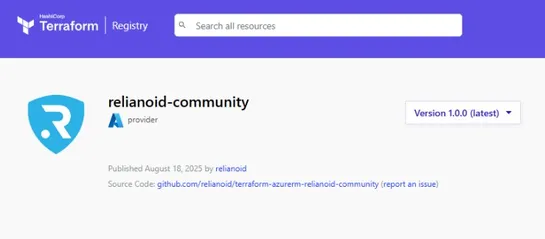
deploy the RELIANOID Load Balancer Community Edition v7 on Azure using Terraform

🚀 New Technical Guide Available! You can now deploy the RELIANOID Load Balancer Community Edition v7 on Azure using Terraform in just a few minutes: ✔️ Install prerequisites (Terraform, Azure CLI, SSH keys) ✔️ Use the official Terraform module from the Registry ✔️ Automatically provision all Azure r..

terraform_relianoid_community_azure_img2
 Activity
 Activity
Link
@anjali shared a link, 6 months, 1 week ago
Customer Marketing Manager, Last9

How to Track Down the Real Cause of Sudden Latency Spikes

Sudden latency spikes rarely have a single cause. This blog shows how to uncover the real source using traces, histograms, and modern debugging signals.

track_latency
Link
@anjali shared a link, 6 months, 1 week ago
Customer Marketing Manager, Last9

Hidden Correlations Traditional Monitoring Misses

Last9 is built to work with high-cardinality telemetry, and we’ve been covering it in detail through our series. This piece looks at a familiar pain: issues that only show up for a specific tenant or deployment. Why does that context disappear in most monitoring setups?

anamoly_detection
Story
@shurup shared a post, 6 months, 1 week ago
@palark

Helm 4 or Nelm? What's the difference

Helm werf

Helm 4.0.0 brought several new features to its users, such as Server-Side Apply support and kstatus-based resource watching.Nelm, an alternative to Helm created in werf, a CNCF Sandbox project, has been offering these capabilities even before. Nelm has many more new features for Kubernetes deploymen..

AWX is the open source, community supported upstream project for Red Hat Ansible Automation Platform, formerly known as Ansible Tower. It gives teams a web based interface, a full REST API, and a distributed task engine on top of Ansible, turning command line playbook runs into a managed, auditable automation service.

The project began at AnsibleWorks as the commercial Ansible Tower product, and after Red Hat acquired Ansible, it open sourced the codebase as AWX in September 2017, positioning it as the development ground where new features land before they are hardened into the supported Automation Platform controller. With AWX, you organize automation around projects (synced from Git or other source control), inventories (static or dynamically pulled from cloud providers), credentials (stored encrypted and injected at runtime), and job templates that tie a playbook to its inventory and credentials. On top of that, it adds role based access control, a visual dashboard, job scheduling, workflow chaining, webhooks, and real time job output, so multiple teams can run, track, and delegate automation without sharing SSH keys or sitting at a terminal.

Modern AWX runs on Kubernetes or OpenShift through the AWX Operator, which manages installation, upgrades, and scaling declaratively, reflecting its shift from a single host application to a cloud native, container based platform. Because it is the upstream of a paid product, AWX moves fast and ships frequently, which makes it ideal for labs, learning, and self managed deployments, though teams needing formal support and long term stability typically run the downstream Automation Platform instead.