Join us

ContentUpdates and recent posts about AWX..
Link
@kaptain shared a link, 6 months ago
FAUN.dev()

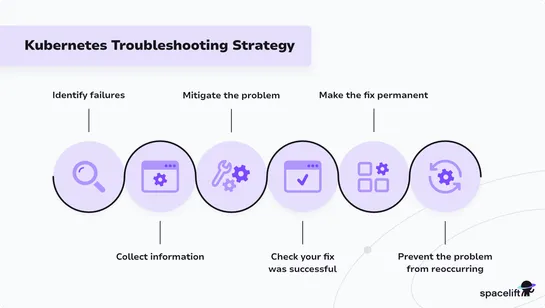
How to Troubleshoot Common Kubernetes Errors

A fresh Kubernetes troubleshooting guide lays out real-world tactics for tracking down 12 common cluster headaches. Think:kubectlsleuthing, poking through system logs, scraping observability metrics, and jumping intodebug containers. The guide breaks down howAIOpsis stepping in, digesting event data.. read more  
How to Troubleshoot Common Kubernetes Errors
Link
@kaptain shared a link, 6 months ago
FAUN.dev()

A Deep Dive into Kubernetes Headless Service

Headless Serviceis a powerfulKubernetesfeature enabling direct pod-to-pod communication forstateful applicationsand preciseservice discoverywithout traditional load balancing.No automatic load balancing, pod IP changes, andspecial use casesmake it ideal for specific scenarios, not general workloads... read more  

Story
@jamesmiller shared a post, 6 months ago
Penetration Tester, ZeroThreat.ai

Automating Penetration Testing in CI/CD: A Practical Guide for Developers

All in One SEO Pack SEMrush SquirrelMail Yoast SEO SchemaHero

Automating pentesting in CI/CD helps developers catch vulnerabilities early, reduce MTTR, and keep releases secure without slowing the pipeline. This guide breaks down why automation matters, the tools developers rely on, common mistakes to avoid, and practical steps to build a reliable pentesting workflow inside modern CI/CD pipelines.

Automating Penetration Testing in CI/CD
Story
@elenamia shared a post, 6 months ago
Technical Consultant, Damco Solutions

Google Cloud Services: A Comprehensive Overview for Modern Businesses

Read this blog to learn about Google Cloud Platform services and its key features, pricing, and use cases across industries.

6086042_22246
Link
@kala shared a link, 6 months ago
FAUN.dev()

How to Create an Effective Prompt for Nano Banana Pro

The author details how to effectively prompt Google’s Nano Banana Pro, a visual reasoning model, emphasizing that success relies on structured design documents rather than vague requests. The method prioritizes four key steps: defining the Work Surface (e.g., dashboard or comic), specifying the prec.. read more  

Link
@kala shared a link, 6 months ago
FAUN.dev()

So you wanna build a local RAG?

Skald spun up a full local RAG stack, withpgvector,Sentence Transformers,Docling, andllama.cpp, in under 10 minutes. The thing hums on English point queries. Benchmarks show open-source models and rerankers can go toe-to-toe with SaaS tools in most tasks. They stumble, though, on multilingual prompt.. read more  

Link
@kala shared a link, 6 months ago
FAUN.dev()

Learning Collatz - The Mother of all Rabbit Holes

Researchers trained small transformer models to predict the "long Collatz step," an arithmetic rule for the infamous unsolved Collatz conjecture, achieving surprisingly high accuracy up to 99.8%. The models did not learn the universal algorithm, but instead showed quantized learning, mastering speci.. read more  

Link
@kala shared a link, 6 months ago
FAUN.dev()

200k Tokens Is Plenty

Amp’s team isn’t chasing token limits. Even with ~200k available via Opus 4.5, they stick toshort, modular threads, around 80k tokens each. Why? Smaller threads are cheaper, more stable, and just work better. Instead of stuffing everything into a single mega-context, they slice big tasks into focuse.. read more  

200k Tokens Is Plenty
Link
@kala shared a link, 6 months ago
FAUN.dev()

Google tests new Gemini 3 models on LM Arena

Google’s been quietly field-testing two shadow models,Fierce FalconandGhost Falcon, on LM Arena. Early signs? They're probably warm-ups for the next Gemini 3 Flash or Pro drop. Classic Google move: float a checkpoint, stir up curiosity, then go GA... read more  

Google tests new Gemini 3 models on LM Arena
Link
@kala shared a link, 6 months ago
FAUN.dev()

Practical LLM Security Advice from the NVIDIA AI Red Team

NVIDIA’s AI Red Team nailed three security sinkholes in LLMs:reckless use ofexec/eval,RAG pipelines that grab too much data, andmarkdown that doesn't get cleaned. These cracks open doors to remote code execution, sneaky prompt injection, and link-based data leaks. The fix-it trend:App security’s lea.. read more  

AWX is the open source, community supported upstream project for Red Hat Ansible Automation Platform, formerly known as Ansible Tower. It gives teams a web based interface, a full REST API, and a distributed task engine on top of Ansible, turning command line playbook runs into a managed, auditable automation service.

The project began at AnsibleWorks as the commercial Ansible Tower product, and after Red Hat acquired Ansible, it open sourced the codebase as AWX in September 2017, positioning it as the development ground where new features land before they are hardened into the supported Automation Platform controller. With AWX, you organize automation around projects (synced from Git or other source control), inventories (static or dynamically pulled from cloud providers), credentials (stored encrypted and injected at runtime), and job templates that tie a playbook to its inventory and credentials. On top of that, it adds role based access control, a visual dashboard, job scheduling, workflow chaining, webhooks, and real time job output, so multiple teams can run, track, and delegate automation without sharing SSH keys or sitting at a terminal.

Modern AWX runs on Kubernetes or OpenShift through the AWX Operator, which manages installation, upgrades, and scaling declaratively, reflecting its shift from a single host application to a cloud native, container based platform. Because it is the upstream of a paid product, AWX moves fast and ships frequently, which makes it ideal for labs, learning, and self managed deployments, though teams needing formal support and long term stability typically run the downstream Automation Platform instead.