Join us

ContentUpdates and recent posts about AWX..
Link
@varbear shared a link, 4 months, 3 weeks ago
FAUN.dev()

How Github monopoly is destroying the open source ecosystem

Out of 238 student open source contributions over seven years, 237 landed onGitHub- even though they were told to look elsewhere. One short-lived GitHub IP block brought everything to a standstill. No commits. No reviews. Just silence. Turns out, a single platform holds the keys to a whole ecosystem.. read more  
How Github monopoly is destroying the open source ecosystem
Link
@varbear shared a link, 4 months, 3 weeks ago
FAUN.dev()

A better way to limit Claude Code (and other coding agents!) access to Secrets

A new workflow dropsClaude Codeinto aBubblewrap-based sandbox, cutting Anthropic's client-side code out of the trust loop. Compared to spinning up Docker or juggling user accounts, Bubblewrap locks things down tighter - with less setup and cleaner OS-level walls around files, network access, and sec.. read more  

Link
@varbear shared a link, 4 months, 3 weeks ago
FAUN.dev()

An Honest Review of Go

Go gets big props for its built-in concurrency model withgoroutinesandchannels, which make lightweight, scalable parallelism easy and ergonomic. The author criticizes Go's type system for lacking things likeenums, closed type sets, and tuples, making certain patterns awkward compared with Rust's ric.. read more  

Link
@varbear shared a link, 4 months, 3 weeks ago
FAUN.dev()

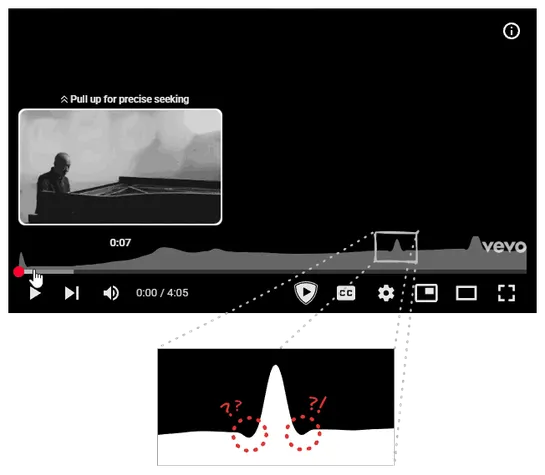
Reversing YouTube's "Most Replayed" Graph

An engineer cracked open YouTube’s “most replayed” heatmap. Turns out it runs onsampled view frequency arrays, client-sidenormalization, andSVG renderingstitched together withCubic Bézier splinesfor that smooth, snappy curve. Behind the scenes, playback gets logged with adifference array + prefix su.. read more  

Reversing YouTube's "Most Replayed" Graph
Story
@laura_garcia shared a post, 4 months, 3 weeks ago
Software Developer, RELIANOID

🚨 Join RELIANOID at the Dallas Cybersecurity Conference 2026! 🚨

📍 Dallas, Texas | 🗓 January 22, 2026 Securing the Future starts here. We’re excited to be part of FutureCon Dallas, a high-impact event bringing together CISOs, C-suite leaders, and senior security professionals to tackle today’s most pressing cyber threats. 🔹 Why attend? Gain actionable insights in..

dallas_cybersecurity_conference_2026_relianoid
Link
@kaptain shared a link, 4 months, 3 weeks ago
FAUN.dev()

v1.35: Restricting executables invoked by kubeconfigs via exec plugin allowList added to kuberc

Kubernetes v1.35 lands with acredential plugin allowlist, now in beta, no feature gate needed. It lets you lock down whichexecplugins your kubeconfigs can run. Tighter leash, lower risk. Especially when the credential pipeline gets sketchy... read more  

Link
@kaptain shared a link, 4 months, 3 weeks ago
FAUN.dev()

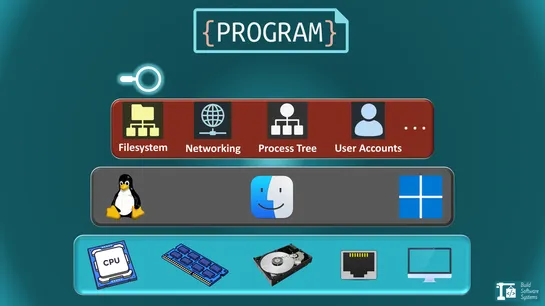
From Bare Metal to Containers: A Developer's Guide to Execution Environments

A sharp look at how execution environments evolved - from bare metal to VMs, containers, sandboxes, and language-level runtimes. The focus: isolation. Hardware, kernel, processes, runtimes - each adds a boundary. Modern stacks mix and match layers to dial in the right amount. VMs, containers, venvs... read more  

From Bare Metal to Containers: A Developer's Guide to Execution Environments
Link
@kaptain shared a link, 4 months, 3 weeks ago
FAUN.dev()

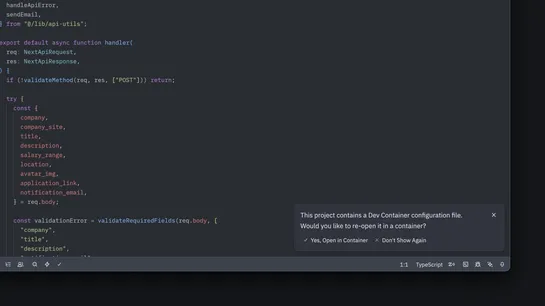
Run Your Project in a Dev Container, in Zed

Zed v0.218 addsDev Containersupport with Docker. Projects can now spin up in clean, spec-compliant environments built from.devcontainer.json. It hooks into theDevelopment Containers CLI, with a Zed remote server running backend ops and piping through standard IO. Fast and clean. The bigger picture?L.. read more  

Run Your Project in a Dev Container, in Zed
Link
@kaptain shared a link, 4 months, 3 weeks ago
FAUN.dev()

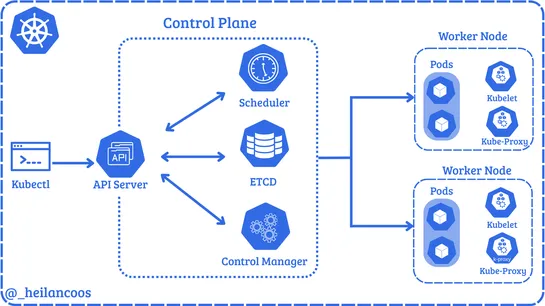
A Brief Deep-Dive into Attacking and Defending Kubernetes

A sharp teardown of Kubernetes’ attack surface maps out where things go sideways: pods, the control plane, RBAC, admission controllers, and etcd. Misconfigurations like anonymous API access, wildcard roles, and hostPath mounts aren't just sloppy- they're attack vectors. Fixes? ThinkFalco,RBAC lockdo.. read more  

A Brief Deep-Dive into Attacking and Defending Kubernetes
Link
@kala shared a link, 4 months, 3 weeks ago
FAUN.dev()

The Complete Guide to CLAUDE.md

Claude Code just got smarter withCLAUDE.md- a project-level file that loads every time a session starts. Drop in your team's coding quirks, custom commands, naming rules, or traps to avoid. Claude reads it, remembers it, and quietly tailors responses to fit. Think of it likeAGENTS.md, seen in Cursor.. read more  

The Complete Guide to CLAUDE.md
AWX is the open source, community supported upstream project for Red Hat Ansible Automation Platform, formerly known as Ansible Tower. It gives teams a web based interface, a full REST API, and a distributed task engine on top of Ansible, turning command line playbook runs into a managed, auditable automation service.

The project began at AnsibleWorks as the commercial Ansible Tower product, and after Red Hat acquired Ansible, it open sourced the codebase as AWX in September 2017, positioning it as the development ground where new features land before they are hardened into the supported Automation Platform controller. With AWX, you organize automation around projects (synced from Git or other source control), inventories (static or dynamically pulled from cloud providers), credentials (stored encrypted and injected at runtime), and job templates that tie a playbook to its inventory and credentials. On top of that, it adds role based access control, a visual dashboard, job scheduling, workflow chaining, webhooks, and real time job output, so multiple teams can run, track, and delegate automation without sharing SSH keys or sitting at a terminal.

Modern AWX runs on Kubernetes or OpenShift through the AWX Operator, which manages installation, upgrades, and scaling declaratively, reflecting its shift from a single host application to a cloud native, container based platform. Because it is the upstream of a paid product, AWX moves fast and ships frequently, which makes it ideal for labs, learning, and self managed deployments, though teams needing formal support and long term stability typically run the downstream Automation Platform instead.