Join us

ContentUpdates and recent posts about AWX..
Link
@kala shared a link, 2 months, 3 weeks ago
FAUN.dev()

LLMs are getting better at unmasking people online

Researchers at ETH Zurich show LLMs can stitch anonymous bios to public web data and reidentify users across platforms. Fine-tuned models and agent chains parse unstructured text and automate deanonymization in minutes at penny-level inference costs... read more  

LLMs are getting better at unmasking people online
Link
@devopslinks shared a link, 2 months, 3 weeks ago
FAUN.dev()

Amazon is back up after outage affecting tens of thousands of shoppers

Amazon faced an outage, affecting tens of thousands of shoppers globally on Thursday afternoon. Downdetector reported a surge in complaints, peaking at 20,000 by 3:49 p.m. ET. The outage involved checkout and pricing errors caused by a software code deployment... read more  

Link
@devopslinks shared a link, 2 months, 3 weeks ago
FAUN.dev()

AWS Cost Optimization Best Practices: A Maturity-Based Guide [2026]

The guide maps a five-stagematurity model— fromVisibilitytoFinOps Culture. It prescribes staged actions before commitment purchases. It recommends turning onCost ExplorerandAWS Budgets, enforcingtag policies, runningCompute Optimizer, testingGraviton, and usingCloudBurn/Amazon Qfor pre-deploy estima.. read more  

Link
@devopslinks shared a link, 2 months, 3 weeks ago
FAUN.dev()

Draw.io MCP for Diagram Generation: Why It’s Worth Using

Draw.io MCPlinks theModel Context Protocoltodraw.io. It ingests structured input (text,CSV,Mermaid) and emitsdraw.io XML, PNG/SVG, or hosted links. Draw.io MCPruns as anMCP Tool Server, CLI, or Copilot skill. It drafts small graphs (<50 nodes) in seconds and stores diagrams inGitfor diffs andCI/CDau.. read more  

Draw.io MCP for Diagram Generation: Why It’s Worth Using
Link
@devopslinks shared a link, 2 months, 3 weeks ago
FAUN.dev()

How I Dropped Our Production Database and Now Pay 10% More for AWS

Planned migration shifts the static site fromGitHub PagestoAWS S3. DNS moves toAWS.Djangostages on a subdomain before the main domain swaps. ATerraformauto-approve ran with no remote state. It destroyed productionRDS,VPC,ECS, and automated snapshots.AWSfound a hidden snapshot and recovered the DB in.. read more  

How I Dropped Our Production Database and Now Pay 10% More for AWS
Link
@devopslinks shared a link, 2 months, 3 weeks ago
FAUN.dev()

Why Serverless Compute Partners Are Now More Important Than Ever

The note saysAIworkloads are bursty. They spawn parallel tool calls, pull multi‑GB model weights into RAM, and endure long cold starts (e.g.,vLLM,SGLang). Companies wrestle with a fragmentedGPUmarket and poor peakGPU utilization. To hit latency, compliance, and cost targets they adoptmulti‑region/mu.. read more  

Why Serverless Compute Partners Are Now More Important Than Ever
Story
@shubham321 shared a post, 2 months, 3 weeks ago
Software engineer, Keploy

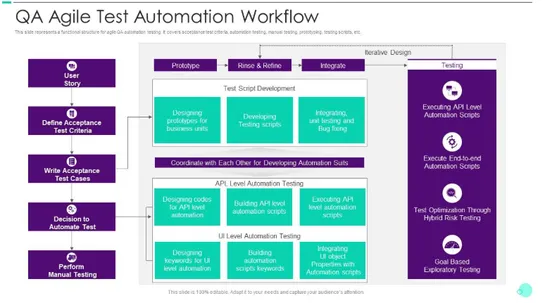
What Is QA Automation? Benefits, Tools, Challenges & Future

QA automation is a modern software testing approach that uses automated tools and frameworks to execute test cases efficiently and consistently. Instead of relying solely on manual testing, QA automation enables teams to validate application functionality, performance, and reliability at every stage of the development lifecycle. It plays a crucial role in Agile and DevOps environments, where frequent code changes and faster release cycles demand continuous testing.

One of the biggest advantages of QA automation is speed. Automated tests can run in minutes, allowing teams to detect defects early and provide quick feedback to developers. This leads to improved software quality and reduced risk of critical issues reaching production. Automation also enhances accuracy by eliminating human errors that commonly occur in repetitive manual testing tasks.

qa automation
Story
@suarezsara shared a post, 2 months, 3 weeks ago

Why SharePoint Application Development Still Powers Enterprise Collaboration in 2026

Learn how businesses use SharePoint for workflow automation, seamless Microsoft 365 integration, and enhanced governance.

Story Keploy Team
@sancharini shared a post, 2 months, 3 weeks ago

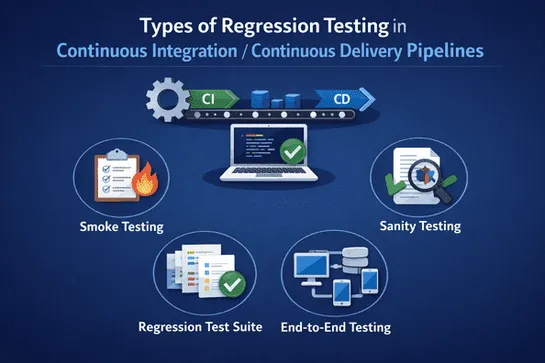
Types of Regression Testing in CI/CD Pipelines

Learn how different types of regression testing in CI/CD pipelines help teams detect defects early, maintain software quality, and reduce production risks while optimizing automated workflows.

Types of Regression Testing in CI/CD Pipelines
Story Keploy Team
@sancharini shared a post, 2 months, 3 weeks ago

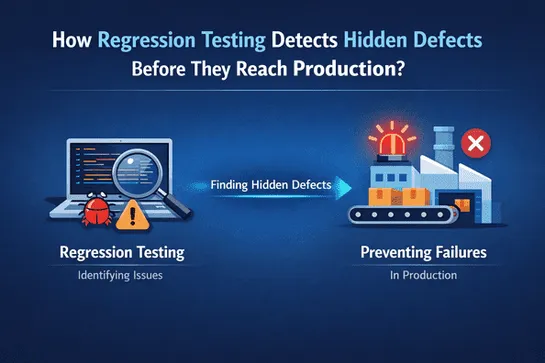
How Regression Testing Detects Hidden Defects Before They Reach Production?

Understand how regression testing helps teams identify hidden defects early, maintain system stability, and prevent production issues using effective testing strategies and regression testing tools.

How Regression Testing Detects Hidden Defects Before Production
AWX is the open source, community supported upstream project for Red Hat Ansible Automation Platform, formerly known as Ansible Tower. It gives teams a web based interface, a full REST API, and a distributed task engine on top of Ansible, turning command line playbook runs into a managed, auditable automation service.

The project began at AnsibleWorks as the commercial Ansible Tower product, and after Red Hat acquired Ansible, it open sourced the codebase as AWX in September 2017, positioning it as the development ground where new features land before they are hardened into the supported Automation Platform controller. With AWX, you organize automation around projects (synced from Git or other source control), inventories (static or dynamically pulled from cloud providers), credentials (stored encrypted and injected at runtime), and job templates that tie a playbook to its inventory and credentials. On top of that, it adds role based access control, a visual dashboard, job scheduling, workflow chaining, webhooks, and real time job output, so multiple teams can run, track, and delegate automation without sharing SSH keys or sitting at a terminal.

Modern AWX runs on Kubernetes or OpenShift through the AWX Operator, which manages installation, upgrades, and scaling declaratively, reflecting its shift from a single host application to a cloud native, container based platform. Because it is the upstream of a paid product, AWX moves fast and ships frequently, which makes it ideal for labs, learning, and self managed deployments, though teams needing formal support and long term stability typically run the downstream Automation Platform instead.