Join us

ContentUpdates and recent posts about AWX..
Link
@kala shared a link, 7 months, 1 week ago
FAUN.dev()

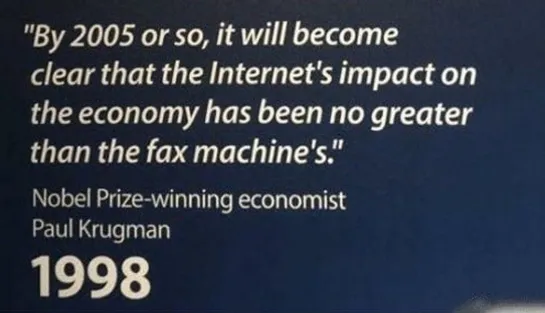
AI's Dial-Up Era

AI's reshaping jobs - but not evenly. Some industries will feel the squeeze faster than others. It all comes down to a race: productivity vs. demand. History's playbook? Think textiles, steel, autos. Automation boosted output. Jobs stuck around - as long as demand kept growing. Once markets topped o.. read more  
AI's Dial-Up Era
Link
@kala shared a link, 7 months, 1 week ago
FAUN.dev()

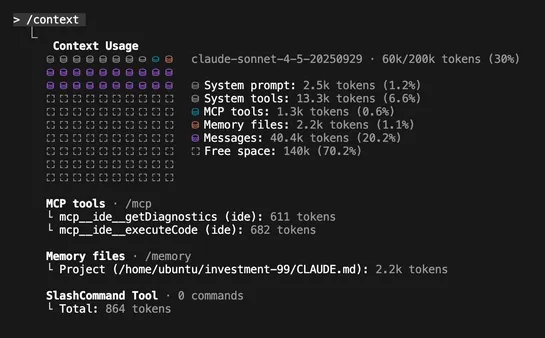
How I Use Every Claude Code Feature

Claude Code isn't just generating responses anymore - it's gearing up to run projects. The new direction turns it into a programmable, auditable agent runtime. Think custom hooks, restart logic, planning workflows, GitHub Actions, and subagent delegation tricks like the “Master-Clone” pattern. At th.. read more  

How I Use Every Claude Code Feature
Link
@kala shared a link, 7 months, 1 week ago
FAUN.dev()

AI Broke Interviews

AI has revolutionized technical interviews, blurring the line between genuine skill and cheating with perfect solutions and polished answers. In response, companies are shifting back to in-person interviews for real-time cognitive transparency, authenticity constraints, realistic collaboration signa.. read more  

Link
@devopslinks shared a link, 7 months, 1 week ago
FAUN.dev()

Why I Like Using Docker Compose in Production

A decade in, and this dev still rides with Docker Compose for production. Why? It just works. Clean deployments, solid uptime, same setup everywhere. No yak-shaving. It shines when you pair it with Git hooks for hands-off, zero-downtime deploys. No need to drag in Kubernetes unless you’re actually w.. read more  

Why I Like Using Docker Compose in Production
Link
@devopslinks shared a link, 7 months, 1 week ago
FAUN.dev()

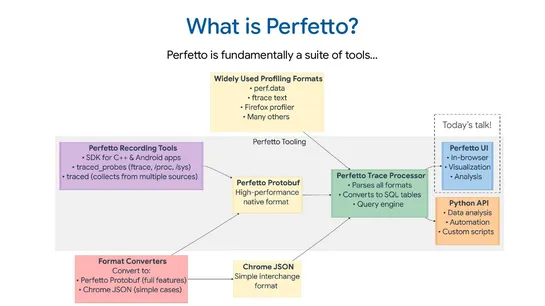
Perfetto: Swiss Army Knife for Linux Client Tracing

Perfetto now pulls in mixed trace data -perfsamples, scheduler events, app-level instrumentation - and lines it all up on a single timeline. One view, no silos. It readstrace-cmd’s text format now, with smoother flame graphs, sharper bottom-up views, and SQL-powered filtering baked right into the UI.. read more  

Perfetto: Swiss Army Knife for Linux Client Tracing
Link
@devopslinks shared a link, 7 months, 1 week ago
FAUN.dev()

VMware Cloud Foundation – what’s actually going on?

Broadcom underwent significant changes post-VMware acquisition, with emphasis on subscription-based pricing and portfolio simplification. Prashant Shenoy claims VCF lowered prices by 50%, challenging industry norms about AI workloads on bare metal versus virtualized environments. Integration pointed.. read more  

News FAUN.dev() Team
@kaptain shared an update, 7 months, 1 week ago
FAUN.dev()

Kubernetes Gateway API 1.4.0 Makes Network Routing More Declarative and Reliable

Istio Kubernetes

Kubernetes releases Gateway API 1.4.0, enhancing service networking with new features like secure TLS connections and improved configuration options.

Gateway API Logo
News FAUN.dev() Team
@kaptain shared an update, 7 months, 1 week ago
FAUN.dev()

Grafana Pushes the Limits of Metrics Performance with Mimir 3.0

Prometheus Grafana Mimir

Grafana Mimir 3.0 debuts with a new query engine and architecture, boosting performance, reliability, and cost efficiency.

Grafana Pushes the Limits of Metrics Performance with Mimir 3.0
Link
@anjali shared a link, 7 months, 1 week ago
Customer Marketing Manager, Last9

OpenTelemetry Metrics in Quarkus Explained

Understand how to enable, export, and extend OpenTelemetry metrics in your Quarkus application with practical examples.

otel_metrics_quarkus
News FAUN.dev() Team
@varbear shared an update, 7 months, 1 week ago
FAUN.dev()

Redis Fixes Critical Vulnerability - Update Your Instances Now

Redis

Redis addresses a critical remote code execution vulnerability, CVE-2025-49844, by releasing fixed versions and recommending best practices to protect instances.

Redis Fixes Critical Vulnerability - Update Your Instances Now
AWX is the open source, community supported upstream project for Red Hat Ansible Automation Platform, formerly known as Ansible Tower. It gives teams a web based interface, a full REST API, and a distributed task engine on top of Ansible, turning command line playbook runs into a managed, auditable automation service.

The project began at AnsibleWorks as the commercial Ansible Tower product, and after Red Hat acquired Ansible, it open sourced the codebase as AWX in September 2017, positioning it as the development ground where new features land before they are hardened into the supported Automation Platform controller. With AWX, you organize automation around projects (synced from Git or other source control), inventories (static or dynamically pulled from cloud providers), credentials (stored encrypted and injected at runtime), and job templates that tie a playbook to its inventory and credentials. On top of that, it adds role based access control, a visual dashboard, job scheduling, workflow chaining, webhooks, and real time job output, so multiple teams can run, track, and delegate automation without sharing SSH keys or sitting at a terminal.

Modern AWX runs on Kubernetes or OpenShift through the AWX Operator, which manages installation, upgrades, and scaling declaratively, reflecting its shift from a single host application to a cloud native, container based platform. Because it is the upstream of a paid product, AWX moves fast and ships frequently, which makes it ideal for labs, learning, and self managed deployments, though teams needing formal support and long term stability typically run the downstream Automation Platform instead.