Join us

ContentUpdates and recent posts about Arti..
News FAUN.dev() Team
@varbear shared an update, 2 months, 3 weeks ago
FAUN.dev()

VillageSQL Launches: A Drop-In MySQL Fork Bringing Extensions and AI to the Core

VillageSQL MySQL

VillageSQL is a drop-in, open-source fork of MySQL that introduces a true extension framework, enabling permissionless innovation for AI-era workloads. It allows developers to add custom data types and functions - with vector indexing and search on the roadmap - bringing MySQL closer to PostgreSQL-style extensibility without waiting for core upstream changes.

 Activity
@kala added a new tool GitHub Copilot SDK , 2 months, 3 weeks ago.
 Activity
@varbear added a new tool VillageSQL , 2 months, 3 weeks ago.
News FAUN.dev() Team Trending
@devopslinks shared an update, 2 months, 3 weeks ago
FAUN.dev()

MinIO Ends Community Development, Positions AIStor as the Future

AIStor MinIO

MinIO has marked its open-source GitHub repository as "THIS REPOSITORY IS NO LONGER MAINTAINED," effectively ending active community development. The company is shifting focus to AIStor, its subscription-based enterprise object storage platform. The code remains available under AGPLv3, but future innovation and support are centered on the commercial product.

 Activity
@devopslinks added a new tool AIStor , 2 months, 3 weeks ago.
Story
@laura_garcia shared a post, 2 months, 3 weeks ago
Software Developer, RELIANOID

Pink26: ITSM – The Next Generation 🚀

📍 February 16–18, 2026 | Las Vegas The future of IT Service Management starts here. Pink26 brings together global IT leaders for a powerful mix of innovation, learning, and real-world transformation — inspired by the spirit of Star Trek: The Next Generation. From ITSM and DevOps to AI, Agile, and Ex..

pink26 las vegas relianoid
Story
@shubham321 shared a post, 2 months, 3 weeks ago
Software engineer, Keploy

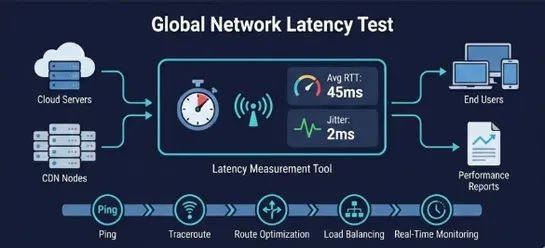
Latency Test Guide: How to Boost App Speed and Improve UX

Did you know 100ms of lag can cost you 1% in sales? Learn how to master the latency test to isolate network, application, and database bottlenecks for a snappier, more reliable user experience

Latency testing (2)
Story
@laura_garcia shared a post, 2 months, 3 weeks ago
Software Developer, RELIANOID

🔁 Resharing insights from our CEO on the next decade of cybersecurity (2026–2036)

🔁 Resharing insights from our CEO on the next decade of cybersecurity (2026–2036) Cybersecurity is not heading toward a single dramatic disruption. It is undergoing a structural transformation. In her latest analysis, our CEO outlines the fundamental shifts that will define the next ten years: 🔐 ..

Story Keploy Team
@sancharini shared a post, 2 months, 3 weeks ago

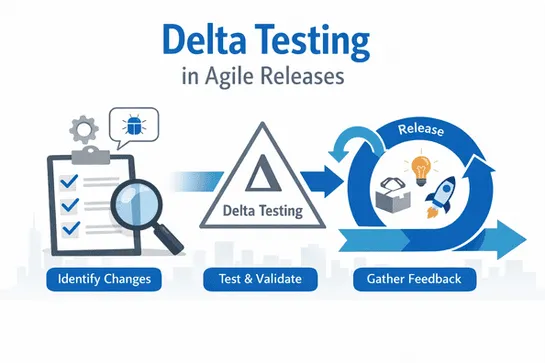
Delta Testing in Agile Releases: How to Validate Changes Without Retesting Everything?

Learn how delta testing helps Agile teams validate code changes efficiently, reduce regression scope, and accelerate CI/CD releases without retesting everything.

Delta Testing in Software Testing
Story
@laura_garcia shared a post, 2 months, 3 weeks ago
Software Developer, RELIANOID

Post-Quantum Cryptography is no longer theoretical. It’s strategic.

Quantum computing will eventually break RSA and ECC — the foundations of today’s secure communications. The industry is already preparing for “Q-Day,” with NIST standardizing algorithms like CRYSTALS-Kyber and Dilithium. We are entering a hybrid era that demands crypto agility. At RELIANOID, we’re p..

Blog Post-Quantum Cryptography
Arti is an official Tor Project initiative to rewrite the Tor client stack in Rust. Its primary goal is to address long-standing safety, reliability, and maintainability challenges inherent in the legacy C-based Tor implementation. By leveraging Rust’s strong compile-time guarantees for memory safety and concurrency, Arti eliminates entire classes of bugs that have historically affected Tor, including many security vulnerabilities.

Arti is architected as a modular, embeddable library rather than a monolithic application. This makes it easier for developers to integrate Tor networking capabilities directly into other applications, services, and platforms. From its earliest versions, Arti has supported multi-core cryptography, cleaner APIs, and a more maintainable internal design.

While early releases focused on client functionality such as bootstrapping, running as a SOCKS proxy, and routing traffic over the Tor network, the long-term roadmap includes full feature parity with the existing Tor client, support for onion services, anti-censorship mechanisms, and eventually Tor relay functionality. Arti represents the future foundation of the Tor ecosystem, prioritizing long-term security, developer velocity, and adaptability.