Join us

ContentUpdates and recent posts about Argo CD..
 Activity
@sanjayjoshi added a new tool Shadcn Space , 1 week, 2 days ago.
 Activity
@sanjayjoshi created an organization WrapPixel , 1 week, 2 days ago.
 Activity
@sanjayjoshi started using tool tailwindcss , 1 week, 2 days ago.
 Activity
@sanjayjoshi started using tool React , 1 week, 2 days ago.
 Activity
@sanjayjoshi started using tool Next.js , 1 week, 2 days ago.
Story Trending
@himanshu shared a post, 1 week, 3 days ago

Software Testing Strategies: A Practical Guide for Modern Development

Software quality is a critical factor in modern application development. As development teams adopt Agile, DevOps, and CI/CD pipelines, testing must also evolve to ensure software remains reliable and secure. A well-defined testing plan helps teams identify bugs early, reduce risks, and deliver bett..
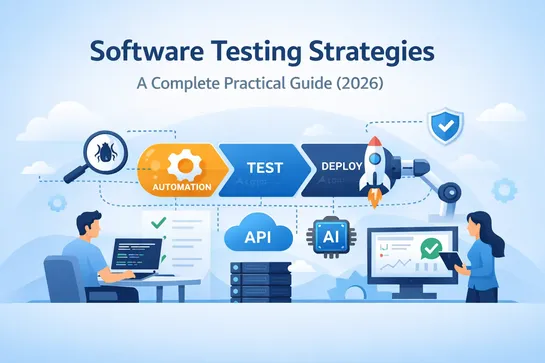
software testing Strategies
Link
@pramod_kumar_0820 shared a link, 1 week, 3 days ago
Software Engineer, Teknospire

Why Most Spring Boot Apps Fail in Production (7 Critical Mistakes)

Most Spring Boot applications run perfectly in development.

The APIs respond quickly, tests pass, and everything seems stable.

But once the application reaches production, things can change dramatically — slow responses, memory issues, and unexpected failures start appearing.

In many cases, the problem isn't Spring Boot itself.
It's a set of common mistakes developers unknowingly introduce into their applications.

In this article, we'll explore 7 critical mistakes that cause many Spring Boot apps to fail in production — and how to avoid them.

new
Story Trending
@marxjenes shared a post, 1 week, 3 days ago

Why Test Automation Frameworks Are Essential for Scalable Testing?

Learn why test automation frameworks are essential for scalable testing, enabling teams to manage large test suites, improve test efficiency, and maintain reliable software quality.

Why Test Automation Frameworks Are Essential for Scalable Testing
Story Trending
@shubham321 shared a post, 1 week, 3 days ago
Software engineer, Keploy

System Integration Testing (SIT) in Software Testing: Complete Guide

System Integration Testing (SIT) is an essential phase in the software testing lifecycle that focuses on verifying how different components of a system interact with each other. In modern software applications, multiple modules such as APIs, databases, services, and external systems work together to deliver functionality. While individual modules may function correctly when tested separately, issues often arise when these modules are integrated. SIT helps identify and resolve such issues before the software moves to later testing stages.

Screenshot 2026-03-10 172412
Link Keploy Team
@sancharini shared a link, 1 week, 3 days ago

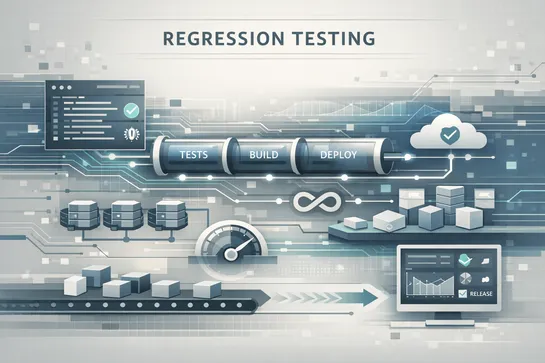
Software Regression Testing Services: Ensuring Stability After Every Change

Software Regression Testing Services: Ensuring Stability After Every Change

regression testing services
At its core, Argo CD treats Git as the single source of truth for application definitions. You declare the desired state of your Kubernetes applications in Git (manifests, Helm charts, Kustomize overlays), and Argo CD continuously compares that desired state with what is actually running in the cluster. When drift is detected, it can alert you or automatically reconcile the cluster back to the Git-defined state.

Argo CD runs inside Kubernetes and provides:

- Declarative application management
- Automated or manual sync from Git to cluster
- Continuous drift detection and health assessment
- Rollbacks by reverting Git commits
- Fine-grained RBAC and multi-cluster support

It integrates natively with common Kubernetes configuration formats:

- Plain YAML
- Helm
- Kustomize
- Jsonnet

Operationally, Argo CD exposes both a web UI and CLI, making it easy to visualize application state, deployment history, diffs, and sync status. It is commonly used in platform engineering and SRE teams to standardize deployments, reduce configuration drift, and enforce auditability.

Argo CD is part of the Argo Project, which is hosted by the Cloud Native Computing Foundation (CNCF), and is widely adopted in production Kubernetes environments ranging from startups to large enterprises.