Join us

ContentUpdates and recent posts about AIStor..
News FAUN.dev() Team
@kaptain shared an update, 3 months, 1 week ago
FAUN.dev()

Running Databases on Kubernetes Is Becoming the New Normal

Running databases on Kubernetes has moved from experimentation to standard practice, driven by platform maturity, cost pressures, and AI/ML demands. According to the 2025 Data on Kubernetes survey, organizations are now focused on operational excellence, with cost optimization, storage performance, and AI workloads shaping the next phase.


Story
@laura_garcia shared a post, 3 months, 2 weeks ago
Software Developer, RELIANOID

🔐 Third-Party Risk Management at RELIANOID

At RELIANOID, security and resilience extend beyond our own platform. We apply strict Third-Party Risk Management (TPRM) practices to ensure that every vendor, partner, or supplier meets our high standards for security, compliance, and reliability. ✔️ Risk assessments before onboarding (ISO 27001, S..

Third-Party Risk Management (TPRM) Policy relianoid
Story
@sancharini shared a post, 3 months, 2 weeks ago

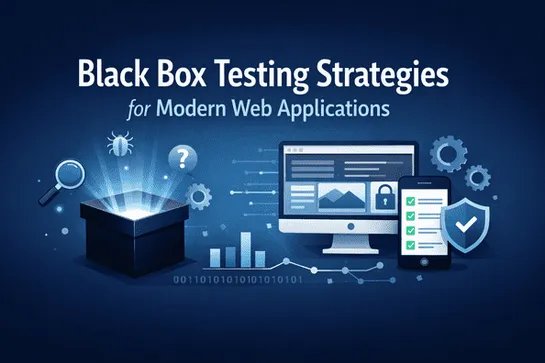
Black Box Testing Strategies for Modern Web Applications

Explore effective black box testing strategies for modern web applications. Learn how to validate user workflows, APIs, asynchronous behavior, and security while minimizing flaky tests.

Black Box Testing Strategies for Modern Web Applications
 Activity
@sancharini created an organization Keploy , 3 months, 2 weeks ago.
Story
@laura_garcia shared a post, 3 months, 2 weeks ago
Software Developer, RELIANOID

🌊 Load Balancing Smart Wave with RELIANOID

Built for Marine Telemetry The Smart Wave platform is key for real-time telemetry from offshore buoys, vessels, and coastal stations. But how do you ensure it performs reliably — even over satellite links? We've published a new technical guide showing how to load balance Smart Wave using RELIANOID: ..

Knowledge base_how to load balance SMART WAVE_blue economy
Story
@sancharini shared a post, 3 months, 2 weeks ago

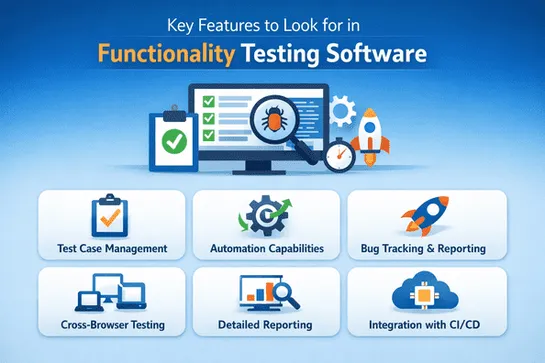
Key Features to Look for in Functionality Testing Software

Discover key features to look for in functionality testing software to ensure reliable, efficient, and scalable application testing.

Features of Functionality Testing Software
Story
@laura_garcia shared a post, 3 months, 2 weeks ago
Software Developer, RELIANOID

We’re excited to take part in The Elephant In AppSec Conference 2026 🐘🔐

📅 January 14–15, 2026 🌐 Virtual Event An AppSec event where strong opinions are encouraged, assumptions are challenged, and real-world experience takes center stage. Looking forward to engaging in honest conversations and sharing how RELIANOID supports modern Application Security through secure appl..

the_elephant_in_appsec_conference_2026_relianoid
Story
@laura_garcia shared a post, 3 months, 2 weeks ago
Software Developer, RELIANOID

Cybersecurity in Maritime: The Quiet Threat Persisting Throughout the Entire Lifecycle of a Ship 🚢⚓️🔐

The maritime sector is becoming increasingly digital — and with it comes a growing, often invisible, threat: cybersecurity vulnerabilities that affect vessels from the blueprint stage to decommissioning. 📍 From compromised ECDIS systems to insecure OTA updates and neglected end-of-life data handling..

Blog Maritime Cybersecurity
Link Xygeni Team
@mashka shared a link, 3 months, 2 weeks ago
Paid Acquisition and Growth Marketing, xygeni

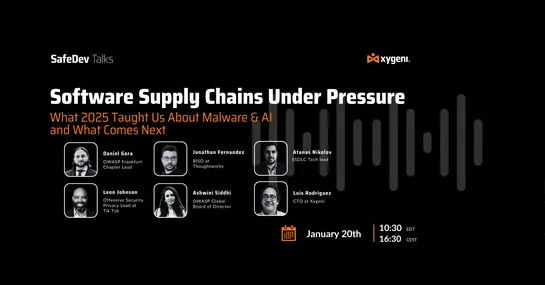
Software Supply Chains Under Pressure: What Malware and AI Changed in 2025 and what to Expect in 2026

2025 exposed a shift in software supply chain attacks. AI-assisted malware, self-propagating techniques, and widespread trust abuse altered how compromises spread across dependencies, registries, and CI/CD pipelines.

This upcoming LinkedIn Live SafeDev Talk examines what truly changed, why long-held security assumptions are breaking down, and what development teams need to rethink as they head into 2026.

📅 January 20th | ⏰ Time: 𝟏𝟔:𝟑𝟎 (𝐂𝐄𝐒𝐓)/𝟏𝟎:𝟑𝟎 (𝐄𝐃𝐓)

Join Us!

SafeDev Talk 1 2026 - Yearly Recap (4)
Link FAUN.dev() Team
@eon01 shared a link, 3 months, 2 weeks ago
Founder, FAUN.dev

2025 Internet Trends

Cloudflare just released its 2025 Radar Year in Review, a systems report on how the Internet actually behaved last year. A few things stood out in my opinion: 👉 Most AI systems take far more than they give back. AI bots now account for a meaningful slice of web traffic. Googlebot alone generates mor.. read more  

AIStor is an enterprise-grade, high-performance object storage platform built for modern data workloads such as AI, machine learning, analytics, and large-scale data lakes. It is designed to handle massive datasets with predictable performance, operational simplicity, and hyperscale efficiency, while remaining fully compatible with the Amazon S3 API. AIStor is offered under a commercial license as a subscription-based product.

At its core, AIStor is a software-defined, distributed object store that runs on commodity hardware or in containerized environments like Kubernetes. Rather than being limited to traditional file or block interfaces, it exposes object storage semantics that scale from petabytes to exabytes within a single namespace, enabling consistent, flat addressing of vast datasets. It is engineered to sustain very high throughput and concurrency, with examples of multi-TiB/s read performance on optimized clusters.

AIStor is optimized specifically for AI and data-intensive workloads, where throughput, low latency, and horizontal scalability are critical. It integrates broadly with modern AI and analytics tools, including frameworks such as TensorFlow, PyTorch, Spark, and Iceberg-style table engines, making it suitable as the foundational storage layer for pipelines that demand both performance and consistency.

Security and enterprise readiness are central to AIStor’s design. It includes capabilities like encryption, replication, erasure coding, identity and access controls, immutability, lifecycle management, and operational observability, which are important for mission-critical deployments that must meet compliance and data protection requirements.

AIStor is positioned as a platform that unifies diverse data workloads — from unstructured storage for application data to structured table storage for analytics, as well as AI training and inference datasets — within a consistent object-native architecture. It supports multi-tenant environments and can be deployed across on-premises, cloud, and hybrid infrastructure.