Join us

ContentUpdates and recent posts about AIStor..
Link
@kaptain shared a link, 3 weeks, 2 days ago
FAUN.dev()

Kubernetes v1.36 - Sneak Peek

Kubernetes v1.36 (Apr 22, 2026) enablesHPAScaleToZeroby default. That lets theHPAuseminReplicas: 0and read only controller-owned pod metrics. The release swaps long-lived image-pull secrets forephemeral KSA tokens. It deprecatesIPVS, retiresIngress NGINX, and aligns withcontainerd 2.x. The release f.. read more  

Link
@kala shared a link, 3 weeks, 2 days ago
FAUN.dev()

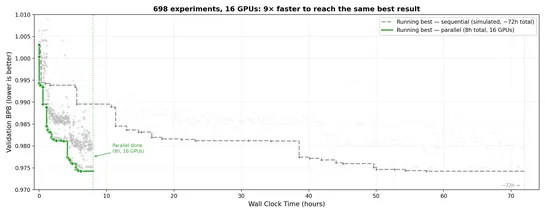
Scaling Karpathy's Autoresearch: What Happens When the Agent Gets a GPU Cluster

A team pointedClaude Codeatautoresearchand spun up 16 Kubernetes GPUs. The setup ran ~910 experiments in 8 hours.val_bpbdropped from 1.003 to 0.974 (2.87%). Throughput climbed ~9×. Parallel factorial waves revealedAR=96as the best width. The pipeline usedH100for cheap screening andH200for validation.. read more  

Scaling Karpathy's Autoresearch: What Happens When the Agent Gets a GPU Cluster
Link
@kala shared a link, 3 weeks, 2 days ago
FAUN.dev()

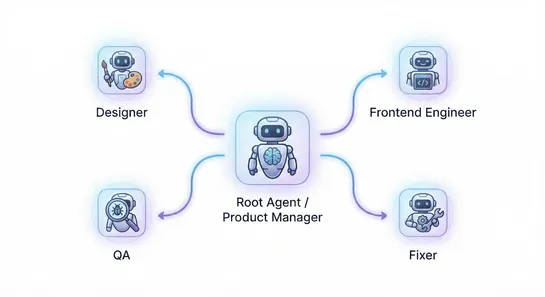
Building AI Teams with Sandboxes & Agent

Docker Agentruns teams of specialized AI agents. The agents split work: design, code, test, fix. Models and toolsets are configurable. Docker Sandboxesisolate each agent in a per-workspacemicroVM. The sandbox mounts the host project path, strips host env vars, and limits network access. Tooling move.. read more  

Building AI Teams with Sandboxes & Agent
Link
@kala shared a link, 3 weeks, 2 days ago
FAUN.dev()

OpenClaw Tutorial: AI Stock Agent with Exa and Milvus

An autonomous market agent ships. OpenClaw handles orchestration. Exa returns structured, semantic web results. Milvus (or Zilliz Cloud) stores vectorized trade memory. A 30‑minute Heartbeat keeps it running. Custom Skills load on demand. Recalls query 1536‑dim embeddings. Entire stack runs for abou.. read more  

OpenClaw Tutorial: AI Stock Agent with Exa and Milvus
Link
@kala shared a link, 3 weeks, 2 days ago
FAUN.dev()

OpenClaw is a great movement, but dead product. what's next?

After talking to 50+ individuals experimenting with OpenClaw, it's clear that while many have tried it and even explored it for more than 3 days, only around 10% have attempted automating real actions. However, most struggle to maintain these automations at a production level due to challenges with .. read more  

Link
@kala shared a link, 3 weeks, 2 days ago
FAUN.dev()

OpenAI to acquire Astral

OpenAI will acquire Astral, pending regulatory close. It will fold Astral's open-source Python tools —uv,Ruff, andty— intoCodex. Teams will integrate the tools.Codexwill plan changes, modify codebases, run linters and formatters, and verify results acrossPythonworkflows. System shift:This injects pr.. read more  

OpenAI to acquire Astral
Link
@devopslinks shared a link, 3 weeks, 2 days ago
FAUN.dev()

How we fixed Postgres connection pooling on serverless with PgDog

A startup swappedSupavisorandPgBouncerforPgDogonEKS. The swap stopped serverless deploy connection spikes. A multi-threaded, colocated pooler handled the bursty traffic. PgDogneeded fixes forPrismaprepared-statement handling. The team shipped those.PgDognow exports metrics viaOpenMetricstoPrometheus.. read more  

How we fixed Postgres connection pooling on serverless with PgDog
Link
@devopslinks shared a link, 3 weeks, 2 days ago
FAUN.dev()

New Malware Highlights Increased Systematic Targeting of Network Infrastructure

The enterprise attack surface has changed, with threat actors increasingly targeting network infrastructure. Eclypsium recently captured new malware samples, including CondiBot and "Monaco," both impacting network devices such as Fortinet products. The rise in network device attacks poses serious th.. read more  

Link
@devopslinks shared a link, 3 weeks, 2 days ago
FAUN.dev()

California’s AB 1043 Could Regulate Every Linux Command, and the Open Source World Is Too Quiet

California'sAB 1043requires operating systems to collect age/DOB at account setup and expose anAPIthat returns anage bracket signal. Apps must request that signal on launch and restrict access by bracket. EffectiveJan 1, 2027, vague definitions could sweepapt,flatpak,snap, and package managers into .. read more  

Link
@devopslinks shared a link, 3 weeks, 2 days ago
FAUN.dev()

Rocky Linux 9 on AWS EC2: Best Practices for Production

Rocky Linux 9 pairs RHEL-9 binary compatibility and modern kernels with AWS EC2 features:cloud-init,ENA,NVMe,gp3. The guide recommendsM6i/M7ifor general servers. It favorsC‑seriesfor heavy compute andio2for databases. PreferXFS. KeepSELinuxenabled. Use immutable AMIs. Automate withAnsible... read more  

AIStor is an enterprise-grade, high-performance object storage platform built for modern data workloads such as AI, machine learning, analytics, and large-scale data lakes. It is designed to handle massive datasets with predictable performance, operational simplicity, and hyperscale efficiency, while remaining fully compatible with the Amazon S3 API. AIStor is offered under a commercial license as a subscription-based product.

At its core, AIStor is a software-defined, distributed object store that runs on commodity hardware or in containerized environments like Kubernetes. Rather than being limited to traditional file or block interfaces, it exposes object storage semantics that scale from petabytes to exabytes within a single namespace, enabling consistent, flat addressing of vast datasets. It is engineered to sustain very high throughput and concurrency, with examples of multi-TiB/s read performance on optimized clusters.

AIStor is optimized specifically for AI and data-intensive workloads, where throughput, low latency, and horizontal scalability are critical. It integrates broadly with modern AI and analytics tools, including frameworks such as TensorFlow, PyTorch, Spark, and Iceberg-style table engines, making it suitable as the foundational storage layer for pipelines that demand both performance and consistency.

Security and enterprise readiness are central to AIStor’s design. It includes capabilities like encryption, replication, erasure coding, identity and access controls, immutability, lifecycle management, and operational observability, which are important for mission-critical deployments that must meet compliance and data protection requirements.

AIStor is positioned as a platform that unifies diverse data workloads — from unstructured storage for application data to structured table storage for analytics, as well as AI training and inference datasets — within a consistent object-native architecture. It supports multi-tenant environments and can be deployed across on-premises, cloud, and hybrid infrastructure.