As organizations accelerate cloud adoption, securing cloud-native applications has become increasingly challenging. Modern applications are built using containers, Kubernetes, serverless functions, APIs, and multi-cloud environments, creating a complex security landscape. Traditional security tools often operate in silos, leaving security teams struggling with fragmented visibility and inconsistent protection.
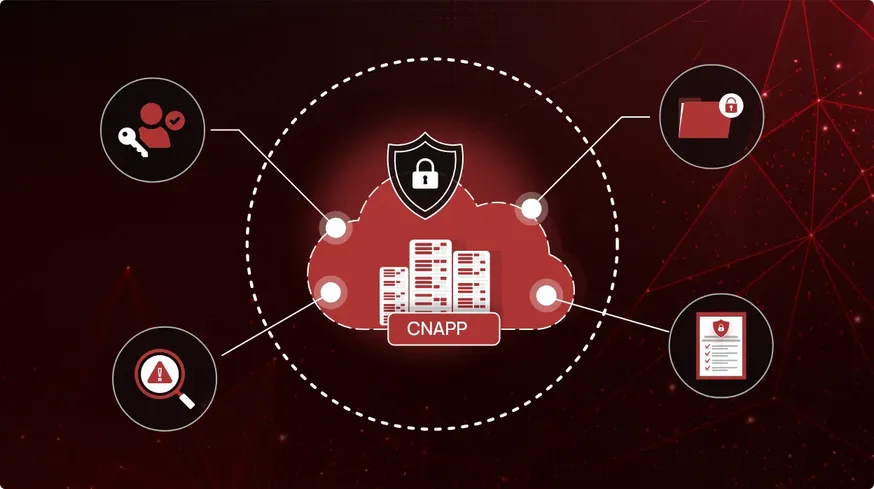
To address these challenges, Cloud-Native Application Protection Platforms (CNAPPs) have emerged as a unified security approach. CNAPP combines multiple cloud security capabilities into a single platform, helping organizations secure applications throughout their entire lifecycle—from development to runtime.
In this article, we'll explore what CNAPP is, how it works, its key components, benefits, use cases, and why it has become an essential part of modern cloud security strategies.
What Is CNAPP?
Cloud-Native Application Protection Platform (CNAPP) is an integrated security solution designed to protect cloud-native applications across development, deployment, and runtime environments.
The term CNAPP was introduced by the research and advisory firm Gartner to describe a consolidated platform that brings together multiple cloud security technologies into a unified framework.
Rather than relying on separate tools for cloud security posture management, workload protection, vulnerability management, and compliance monitoring, CNAPP combines these capabilities into a single platform.
A CNAPP solution provides:
- Continuous visibility into cloud environments
- Risk assessment and prioritization
- Vulnerability detection
- Compliance monitoring
- Runtime threat detection
- Infrastructure-as-Code (IaC) security
- Identity and access security
This unified approach enables organizations to identify, prioritize, and remediate security risks more efficiently.
Why CNAPP Is Important
Cloud environments are becoming more dynamic and distributed. Organizations often use multiple cloud providers, containerized workloads, microservices architectures, and DevOps practices.
This complexity introduces several challenges:
Expanding Attack Surface
Every container, API, virtual machine, serverless function, and cloud service creates potential attack vectors.
Security Tool Sprawl
Many organizations deploy separate tools for:
- CSPM
- CWPP
- Vulnerability Management
- Container Security
- Compliance Monitoring
Managing multiple disconnected tools can create operational inefficiencies and visibility gaps.
Faster Development Cycles
DevOps and CI/CD pipelines accelerate software delivery but can introduce security vulnerabilities if security isn't integrated early.
Regulatory Compliance
Organizations must comply with regulations such as:
- GDPR
- HIPAA
- PCI DSS
- ISO 27001
- NIST Framework
CNAPP helps automate compliance monitoring and reporting across cloud environments.
Key Components of CNAPP
A CNAPP platform typically combines several cloud security technologies.
1. Cloud Security Posture Management (CSPM)
CSPM continuously monitors cloud environments for:
- Misconfigurations
- Compliance violations
- Excessive permissions
- Publicly exposed resources
Examples include:
- Open storage buckets
- Misconfigured firewalls
- Unencrypted databases
2. Cloud Workload Protection Platform (CWPP)
CWPP protects cloud workloads such as:
- Virtual machines
- Containers
- Kubernetes clusters
- Serverless workloads
It provides:
- Vulnerability scanning
- Malware detection
- Runtime protection
- Threat monitoring
3. Infrastructure-as-Code (IaC) Security
Modern cloud environments are often deployed using:
- Terraform
- AWS CloudFormation
- Kubernetes YAML files
CNAPP scans IaC templates before deployment to identify security issues early in the development lifecycle.
4. Container Security
Containers are central to cloud-native architectures.
CNAPP provides:
- Container image scanning
- Configuration assessment
- Supply chain security
- Runtime protection
This helps organizations secure applications before and after deployment.
5. Kubernetes Security
CNAPP secures Kubernetes environments by:
- Detecting misconfigurations
- Monitoring cluster activity
- Managing permissions
- Enforcing security policies
6. Identity and Entitlement Management
Cloud environments often suffer from excessive permissions and privilege creep.
CNAPP helps identify:
- Overprivileged accounts
- Dormant credentials
- Risky permissions
- Identity-based attack paths
7. Runtime Threat Detection
Security risks don't disappear after deployment.
CNAPP continuously monitors workloads for:
- Suspicious activity
- Unauthorized access attempts
- Malware execution
- Lateral movement
This enables rapid threat detection and response.
How CNAPP Works
CNAPP operates across the entire cloud-native application lifecycle.
Development Stage
During development, CNAPP:
- Scans source code
- Reviews Infrastructure-as-Code templates
- Identifies vulnerabilities
- Enforces security policies
Build Stage
As applications move through CI/CD pipelines, CNAPP:
- Scans container images
- Detects secrets exposure
- Assesses software dependencies
Deployment Stage
Before deployment, CNAPP:
- Evaluates configurations
- Validates compliance requirements
- Identifies security gaps
Runtime Stage
After deployment, CNAPP:
- Monitors workloads
- Detects threats
- Identifies anomalies
- Generates alerts
This shift-left and shield-right approach ensures security throughout the application lifecycle.
Benefits of CNAPP
Unified Security Visibility
CNAPP provides a centralized view of cloud security risks across multiple cloud environments.
Improved Risk Prioritization
Rather than overwhelming teams with thousands of alerts, CNAPP correlates findings and highlights the most critical risks.
Reduced Security Tool Complexity
Organizations can consolidate multiple cloud security products into a single platform.
Faster Remediation
Security teams receive contextual information that helps prioritize and fix vulnerabilities more efficiently.
Better Compliance Management
Continuous compliance monitoring simplifies audits and regulatory reporting.
Enhanced DevSecOps Integration
CNAPP integrates directly into development workflows, allowing security issues to be identified earlier.
Reduced Cloud Risk
By continuously monitoring configurations, workloads, identities, and runtime activities, organizations can significantly reduce their cloud attack surface.
CNAPP vs CSPM
FeatureCSPMCNAPPCloud Configuration MonitoringYesYesCompliance MonitoringYesYesRuntime ProtectionLimitedYesContainer SecurityLimitedYesVulnerability ManagementPartialYesIdentity SecurityLimitedYesUnified Risk ContextNoYes
CSPM is a component of CNAPP, while CNAPP provides a broader, more comprehensive security platform.
CNAPP vs CWPP
FeatureCWPPCNAPPWorkload ProtectionYesYesVulnerability DetectionYesYesCloud Posture ManagementNoYesIaC SecurityNoYesCompliance MonitoringLimitedYesIdentity SecurityNoYes
CWPP focuses on workloads, while CNAPP covers the entire cloud-native ecosystem.
Common CNAPP Use Cases
Multi-Cloud Security
Organizations using AWS, Azure, and Google Cloud can manage security through a single platform.
Container and Kubernetes Protection
CNAPP helps secure modern containerized applications from development through runtime.
Compliance Automation
Organizations can continuously monitor compliance with industry standards and regulations.
Vulnerability Management
Security teams can identify, prioritize, and remediate vulnerabilities based on business risk.
Identity Risk Reduction
CNAPP helps prevent privilege misuse and identity-based attacks.
DevSecOps Enablement
Security becomes an integrated part of software development rather than a final checkpoint.
Choosing the Right CNAPP Solution
When evaluating CNAPP platforms, consider:
- Multi-cloud support
- Container and Kubernetes security
- Runtime protection capabilities
- Compliance coverage
- Identity security features
- DevSecOps integrations
- Risk prioritization capabilities
- Scalability and performance
Organizations should prioritize solutions that provide comprehensive visibility while minimizing operational complexity.
The Future of CNAPP
As cloud-native adoption continues to grow, CNAPP is becoming a foundational component of enterprise cybersecurity strategies.
Future CNAPP platforms are expected to incorporate:
- AI-driven risk analysis
- Automated remediation
- Advanced attack path modeling
- Enhanced cloud identity security
- Deeper integration with XDR and SIEM platforms
The trend toward security platform consolidation will likely accelerate, making CNAPP a central pillar of cloud security operations.
Conclusion
Cloud-Native Application Protection Platforms (CNAPPs) represent the next evolution of cloud security. By integrating CSPM, CWPP, container security, Kubernetes protection, identity management, and runtime threat detection into a single platform, CNAPP enables organizations to secure cloud-native applications more effectively.
As cloud environments become increasingly complex, organizations need security solutions that provide unified visibility, contextual risk analysis, and continuous protection across the entire application lifecycle. CNAPP delivers these capabilities, helping security teams reduce risk, improve compliance, and strengthen their overall cloud security posture.
For organizations pursuing digital transformation and cloud-first initiatives, adopting a robust CNAPP strategy is no longer optional—it is essential for maintaining security and resilience in today's rapidly evolving threat landscape.