 Posts from @thehomess_ca..
 Link


Story
@squadcast shared a post, 1 year, 7 months ago
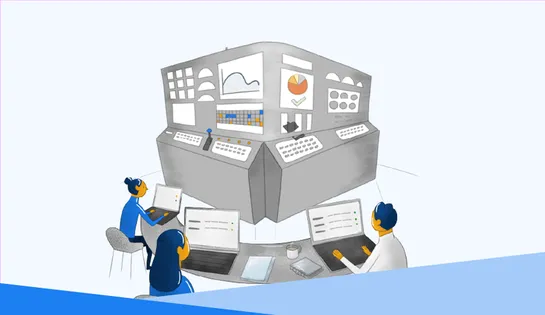
How Incident Management Software Can Help You Conduct Better Root Cause Analysis
Incident management software can improve root cause analysis (RCA) by storing all data (logs, alerts, communication) in one place. This saves time and allows for faster identification of root causes through automatic data analysis. Traditional RCA methods are manual and slow, with scattered information and inconsistent results. The article recommends Squadcast, an incident management solution with built-in RCA features like collaboration tools, actionable reports, and a searchable RCA repository.
Story

@veljkoristic shared a post, 1 year, 7 months ago
Content Manager, Mailtrap
Creating a WordPress Contact Form – Complete Guide
I’ll make you an offer you can’t refuse. 🐈 I’ll tell you how to create a WordPress contact form, covering every imaginable detail, and making sure you won’t be reading only code and industry jargon. So, this article is suitable for beginners and those who already have some experience and wish to get..
Story
@squadcast shared a post, 1 year, 7 months ago
Squadcast Earns Top Ratings as an Incident Management Tool in G2 Spring Report 2024
Squadcast, an incident management tool, was ranked among the top 10 in the G2 Spring Report 2024. They received high marks for ease of use, customer satisfaction, and rapid deployment. They are known for their user-friendly interface and focus on helping organizations streamline incident response workflows. Squadcast also performed well in both the Mid-Market and Enterprise segments, being recognized for their scalability and customer support. Overall, the blog highlights Squadcast's position as a leading incident management tool.
Story
@squadcast shared a post, 1 year, 7 months ago
How Incident Management Software Can Help You Conduct Better Root Cause Analysis
Incident management software can improve root cause analysis (RCA) by storing all data (logs, alerts, communication) in one place. This saves time and allows for faster identification of root causes through automatic data analysis. Traditional RCA methods are manual and slow, with scattered information and inconsistent results. The article recommends Squadcast, an incident management solution with built-in RCA features like collaboration tools, actionable reports, and a searchable RCA repository.
Story


@squadcast shared a post, 1 year, 7 months ago
Splunk vs Sumo Logic: Choosing the Right Tool for Your Data Needs
This article offers a comparison of two leading data analytics platforms: Sumo Logic and Splunk. It highlights the key factors to consider when choosing between these two options, including: functionality, scalability, deployment, security, cost, and licensing.
In essence, Splunk is suited for businesses with complex data needs and a preference for customization, while Sumo Logic caters more towards cloud-based log management and real-time data processing. The final decision depends on your specific requirements and budget.
Story

@adammetis shared a post, 1 year, 7 months ago
DevRel, Metis
Journey to modern databases
Choosing a database is hard, however, maintaining it afterward is even harder. In this post, we talk about elements to focus on, tooling, monitoring, and other aspects of keeping the database up and running.
Story
@adammetis shared a post, 1 year, 7 months ago
DevRel, Metis
PostgreSQL on steroids - how to ace your database configuration
Databases are complex beasts. They have options for various areas like memory usage, backups, write-ahead-logs, monitoring, replication, and many more. Installing a database is just the beginning, we need to configure it accordingly later on to match our needs. In this blog post we cover the most important settings you should use.
Story
@squadcast shared a post, 1 year, 7 months ago
Prometheus vs InfluxDB: Choosing the Right Time Series Database
Compares Prometheus and InfluxDB, two popular time series databases. It highlights the key differences between the two in terms of data model, query language, scalability, ecosystem, and pricing.
Here's a quick summary:
Data Model: Prometheus offers flexible querying with its multidimensional model, while InfluxDB is better for data retrieval with its tag-based model.
Query Language: Prometheus uses PromQL, InfluxDB uses InfluxQL (similar to SQL).
Scalability: Prometheus scales horizontally, InfluxDB scales vertically.
Ecosystem: Prometheus integrates well with monitoring tools, InfluxDB offers more integrations overall.
Pricing: Prometheus is free, InfluxDB has a free tier and paid tiers with more features.
Ultimately, the choice depends on your needs. Prometheus is ideal for monitoring and alerting with its flexible data model, while InfluxDB excels at handling large datasets.
Story
@squadcast shared a post, 1 year, 7 months ago
Terraform Deploy Multiple Instances: Launch Multiple EC2 Instances with Ease
This blog post offers a tutorial on launching multiple Amazon EC2 instances effortlessly using Terraform's count argument. It targets individuals new to AWS who want to create multiple EC2 instances or existing Terraform users looking to streamline deployments. The guide provides step-by-step instructions on setting up Terraform configuration files, defining variables, and running Terraform commands to launch the instances. It also covers verifying the deployment on the AWS console. Overall, the post highlights how Terraform simplifies managing and automating cloud infrastructure deployments.

