ContentPosts from @kakesnyc..
Story
@squadcast shared a post, 1 year, 6 months ago

Improve Incident Response with Severity Level Classification and Tags

This blog post argues that while severity level classification is a helpful way to prioritize incidents during an incident response, traditional methods (like SEV 1-5) have limitations. It introduces tags as a more flexible and informative way to classify incidents.

Here are the key takeaways:

Classifying incidents by severity helps prioritize critical issues.

Traditional severity levels can be limited and lack nuance.

Tags allow for more specific and customizable classification.

Tags can be automated based on incident data.

Using tags can streamline incident routing to the right team member.

The blog post concludes by offering a scenario where an engineer uses tags to improve his on-call experience by automatically routing low-priority incidents to another team member. It emphasizes that tags are a powerful tool for a more efficient incident response process.


Story
@squadcast shared a post, 1 year, 6 months ago

Modern Incident Response: How NOCs Thrive in Today’s IT Landscape

Zabbix LogicMonitor Datadog New Relic

This blog post discusses the importance of Network Operation Centers (NOCs) in modern incident response. NOCs are central locations where IT infrastructure is monitored and maintained. They play a crucial role in ensuring constant uptime and swift response to security threats.

The blog post highlights the benefits of NOCs, including:

24/7 monitoring and threat detection

Improved team efficiency through automation

Enhanced infrastructure management and reporting

Reduced alert fatigue

Choosing the right monitoring tools is essential for NOCs. The blog post recommends considering factors like incident tracking, infrastructure monitoring, automation capabilities, and data tracking requirements.

The blog post also explores how Squadcast, a Reliability Workflow Platform, can empower modern incident response. Squadcast offers features like automated tasks, alert routing, incident tagging, and postmortem reporting to streamline NOC operations.

Overall, the blog post emphasizes the importance of NOCs in today's IT environment and how they can be optimized for effective incident response using the right tools and methodologies.

Story
@laura_garcia shared a post, 1 year, 6 months ago
Software Developer, RELIANOID

Heroes of Data & Privacy - Austria

Explore solutions to data quality challenges at Heroes of Data & Privacy, the European conference for professionals in data, marketing, and technology! Join us and gain insights on: 📊 Online marketing & analytics in 2025 🔒 Data protection regulations 🚀 Leveraging data privacy #DataPrivacy #Marke..

heroes of data and privacy vienna RELIANOID
Story
@squadcast shared a post, 1 year, 6 months ago

Transparency in Incident Response: How SLIs Drive Team Success

This blog post argues that transparency is a vital but often overlooked aspect of SRE (Site Reliability Engineering). It discusses the benefits of transparency, including reduced finger-pointing, improved trust, and better decision-making. The blog post also outlines four levels of transparency that SRE teams can adopt, ranging from internal engineering transparency to complete public transparency. It emphasizes that Service Level Indicators (SLIs) are fundamental to achieving transparency because they provide a common understanding of how well a service is performing. The blog post concludes by highlighting the importance of using the right tools to support transparent incident response and mentions Squadcast as an example.

Link
@faun shared a link, 1 year, 6 months ago
FAUN.dev()

Nirmaan's AI Thesis

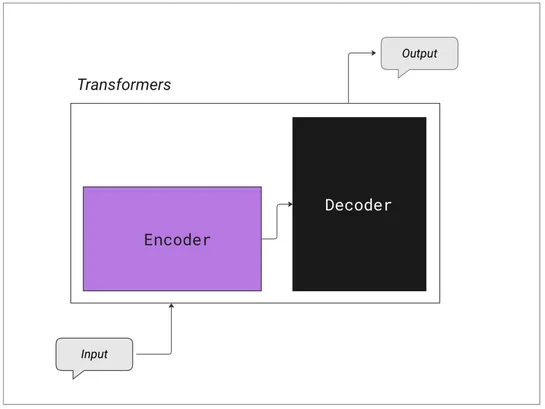
In 2017, AI saw a breakthrough with transformers enhancing neural machine translation. OpenAI's GPT series progressed from GPT-1 with 117 million parameters using masked self-attention and Adam optimization, to GPT-4 with 1.8 trillion parameters and 120 layers. This rapid advancement has necessitate.. read more  

Nirmaan's AI Thesis
Link
@faun shared a link, 1 year, 6 months ago
FAUN.dev()

Kinsing crypto mining campaign targets 75 cloud-native applications

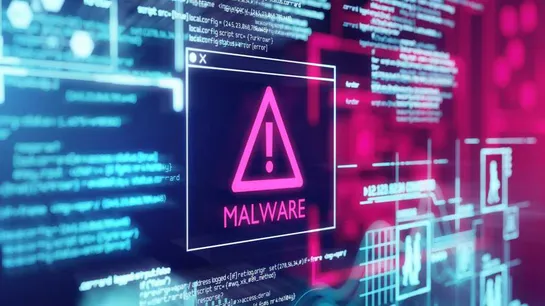
The Kinsing cryptojacking operation, discovered five years ago, continues to target cloud-native environments for cryptocurrency mining. Threat actors exploit remote code execution vulnerabilities in 75 web applications and container systems like Docker and Kubernetes. The attack chain involves infe.. read more  

Kinsing crypto mining campaign targets 75 cloud-native applications
Link
@faun shared a link, 1 year, 6 months ago
FAUN.dev()

Self-hosting keeps your private data out of AI models

Slack's terms of service allow for the use of private data to train artificial-intelligence models, raising concerns about data privacy. Large language models (LLMs) have been shown to memorize training data, posing risks for leakage of sensitive information. Self-hosting collaboration software may .. read more  

Self-hosting keeps your private data out of AI models
Link
@faun shared a link, 1 year, 6 months ago
FAUN.dev()

Hassle-free management of your Kubernetes cluster in style using K9s

K9s is a tool that streamlines Kubernetes commands for microservices and container orchestration. It simplifies operations by providing a user-friendly interface with shortcuts. Installation is straightforward on Linux, macOS, and Windows platforms... read more  

Hassle-free management of your Kubernetes cluster in style using K9s
Link
@faun shared a link, 1 year, 6 months ago
FAUN.dev()

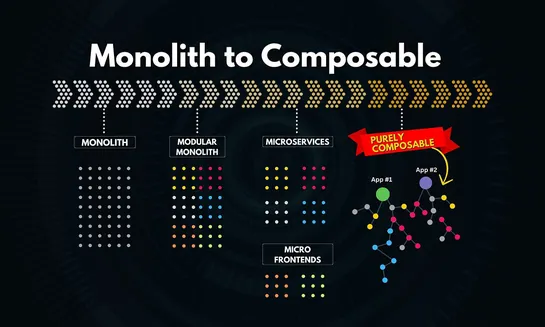
Composable Software Architectures are Trending: Here’s Why

Discover how composable architectures transform software development for enhanced flexibility, scalability, and innovation... read more  

Composable Software Architectures are Trending: Here’s Why
Link
@faun shared a link, 1 year, 6 months ago
FAUN.dev()

Amazon S3 will no longer charge for several HTTP error codes

Amazon S3 will now make unauthorized requests free of charge for customers. Bucket owners will not be charged for requests that return an HTTP 403 error response initiated from outside their AWS account. This change applies to all S3 buckets and all AWS Regions, including AWS GovCloud (US) and AWS C.. read more  

Amazon S3 will no longer charge for several HTTP error codes